
Out to Lunch

Out to Lunch

#OutToLunch: Had Iran been Uganda, what would we have done?

By Denis Jjuuko When the planners of the war on Iran sat to make the final decision, they perhaps envisaged a quick win. Fly in, kill the leader and a few others and the country would collapse. Your chosen leaders would then take over and pledge allegiance, after all you are the world’s super power. Oil would flow to wherever you want it. As the leader of America, Donald Trump would be expected to stand somewhere in the White House and announce how the greatest military on Earth has performed. The new leaders in Tehran would repost his every post. A red carpet would soon be rolled out at the White House where the new leaders in Tehran commit to pay allegiance to the Americans and their Israeli backers. Washington would announce the end of sanctions and beckon American companies to take on the reconstruction of Iran. A date for a return visit to Tehran would be announced. Donald Trump would step on the improvised steps of Air Force One and utter the word ‘freedom’ while clenching his fist. At a speech in Tehran where school kids are waving paper flags of Iran and USA, he would warn others of what will come if they don’t fall in line. Fox News would declare him the greatest leader America has ever had. Trump would demand the Nobel Prize committee to award him. He has saved the world of potential nuclear weapons. Hollywood writers would scramble for pieces of paper to script a blockbuster. However, Iran seems to have had different ideas. The writers must now be writing but not the grand movie. American contractors are waiting, unsure when their reconstruction deals will be inked. Trump posts one thing after another, perhaps once in a while, remembering the famous quote from Sun Tzu’s the Art of War: the best way to win a war is not to fight. Iran defied the odds. Two military powers have dropped thousands of bombs on its facilities and leaders but it has been able to somewhat fight back and even forced ceasefire talks in Islamabad, Pakistan even if they ended without any deal. When you think of Iran, you always want to think of Africa or at least one country in Africa since the continent is not homogenous. Is there one that can stand up to the world powers? Perhaps none. Our natural resources are not used strategically. In fact, they have been a source of endless wars. Look at the Democratic Republic of Congo for example. I consider them the richest country on earth but they can’t even complete their Inga Dam or construct bitumen standard roads. Uganda, a potholed nation, is helping them in the eastern parts of the country. Nigeria had to wait for a private person to build a mega oil refinery. They preferred to export crude and import the refined products. If an individual businessman can mobilize resources and build a refinery, what about a country? And you can say that about all oil producing countries on the continent. We have conditioned ourselves to export raw materials and import everything. The Iranians didn’t wait to import everything. They made their Shahed drones, they developed their missiles program and created a system that wasn’t depending on a single strongman whose assassination would lead everything to crumble. They built universities and given that they are forcing Americans to sit on a negotiation table, it means they didn’t fill their key positions based on blood relationships or who could praise their leaders loudest. They also understood leverage. Their location provided them with the Strait of Hormuz through which 20 percent of the world oil passes. They understood that 20% of the world’s oil can’t be ignored. They understood that their location gives them an opportunity to fight back or take the war to the enablers of their adversaries. They didn’t spend half their time blaming the Americans for the economic sanctions imposed on them. They found a way to prepare themselves for a war that they knew that one day would come. Had the Iranians been some of the African leaders, they would be blaming colonialists while sending their kids to western universities and keeping whatever money they land on in Swiss banks. Research and development would mean nothing. The most energetic labour force would be carted off to find jobs as domestic workers while being urged to save and come back and be job creators. Had we been Iran, how would we be strategically using River Nile, Lake Victoria, the near perfect weather we sing about and all the resources we have? The writer is a communication and visibility consultant. djjuuko@gmaio.com

Read More »
Out to Lunch

#OutToLunch: Municipal bonds could help resettle kiosk businesses removed from road reserves

By Denis Jjuuko A few weeks ago, the internet in Uganda went gaga with a photo of a woman raising her hand, while another holding a toddler who was busy breastfeeding. The woman was in distress as her kiosk was being loaded on a truck with Kenyan motor registration license plates. People said it was photo of the year. To be honest, it is a very powerful image and lives to the axiom that a picture says a thousand words. Some people offered to help the woman. Others said a lot of stuff about the ongoing countrywide campaign to remove informal structures from road reserves and elsewhere. The photographer was the “most wanted person.” It turned out the image was made through prompting artificial intelligence applications. What AI won’t do!! Anyway, Uganda is one of those countries where everyone is either a business owner or trying to start one or has ever started one. We are labelled, by some international organisations, the most entrepreneurial country in the world. But most of our businesses are small, micro small or something lower. A kiosk here, a stall there, a bench where you can polish and shine shoes or simply sit and wait for customers and sell them something that you pick from a shop that you pretend to own. It is called kuyiriba in Kampala speak. With the coming of age of the internet, kuyiriba is also very much alive online. However, kiosks and stalls on streets, road reserves and everywhere you turn, although a big source of employment in the informal sector, are also an eyesore. They create a slummy and unsafe environment for both the people who own them and their customers. The government decided that it had seen enough and instructed their removal (though that order has since been halted). Imagine you are driving on a highway that connects Uganda to Kenya, and perhaps the busiest in the country given our reliance on the Kenyan port of Mombasa, and all of sudden you see hundreds of stalls selling waragi between Kakira and Magamaga where largely taxis and trucks stop, “recharge” and continue to wherever. What message would visitors to Uganda through that route be thinking? Drink driving makes our roads unsafe. What about those visitors who were using the old Kampala-Entebbe Road? They give an impression of a very poor economy. Most of the remaining shops won’t do us any justice either. Impression is sometimes everything. In the meantime, I hope they can ask the property owners to at least pave their front yards and apply some fresh coats of water-resistant paint. The aging roofs could be replaced too. Those who can’t improve these properties could be asked to sell them to those who can. Alternatively, government can acquire them through fair compensations, similar way they do with the right of way while constructing roads. The government would then make a masterplan of the area complete with architectural plans and invite those with money to buy the land from the government and invest. The new investors would not be allowed to change the plan to whatever they want. The government would get the money by issuing municipal or infrastructure bonds. Saccos and investment clubs, individuals and others players would oversubscribe. And then they would find the money to buy the masterplans and do the investments in record time. Tax incentives could be provided. The masterplan would include acquisition of large areas where markets would be established so the kiosk and stall owners would be shifted there. Flea and mobile markets would also operate in such areas instead of doing so in road reserves. Taxi and bus stop areas would be identified and even future train stations. Cycling lanes in some areas as well. Kampala and many upcoming urban areas don’t have open areas. This way, some areas would be dedicated to that among other amenities that make cities livable. Ugandans would have to accept that they can’t get whatever they want around the corner. Every little corner can’t be boda stage or taxi park or a temporary eatery every 7.00pm. People would have to learn to walk or even drive a bit for what they need such as boarding a taxi or getting some groceries. Every little front yard can’t be a kiosk or boutique of used dresses. The global cities we admire are designed that way. We have the tools to do that. The writer is a communication and visibility consultant. djjuuko@gmail.com

Read More »
Out to Lunch

#OutToLunch: UEDCL review should include self-funded connections

By Denis Jjuuko The cost of land in greater Kampala and indeed other urban areas of Uganda skyrockets all the time making it hard for the majority of people to become homeowners. This increases the country’s housing deficit annually. Currently, the housing deficit stands at approximately 2.4 million units. One of the major reasons for the high cost of land is lack of utilities or actually their availability. If an area gets connected to the national electricity grid and water mains, the prices of land shoot up. If a road is built, the prices triple or even quadruple. The land owners know that availability of utilities like electricity and water is an attraction because where they are not available, the costs to get them can be huge. For example, a new connection may cost you less than Shs100,000 where you don’t need a pole and willing to wait for the government subsidized one or more than Shs500,000 for a self-funded connection. Should there be no pole near you, the costs become excessive as they run into millions of shillings. A single-pole connection costs in excess of Shs2.8m. Should you need more than one pole, the costs become limiting and you have to look for a private company to build that line for you. There is no guidance on how much that costs. Each company charges as they wish. When it comes to a factory or business that needs three-phase electricity and a transformer, the costs could be humongous. The alternative land in areas where electricity is available like the industrial parks is not affordable for small businesses leaving them without any options but to incur high startup costs. Water isn’t any different. If there are no major water pipes near you, you suffer the same fate by installing them at your cost. I think it is these costs that enraged the outgoing Mawokota South Member of Parliament Yusuf Nsibambi to cut down the poles he had installed when the voters rejected them in the January 2026 polls. He claimed on live television that there was no return on investment after getting the fewest of votes from areas where he had installed electricity and sunk boreholes using personal resources. He has since crossed from the opposition FDC to the ruling NRM. Nsibambi may have been lucky not to be arrested for cutting down ‘his’ electric poles and vandalizing the power lines. This is because once you install them, the government agency, UEDCL and Umeme before them, maps them and registers them as their own assets. They include them in their inventory. When electricity and water utilities are publishing their achievements and investments on glossy paper, they include the kilometres of electricity lines, transformers and water mains installed. What they don’t tell you is that some of those aren’t built by them and therefore shouldn’t claim them. If I build my own electricity line or install water or a transformer, why should the government utility claim them? Just because they sent a guy or two on a motorcycle with a GPS machine and wrote down the coordinates? The cost of taking down GPS coordinates is insignificant compared to the cost of building the line, buying the transformer and all the stuff. Now, over the weekend the Minister of Energy and Mineral Development terminated the services of the board chair of UEDCL and sent the managing director on forced leave. The newly appointed acting board chair was swift in naming an acting managing director. Everyone hopes that services will improve. One of the issues should be reviewing new connections especially where there is no pole or transformer. The minister and the regulator need to instruct UEDCL not to demand payment from people who buy a pole, build a line or install transformers until their investment is covered. The surveyors they send to establish that a pole, three-phase or transformer is required can put it in their report and come up with workable cost. When the person goes ahead and funds this connection, then they can credit the customer’s account with the money spent. Every month, they can deduct what the customer has consumed until the credited amount is used up. Thereafter, the customer can start paying for the service. That way, the utility company has not ‘stolen’ a private line or transformer and passed it as their own. The homeowner or business would have their money back and that would lead to lower costs of land and/or doing business. The writer is a communication and visibility consultant. djjuuko@yahoo.com

Read More »
Out to Lunch

OutToLunch: African Union could help national airlines struggling to fly

OutToLunch: African Union could help national airlines struggling to fly By Denis Jjuuko Sometime back, the Uganda Civil Aviation Authority decided to mark an anniversary by organizing a flying activity. What one needed to do was to arrive at Entebbe airport with Shs50,000. They would then put them on a flight and fly them around Uganda. The queue stretched many miles. The guys at CBS FM also did something similar during one of their Nkuuka y’Omwaka (end of year) events. Pay some little money and they fly you around Kampala. Thousands of people lined up for this once in a lifetime opportunity. If you watch TikTok regularly, you will see many people posting their trips claiming that they “catch flights, not feelings” and all sorts of things. If there is anything many people in Africa love, it is flying even if it is flying to nowhere. Many people on the continent consider flying an element of success. I think it is linked to widespread poverty. In many countries, domestic flights are rare as there is hardly any infrastructure. Where it exists, air tickets are expensive, thereby eliminating many people from boarding flights from one town to another. Those who manage to fly are considered the lucky ones. That probably explains why many family members escort their relatives to the airport in droves. Minibuses full of people descend at airports, drumming and dancing as the traveler busks in glory. They have finally made it. Upon return, some even hold parties. Parents pray for their children to also get an opportunity to fly. If you eavesdrop at Entebbe before departure, you may hear of somebody calling a relative or friend to engage them in prayer so that they also find some luck one day to fly and I am not making this up. It is that serious. Flying to many isn’t just a means of travel. It is status. It is arrival on the big stage. It is success. That same mindset many times explains the desire by countries to set up airlines. Every country on the continent wants to set up a flag carrier. The reasons given are many. National pride is usually among the top five. Airport or aviation authorities also with the same mindset slap huge taxes on each ticket. Airport ground handling is one of the most lucrative businesses in Africa even when the number of passengers going through these airports is minimal. Passengers who have longed to fly expect five-star experiences even when they don’t want to pay for them — champagne to flow endlessly, great food, free internet, movies and the like. To keep these few passengers happy, airlines end up charging a premium, thereby eliminating many people who would have been able to fly. It then becomes difficult to make money from a very small base of regular passengers. Yet, we many times complain about the exorbitant air ticket rates forgetting that everything we consume on board comes at a price. The equipment is expensive to buy, operate and maintain. Also, the majority of Africans have no reason to travel much. Their incomes are meagre and majority are subsistence farmers without any real need to fly anywhere. Without improved incomes, African airlines will continue to struggle. Also, because poor countries love owning national flag carriers without putting in enough resources, the airlines will continue to struggle to compete with middle eastern carriers. How on earth is a national airline with global or even continental ambitions but operating just 4-6 planes going to compete with Emirates, Qatar or even Air Arabia? It is always going to be frustrations for passengers who in the era of social media who are going to create one communication crisis after another. Brand reputation tanks. The few passengers end up preferring to pay a premium to fly the reliable carriers from Middle East, Europe or even Ethiopia. The national airline ends up in the cemetery. Flying within Africa could provide a lifeline for African national carriers but many countries demand visas from each African while allowing Europeans and North Americans to fly in without them. If people need expensive visas that are also difficult to access, it then becomes very difficult to create a critical mass of travelers within the continent. Look at Europe for example, it is almost borderless. People just wake up and travel without worrying about access. Although it is a very rich continent, being borderless is one of the reasons many people fly in Europe and air tickets are very cheap. The African Union need not be an organization that issues communiques only rather one that facilitates movement and trade across the continent by removing barriers that keep us under developed. The writer is a communication and visibility consultant. djjuuko@gmail.com

Read More »
Out to Lunch

#OutToLunch: Some of the big bets for 2026

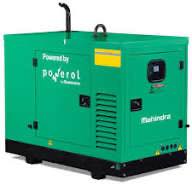
By Denis Jjuuko It was just the other day when many people were making resolutions for 2025. Days turned into weeks, months and now a whole year. You blink, and it is a new year. I hope that you managed to achieve those targets you set for 2025. If you didn’t, well, you can still list them for 2026 and work on the issues that made you fail to achieve them. Well, there are so many things that are happening in 2026. An election is upon us and it comes fast—starting on 15 January. I hope that your candidate wins and most importantly that they do what they are promising to do. In the meantime, I thought of a few things that could be important in 2026. They could be business ideas or stuff that may make your life better one day. Generators, power back up As I was writing this, a close friend called me and she sounded desperate. Her electricity had failed and she was worried about spending yet another night in darkness. She had bought an inverter but because of a prolonged power shutdown in her residence area, her batteries were drained. She fears darkness. So, she thought I could be a plug for a standby generator for a night. We made frantic phone calls but many people with generators for hire had closed for the night. Anyway, it reminded me of a visit I made a few months ago to a friend’s home. I found people installing a generator. My friend had rightly predicted that the transition from one electricity distributor to another wouldn’t be that smooth and had envisaged the return to darkness. I had thought that he was panicking. He wasn’t. The new distributor has told us that electricity will stabilize in a few years. So, in 2026, either get a standby generator for your home or business or start dealing in them. Water harvesting When electricity fails, the guys at Katosi and Gaba inform us that they can’t pump water from Lake Victoria. This means that the taps soon run dry. When we were younger, we used to ask ourselves a silly question. What would should we rather have? Running water or electricity? We thought we had left those days more than 20 years ago. And it seems the question wasn’t even silly after all. So, what would you rather have in 2026? Water or electricity? Well, in 2026, either get a water tank for rain harvesting or start dealing in them. Car parts The smart guys at the Ministry of Works and Transport have declared a mandatory vehicle inspection at your cost. Not a bad thing if it would make our roads safer. But if you live in some of these parts of Kampala, most likely your car won’t pass the test. If it does, it will not be in a good shape a few days later. Some of the roads in Kampala have the biggest potholes ever seen in the world. If you drive a car that was once owned by somebody in Asia or Europe or north America and got rid of it by selling it to you, be prepared for a new suspension every few weeks. You may also have to budget for a bumper in 2026. If you live in a neighborhood with a paved road and potholes aren’t your problems, well, still budget for some body parts. However much you rivet your car, guys will still pluck off stuff in traffic jam or they will scale your fence and “undress” your car. So, in 2026, plan for car spare parts or start dealing in them. Coffee and gold Coffee and gold are most likely going to continue being top forex earners for Uganda in 2026. You may have to look for ways to get involved. Gold, though, has expensive school fees, so invest with care. Coffee, some call it the green gold, is a bit easy. Entry fees are not so exorbitant and many people have knowledge of how to grow it, trade it or drink it. If growing it is where you want to start, think of some bit of irrigation. Changes in the climate are real but also water in Uganda is easily available in many parts where coffee is grown. A few feet underground, and there is reliable water all year long. In 2026, find a way to deal in coffee, remember “it doesn’t lie” or even gold if you have the school fees. The writer is a communication and visibility consultant. djjuuko@gmail.com

Read More »
Out to Lunch

#OutToLunch: How Uganda’s next president could easily reduce the housing deficit

By Denis Jjuuko It is not uncommon to find a social media post in Uganda regarding the price of land or property being shared many times. The argument is that land prices are extremely high especially around Kampala and in many major cities or towns across the country. With an ever-increasing population and poor infrastructure and services a few kilometres outside these major urban centres, it shouldn’t be entirely surprising that land is expensive. I have always given an example of Mpigi town, which is nearer to Kampala than Entebbe but a difficult place to commute due to poor infrastructure. Yet with the Entebbe expressway or even the old road, Entebbe is an easier place to access. So, land prices around Entebbe will always be high as not many people would make Mpigi their area of residence while working in Kampala. That though will change when the Kampala-Mpigi Expressway is complete. However, construction of infrastructure such as expressways in Uganda takes a very long time leading to people crowding around the urban areas where it is easier to commute to their workplaces and services such as hospitals and schools are better. This increases pressures on land for housing purposes in urban areas. And as the population grows, land, an inelastic resource becomes more expensive. Many young people end up struggling to build houses. With the current housing shortage said to be over 2.4 million units in Uganda, poor infrastructure and services and an ever increasing population, the price of land will only continue to rise unless the government does something. And that wouldn’t be nationalizing land like some people urge whenever there are delays in executing infrastructure projects or when the price of land is seen as a hindrance to young people owning houses. Government must realize that the most valuable asset the majority of Ugandans will ever own is a house. Once people own property, they wouldn’t want to create so much chaos that could lead to destruction. Empowering young people to own houses should therefore be in the government’s best interests. Since land in Uganda for housing is largely owned by private entities or communities who determine its cost without any guiding principles, government could create a land bank from which individuals could buy land or a house. How would this work? And since we are going to the polls next week, the country’s next president has his work well cut out. In urban areas like greater Kampala, government could buy large tracts of land in Mukono, Mpigi, Mityana and Luweero and demarcate it for planned housing estates similar with what private land dealers do but a bit better. Land would be divided into small pieces with architectural plans drawn by leading experts. Schools, recreation, and health facilities would be planned. The government would then sell the land at a rate lower than the private sector. Nobody would be allowed to deviate from the architectural plan. If you bought in an area with bungalow houses, you build the exact bungalow. If you bought in an area for storied villas, you build a storied villa as per the architectural plan. Each person or legally married couple would be allowed to buy only one plot and you can’t sell it to another person at any rate. If a buyer prefers to sell, he sells it back to the government at the price he bought it. This would protect the land from speculators who buy, hoard and then sell at an exorbitant price. Because the cost of building a house with a given architectural plan is easy to establish, banks would only rent a certain amount of money. Banks willing to lend the money would not give it to the individual as is usually the case, rather a prequalified construction company that can deliver the house within the established cost of building it with a capped interest rate or profit. This is how Islamic banking works and therefore not a novel idea that is difficult to implement. Should a person fail to pay, the government buys it from the bank at the set amount and then sells it to somebody else. People could pay in installments over a given period. Monthly deductions could be made to salaried workers such as civil servants interested. The government can then construct roads and expressways to those areas as many people would be living in these housing estates. Public transport, schools and health facilities would be prioritized. More young people would end up owning houses and therefore a huge stake in their country and ministry of urban planning would have something big to deliver. The price of land for housing would plummet too enabling more people to own houses. The writer is a communication and visibility consultant. djjuuko@gmail.com

Read More »
Out to Lunch

#OutToLunch: Replicate innovation hubs in Kampala and refugee settlements across the country

By Denis Jjuuko Airpods in the ears. Hands busy with a smartphone. Shoulders holding a leather laptop carry bag. Legs covered in sagging pants. Torso well covered in a jumper with a hoodie. Hair spiked. Sunglasses on. It is a familiar sight at a building in Kampala where young people trying to replicate Silicon Valley converge to work on largely fintech applications. At least a floor in the building provides open spaces where these people work on their ideas while sipping iced coffees sold at a cafeteria in the corner. Walls are covered with inspiring graffiti of quotes by famous people or even bible verses. The young people are on a mission to make it big in the tech world. Those who find some breakthrough, which usually means nailing somebody willing to invest in their ideas or provide a grant, move to the office cubicles partitioned with glass, providing more inspiration to those still on the journey. These workspaces have many names. Incubation centres, ideation labs, entrepreneurial hubs, job centres. They are usually funded by development partners as a way of subsidizing the cost for these emerging entrepreneurs, developers, inventors, creators or whatever they prefer to call themselves. Perhaps having seen some impact in urban areas, these centres were replicated in many of Uganda’s refugee settlements across the country. At these centres, youthful refugees and host communities access high speed internet, get access to computers and sometimes machinery and tools that enable them to bring their ideas to life. The development partners sometimes throw in training like how to use multimedia platforms to market their businesses or find work. Small grants for groups with innovative ideas or even for those who are dedicated to their work are common. Access to high-speed internet has helped a few of them to create great products. On a visit to the Nakivale Refugee Settlement, I found an interesting group that makes guitars. They taught themselves via YouTube tutorials and they are able to market their shiny guitars to global customers through social media. They have been supported by Partnership for improving prospects for forcibly displaced persons and host communities (PROSPECTS), a project implemented by the International Labour Organization and funded by the Netherlands. It is remarkable what young people can do once they are enabled to innovate. Skilling is critical not just in vocational jobs. But also, in soft skills such as communication and digital marketing. How can they use WhatsApp Status, YouTube or TikTok to push their products out? How can they use YouTube to learn a new skill? I don’t think there is a vocational school that sets itself out there to teach making guitars but those refugees in Nakivale found a niche and made it work even though they have a long way to go. I have heard of people who taught themselves baking, weaving, and a few other things via YouTube tutorials and are now earning a living and even employing others. Once young people have access to affordable internet, many can teach themselves similar skills once they appreciate what they can do with a smartphone. Multimedia skilling programs for youth such as those offered by the Uganda Communications Commission (UCC) through Uganda Communications Universal Service and Access Fund (UCUSAF) are a good starting point. I have seen people learn making professional posters through platforms like Canva or videos using CapCut thereby joining the creator economy. I think there is a need to replicate the incubation hubs in Kampala and job centres in refugee settlements at subcounty level or even district level to start with. Here, young people would converge even if once a week to discuss with like-minded individuals, teach themselves skills and form partnerships and synergies that would enable them to scale their ideas or enterprises. Of course, regular trainings and mentorship would be important. They would be able to access high speed internet, computers or virtual reality gadgets. They would also test out their ideas and over time have access to those who may have been able to succeed. They would also provide markets to themselves. If one has mastered digital marketing, another involved in another industry would be able become their customer. We have also talked about value addition for a long time. Machinery is expensive. Knowledge is scarce. If people grow some coffee in Bukomansimbi or Budadiri and you want them to add value, a roastery can be installed at this hub where those interested can roast and package their coffee. As they grow, they would be able to scale on their own. If the hubs are somewhat working for youths in Kampala and refugee settlements, they can work too in rural communities. The writer is a communication and visibility consultant. djjuuko@gmail.com

Read More »
Out to Lunch

#OutToLunch: Rampant unemployment is a key national security issue

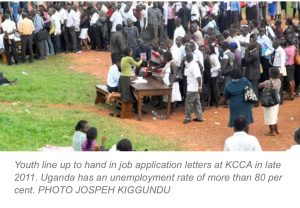
By Denis Jjuuko The public service ministry recently announced that more than 40,000 people applied for 287 jobs across different government ministries, departments and agencies. More than 28,000 of those who applied qualified, meaning they were selected for aptitude tests which were to be held at the Mandela National Stadium at Namboole. It must be frustrating looking for job in Uganda. The news came after a bombshell report emanating from research by the Inspectorate of Government (IG) and the Economic Policy Research Centre (EPRC) that indicated that Ugandans pay a whopping Shs42.34b annually to district service boards to get jobs. Averagely, the report indicated, 130,000 people pay bribes to land jobs. The people who ask for these bribes know that the jobs are scarce and people are desperate and willing to do anything to land the jobs. When somebody who bribed their way to a job gets employed, it means a few things. First, the person is not the best for the job. They just had the money to pay a recruiter. The best candidate may not have had the money and therefore wasn’t considered. Because the person knows they only got the job through bribery, they will continue bribing their way into senior positions. That is how we end up with incompetent people in positions of authority. People who can’t execute anything and making sure things don’t work or looking at everyone who is competent as a threat or what people call work politics. The people who are competent end up doing very little at work so that the incompetent boss doesn’t feel insecure and threatened. That is how we end with yes people—they won’t advise their bosses. They will do whatever the boss wants whether it makes sense or not. Remember, there are no jobs and these people have families to feed. Rocking the boat isn’t something that they want to do. Second, the people who bribed their way to jobs will only hire those who pay them a bribe. That way you end up with a corrupt layer at every level and an incompetent lot everywhere. Service delivery is impacted. Government then fails to create jobs that young people can apply for and get on merit. Third, because the public service is corrupted, the private sector suffers too. People can’t start and run businesses professionally. The people who are in positions because they paid a recruiter will endlessly try to get a return on their investment (read bribe). Procurement processes will be compromised. Payment for services and goods delivered will be frustrated unless somebody is paid. The bribery doesn’t end at public service. We recently saw many statements from politicians who lost elections for positions in their political parties claiming their rivals won through bribery. Some wondered why people were bribing for positions that were actually “voluntary.” We hear that candidates for Members of Parliament in some constituencies spend more money than they would get in the five years they would spend in the office should they win. If somebody spends more money than they would be officially paid, it means they are doing so to illegally get something. Somebody who sells their house to get money for election will do anything to get their house back. That is how we end up without jobs and seeing young energetic people leaving the country for the Middle East not to do highly technical jobs but menial ones or being trafficked for sex like we recently heard from a BBC investigation. Government has been saying that they are intending to grow the economy to US$500 billion annually. Great stuff but with rampant corruption, it will be a tall order. There is a need to nip corruption in the bud in order to create sustainable jobs for the working age population. Otherwise, we shall continue to see thousands of people filling up soccer stadiums to apply for a few jobs they know they stand no chance of getting. That is what they call desperation. And desperate people can do pretty much anything. Unemployment ends up being a key national security issue that the government must urgently address. The public have a chance to play a key role here by voting people in 2026 not because they bribed them with a t-shirts or some cheap alcohol but those who can address the challenges they face such as unemployment. The writer is a communication and visibility consultant. djjuuko@gmail.com
Read More »
Out to Lunch

#OutToLunch: What employees should know before launching a side hustle

By Denis Jjuuko On Friday 29 August this year, I was invited to speak to the staff of Uganda Registration Services Bureau (URSB) about side hustles for corporates during their end of month Fireplace session. The Fireplace is an internal meeting where guest speakers discuss various topics every last Friday of the month. Here is an abridged version of my presentation. I believe others could find an interesting thing or two. In August 1972, Idi Amin launched his so-called economic war which led to the expulsion of Asians. In the months that followed, Uganda experienced unprecedent inflation. With the economy in free fall, many workers realized that their salaries were no longer sufficient. At Makerere University, the country’s premier higher institution of learning, professors took to driving taxis to supplement their income. One professor, until recently a minister in Museveni’s government, was the taxi driver. His colleague, an education professor, was the ‘turn boy’ or conductor. Others became teachers in secondary schools. Their wives turned the garages of their residences into unofficial canteens. Amin’s economic war led to the birth of side hustles in Uganda, where employees do something outside their official jobs to supplement their incomes. The importance of side hustles was further cemented in 1990s when the Structural Adjustment Programme led to thousands of people losing their jobs. Recent mergers of government agencies (rationalization as they call it) and closure of funding organizations like USAID continue to make employees think of life beyond their offices with polished floors. So, if you are thinking of starting a side hustle, what key things should one think about? Here are a few points to ponder. Time: Side hustles for people doing 8-5 jobs should not be too time consuming. Get a hustle like buying and selling land, flipping houses, buying and selling cars, bonds and unit trusts (if you can call them side hustles), or even supplies. Bars, salons, and restaurants require a lot of time when starting which you may not have as you have to concentrate on your job as well. Also, workers in such sectors are unreliable. You don’t know which day they will not turn up. Or when they will sell a crate of beer and replace it creating an impression there are no customers. Still, you don’t want to stay awake in a kafunda so that a few men not eager to get home can finish their beer and leave to enable you close the day’s operations. Cash payments: Avoid side businesses where most of the payments are made in cash. You don’t know when the workers will disappear with it. Most side hustles are small and may not have systems to protect revenues especially in the beginning. Side businesses where people pay in the bank are better. There you can protect your revenue. I know there are mobile money payment codes these days but there are still a few issues with them to be fully embraced. Small is beautiful: All business plans show profitability at one stage. Also, however much research you do, there will always be stuff you will only learn when doing the business. Start small and allow yourself to learn the trade. Don’t throw all your life savings in a business at the beginning. Don’t borrow to start. If you are to borrow, maybe from family. Start with your savings or pool money with others. Six months rule: Before you quit your job to fully concentrate on the side hustle, instruct your bank to send 100% of your salary to an investment account or unit trusts or bonds. Don’t touch this money. Now, see if you can rely on the side hustle for six months. Pay all business and personal expenses from the business. That way you will know if the business is profitable or if you have been subsidizing it with your salary. That way you will avoid looking for a job a few months of leaving one. Do what others are doing: Your side hustle doesn’t have to be innovative or ground breaking. Do what others are doing. See a sector you can invest in, where you can easily raise start up capital and get going. But run it better than others. Ground breaking ideas can then be implemented when you have money you can afford to lose or can raise the required capital from angel investors. Cashflow is the lifeblood of business: Look for businesses which have good cashflows. Planting trees that mature after 20 years should be for people investing for retirement. But doing something that brings in money regularly helps keep the business operational without necessarily relying on the salary or salary loans. Do people need to do typical side hustles? Should everyone do business? There is no clear answer. One just needs to find a model that works for them. Apart from some telecoms and banks, many businesses in Uganda that publicly publish their returns show net profitability of around 10%-15% annually. This means that an employee who invests in treasury bonds or unit trusts is likely to earn the same percentage without any hustle of running after the ever-elusive customers. It can also be a strategy of accumulating capital to venture into capital intensive side hustles that don’t require a lot of time like real estate. The writer is a communication and visibility consultant. djjuuko@gmail.com

Read More »
Out to Lunch

#OutToLunch: Unambitious delayed projects, potholes creating a self-doubting population

#OutToLunch: Unambitious delayed projects, potholes creating a self-doubting population By Denis Jjuuko A few years ago, I used to frequent Addis Ababa, the Ethiopian capital to largely attend meetings at the African Union headquarters. If you kept away for a few months, you would return to a city that you wouldn’t recognize. A new flyover would exist within a few months. You would see people laying down railway lines and find these huge buses providing public transport. Addis Ababa in the mid 2000s was a construction site that was turning slums into hotels of certain status and other infrastructural projects. They seemed to deliver their projects without much delays. One thing I also noticed about Ethiopians is that they claimed to have the biggest everything. A cab driver or a university professor would quickly tell you that they had the biggest market in Africa — the Merkato, equivalent of our Owino. They claimed they had the largest number of cows on the continent, biggest airline, largest number of producers of leather products and coffee, biggest army and even the most beautiful women. Although some of these claims may be true and others could be debatable, Ethiopians have come to believe that they have to do the biggest things. And they go ahead and do them. Just the other day, Ethiopian Airlines launched perhaps the biggest hotel in Africa. Ethiopian Skylight Hotel in Addis Ababa boasts of 1,024 modern rooms. That is perhaps why they decided to utilize River Nile a little bit more, they didn’t go around building a 100 Megawatts dam. They went for 5,150MW. The Grand Ethiopian Renaissance Dam (GERD) that was launched a few weeks ago is, true to Ethiopian style, billed as one of the largest infrastructural projects on the continent. And like roads and railway lines in Addis Ababa, the hydroelectricity dam, which cost US$5 billion to build was completed in 14 short years. It had many challenges such as protests from Egypt over the use of River Nile — like they do whenever anyone else wants to use the Nile waters as well as funding, technical skills and even bloody wars. But the project never got derailed. Compare it to the Grand Inga Dam in the Democratic Republic of Congo, perhaps the world’s wealthiest country, and you will understand what I am saying. Or just look at some of the countries where it takes a year or more to build a single kilometer of a dual carriage road without interchanges and bridges. To build the GERD, Ethiopia got most of the funding from local contributions in form of donations, and selling of bonds locally and to Ethiopians in the diaspora among other sources. They got very little foreign debt to achieve their project which ideally should ensure affordable electricity access to many people in Ethiopia while exporting some to neighboring countries thereby getting much more foreign revenue. Ethiopia is not some country in America, Europe or Asia. It is actually considered part of East Africa and a mere two hours by air from Entebbe. They face similar challenges like us. Wars, famine, draught and diseases among others. Like Uganda, they are landlocked and depend a lot on agriculture. In fact, we have just toppled them as the largest coffee exporter on the continent. They still produce more coffee though only that they consume a lot of it domestically. Since we are so similar and ideally neighbors, what do they have in their DNA that we don’t? How can they run an airline with more than 150 aircraft while we struggle with about six including leased ones? How can they build flyovers in Addis in months while we take decades to complete ours? Or build small hydroelectricity dams with defaults while they complete mega ones? There is a need to dream big by technocrats and be intentional about building a culture that leads us to achieve our targets and on time. We can have as many patriotic lectures as we wish but if people are driving over potholes every day and have them normalized as the way of life, we won’t achieve more ambitious targets like GERD. We will end up with a population that self-doubts itself. Businesspeople will not dream of creating mega factories or big businesses. Their ambitions will remain importing a few containers from China, driving an old Landcruiser, building a storied house in a slummy area, and another in the village and a few apartments. An ordinary Ethiopian seeing the country launching GERD or the largest hotel on the continent will dream of something as big. The writer is a communication and visibility consultant. djjuuko@gmail.com
Read More »
Out to Lunch

#OutToLunch: Invest in a residential house or start a business? It is your profile that matters

By Denis Jjuuko It is one of those debates that will never end similar to the one most people are used to —chicken and the egg, what came first? Though this time it is on a personal residential house and a business or even investing in financial assets like treasury bonds. It is an issue we have discussed before in previous editions of #OutToLunch. Since it won’t go away, why not revisit it? First, let us get to speed with the differing arguments. One side of the coin posits that people especially young ones investing in personal residential houses are stifling growth and funds that may have been used to invest elsewhere is stuck in bricks and mortar. That renting is many times cheaper than owning a personal residential house. The argument continues that people should invest in personal residential houses when they are financially secure. Millions can be stuck in a residential house which doesn’t provide much returns. The other side of the coin argues otherwise. That a personal residential house is a prerequisite for growth. That it is an investment too and unlike businesses or financial assets, it is not as affected by inflation. The argument is that a residential house’s value increases year on year as the country develops. It is a low-risk asset class that leads to increment in one’s net worth. Proponents of this view also argue about peace of mind. The landlord doesn’t have to get worried if he popped in and found you eating chicken! And it can be an asset one could use as collateral for financing to invest in other areas, the argument continues. What decision, then, should a young person make? Invest their money in business, bonds or start on a personal residential house journey? These questions need contextualization, which is never provided by those who advance one argument against the other. For example, what does one want? What does the person do for a living? Can one do both? Many people are not wired not to lose money especially if they can withdraw it at any time the way it is with financial assets. If they hear something is profitable, they rush to invest into it without thinking. That is why many scammers exist. They know people who have money are easily tempted. A cousin has no fees? They rush to give. Real estate is hard to liquidate, which forces many easily excitable people to keep their wealth for the long term. But does a personal residential house curtail somebody’s financial growth? It could, where money that would have been invested in business is channeled into an asset that may not bring back immediate returns. Many Ugandans love building houses in their ancestral villages where they visit a few times a year and can’t rent out or turn them into small bed and breakfast enterprises. Others want very big and fancy ones, which they probably don’t need. And such projects could lead to the collapse of a business or deny one funds that they could have invested elsewhere to ensure financial growth. This brings us back to the issue of contextualization that we talked about earlier. In this case, it is the profile of the person. If you decided to invest in a business or financial assets, do you have the temperament to see money accumulating on your investment account without spending it on ostentatious goods? Can you see your friends holidaying in Santorini and not feel the urge to do the same? If you are a man, are you be able to handle a spouse that sings in your ear everyday about not owning a house? Of if you visit your friends, do you feel left out because you are renting? Will you be able to handle the stress that comes with a business failing? Or you will regret why you didn’t build? As you can see, there are many questions in this article. Questions whose answers can only be provided not by financial advisors on X and TikTok but by the person who is in the middle of making the decision. Building a personal residential house may be the best decision one could make. For another, it might not be the best decision. The type of house and where it is built matters as well. Similar to financial assets, where one invests matters. However, I believe that people can build residential houses while also investing in businesses or financial assets at the same time. Most Ugandans build incrementally, which is done over several years. If one had a certain amount of money, depending on their interests, they could have a percentage in a personal residential house and another in business or financial assets. The writer is a communication and visibility consultant. djjuuko@gmail.com

Read More »
Out to Lunch

#OutToLunch: Uganda’s businesses can also celebrate 50 years like Afrigo

By Denis Jjuuko If you are familiar with things Masaka, you have probably heard of Nabugabo Beach. A usually quiet beach on the shores of Lake Victoria. A place you would perhaps wish to sit, listen to water waves and reflect. I think one of the major Christian faiths in Uganda even owns a retreat center in the area. But Nabugabo Beach becomes totally different on two days a year — Boxing Day and Easter Monday. The quietness is replaced with the exuberance of youth, the calmness of adulthood, the rowdiness of revelers, the sound of Uganda’s most powerful line arrays, and the tastiness of beverages in all colors and bottles. It seems the whole of Masaka including those who migrated to Kampala to trade or work as professionals descends on Nabugabo Beach to celebrate either the birth of Jesus Christ or his resurrection. Uganda’s leading musicians and whoever works in the entertainment value chain always put their mind to these days. It is a party like no other for those who can manage the crowd. So, one day, as a teenager, my guardians I think thought that I needed to experience Nabugabo Beach. I don’t remember if it was Boxing Day or Easter Monday but they decided that I should not miss out. My guardians were strict people who never allowed us to go to such events. This time, they didn’t care. I still don’t know why but reflecting about it many years later, I think it was because of the main act — the legendary Afrigo Band. We arrived at Nabugabo Beach around lunch hour and set our eyes on the stage. Two or so hours later, the MC announced that Afrigo Band was ready to perform. I fell in love with them. The guy on the keyboard, the guy on the drums, the guy on the saxophone. The guy who danced while wearing a waistcoat without a shirt. Great stuff that I remember to this day. Over the years, I started following them a bit even though I wasn’t as much a fan as my elder brother, Tete, whose Friday evenings only meant Afrigo. And when I started living with him in Kampala during my late teens, I wished one day he would wake up and say dress up and we go to Crested Towers, Little Flowers or wherever Afrigo was performing but he was never as generous as my Masaka guardians! Anyway, the other Saturday I didn’t need anyone’s invitation or permission to see them perform at their 50th anniversary at the expansive Millennium Grounds in Lugogo. The heavy downpour wanted to spoil the evening but it found us “looking.” It is remarkable what Moses Matovu and his team have done. And for me it isn’t just their timeless songs. It is how they have kept it all together for all these years. We are on a continent where we are constantly reminded that businesses don’t even celebrate their fifth birthday. And here we have Afrigo Band. 50 years in the same business with the same name and perhaps ethos. Although apart from Moses Matovu, all the other founders are long dead, the band still has people who have been part of it for more than 40 years. Drummist Herman Ssewanyana joined in 1983. Joanita Kawalya has been there since time immemorial. Becoming a Member of Parliament didn’t stop Rachel Magoola from singing Obangaina. How do we evolve to keep people interested in what we are doing for 50 years? At many Afrigo’s shows, it isn’t only old people enjoying Endongo Ssemadongo. Young people come to enjoy songs on which their parents danced “squeeze” during their wedding ceremonies. Young people bring their dates to Afrigo’s shows. Young people hire Afrigo for their weddings. I think it is because they have kept some standards and decided not to cut corners. I may be wrong but I have never heard that Afrigo announced a show and didn’t turn up like it is sometimes with some musicians. You don’t see their members in the press or on TikTok badmouthing their colleagues. Don’t the members have any differences? I think they do, after all they are human even when they enjoy legendary status, but they keep their differences under wraps. They have come to understand that what unites them and keeps them together is far more important. As we celebrate 50 years of Afrigo, we need to learn a lot from them. Patience, sticking to the basics, doing what we said we would do and ensuring that we can always pass on the baton to the next generation. The writer is a communication and visibility consultant. djjuuko@gmail.com

Read More »