
Out to Lunch

Out to Lunch

#OutToLunch: Africans will continue seeking western citizenships unless governments act

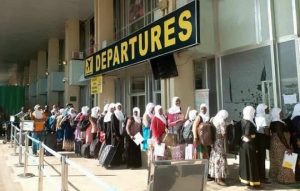
By Denis Jjuuko Many years ago, I decided to go out of the country for my graduate education which lasted about 18 months after which I came back to Uganda. Upon my return, I found myself, like most young people, unemployed. I went to visit a family friend whose children live and work outside Uganda. When I was leaving her home, she told me what I heard many people had said about me but not to my face. Why did I come back? I should have found a way never to return to Uganda to be unemployed. Many people will say oli musiru or you are naïve if you had a chance to run away from Uganda and didn’t take it. It isn’t just in Uganda but in many parts of Africa. That is why athletes participating in international sporting events are known to “disappear” into thin air instead of returning once the tournament is over. They rather become illegal immigrants doing odd jobs (kyeyo) than returning to the dusty streets of African capitals. Many students at graduate schools never return to the continent. Some become career students as they look for opportunities to remain in those countries. West Africans rather die trying to walk the breadth of the Sahara Desert and then jump onto ricket risky boats to cross into Europe than remaining at home riding boda bodas. The few times I visit Entebbe airport, the biggest number of departing passengers I see are young women dressed in abayas and hijabs walking in a choreographed pattern on their way to the Arabian desert to do domestic work. They are happy to finally land a job. If you engage many of those returning to Uganda, their ultimate dream is to find a way to Europe, America or Canada. People of means have been known to fly their pregnant wives to give birth in America or other developed countries where citizenship is guaranteed upon birth, which the current US president wants to ban. He also wants to create a system where people who have the money can buy the US citizenship or permanent residency. If he did that, many wealthy Africans would pay for it. Already, people in Uganda pay hefty sums to conmen promising them US visas and green cards. One time, a visa officer at one of the embassies of the western powers said that many applications arrived with fetishes. That is when paper applications were still the norm. Once some people got the forms, they took them to their traditional healers for blessings. That is how desperate many people are for western visas and permits. Given what people do to get the visas, if the world’s biggest plane arrived at Entebbe airport and said they are taking the first 850 people to arrive to Europe or north America for free and they would be granted citizenship, you would be shocked by who would line up. There would be chaos as the big people try to jump the queue or have their spouses, children or grandchildren be the ones to go. That is why there was pandemonium when parliament didn’t approve some people appointed to ministerial positions due to their possessions of dual citizenships. Many promised to renounce the citizenships of other countries while another turned to theatrics. I highly doubt many people would renounce their western citizenships to serve as cabinet ministers beyond sending an email to some officers somewhere. Many ministers and government officials are the ones who largely send their wives and daughters to give birth in America. They encourage their children who they send to the west to study to remain there until they have processed the paperwork that may lead to citizenship or permanent residency. Publicly, they may renounce the western citizenships and even hire social media influencers to make their case but deep down, they prefer western passports. That is why they acquired them in the first place. They know the benefits of western citizenships. African economies celebrate remittances from their people in the diaspora with fanfare and many are happy to create policies that send their youths to the gulf states to work even though they sometimes publicly denounce those who seek to go and work there. Western citizenships are largely sought after by Africans for economic reasons. What about creating opportunities and an environment here on the continent? If we did, there wouldn’t be many people doing whatever it takes to become western citizens in the first place. The writer is a communication and visibility consultant. djjuuko@gmail.com

Read More »
Out to Lunch

#OutToLunch: English soccer fanaticism provides opportunities for business

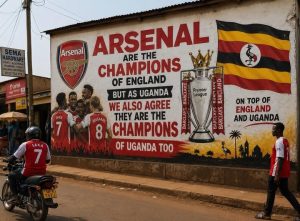
By Denis Jjuuko The European soccer season is finally over after reaching its crescendo the other weekend with the Uefa Champions League final in Budapest. The soccer faithful are now bracing themselves for the FIFA World Cup that is kicked off yesterday in Mexico who will co-host alongside USA and Canada. Here, national teams will compete for the world’s biggest soccer prize. Given the time difference, expect emotions running really high late nights and early mornings. Soccer is the world’s most popular sport with an estimated 4 billion fans globally. Stars of the game like Diego Maradona and Pele (now both deceased) are even worshipped in their respective countries (Argentina and Brazil) and in many parts of the world. Current soccer gods, Lionel Messi of Argentina and Christiano Ronaldo of Portugal have hundreds of millions of followers all over the world. It will be both their last World Cup. Messi won it the last time the tournament was held four years ago. Ronaldo is looking forward to add it on his ever-growing list of achievements. In the regular season, the English Premier League is the most popular one in Uganda and indeed many parts of the world. English clubs particularly Arsenal, Liverpool and Manchester United have millions of followers in Uganda. When Arsenal won the premiership title at the end of the season last month, its fans went hysterical. Church events were organised. Concerts were held. People matched several kilometres in mock trophy parades. Rival fans trolled Arsenal. Arsenal fans shot back. Memes were created. The banter has been in high gear. Some of the people trying to be different after watching huge crowds of Arsenal fans in several African capitals wondered why the people were celebrating a foreign team. They called it colonialism. Some of the loudest voices were journalists including those working for media houses that push for western hegemony. Such people argued that Africans must develop their own games or stop worshiping colonizers. Anyway, the globalization of the media (including social media) and the marketing capabilities of European leagues have made European soccer a must watch for many. It is easier to find a TV showing an English soccer match than a Ugandan one. The money involved also means that the development in terms of infrastructure and talent is many centuries ahead of countries like Uganda. Sometimes, a live match involving humans resembles a computer game in execution. The aesthetics of the English Premier League is hard to ignore. But after watching these huge crowds, one wonders what could be done? How can entrepreneurs in countries like Uganda tap in? There are millions of fans, who are so committed to their clubs and they remain faithful even when the titles are elusive for decades. Looking at the sheer numbers of Arsenal fans in Uganda and Kenya, one could tell that they were wearing counterfeit replica shirts. Indeed, very few fans in East Africa can afford a Pound Sterling 140 (approximately Shs711,000) shirt before even shipment and taxes. And many small shops sell these counterfeits for as little as Shs30,000. What if someone negotiated a deal with these clubs to make replica shirts that are affordable for countries like Uganda? The shirts would probably be Ugandan or African themed to make them a bit different from what they sell in Europe and elsewhere. Most fans would love to buy them because they would know that these are original shirts meant for the continent. The franchise owner would of course work with law enforcement to ensure cheap counterfeits aren’t shipped in. And then for those who can afford the European ones, could order from the franchise owner. Other merchandise items could be also be shipped in using the same concept. Soccer is best watched among peers and fans. At home, to the chagrin of most spouses especially the female ones, it can be boring. Rival fans can also be good to troll as the match goes on—those brave enough to go to a bar where they aren’t in the majority. Imagine an Arsenal, Liverpool or Manchester United themed bar? Fans of the particular club would be sure to catch the game on large screens in a friendly atmosphere. One of the challenges of Ugandan bars that show matches is inconsistence. You sometimes find them flipping channels trying to make everyone happy especially when several matches are being played at the same time. Some fans end up leaving to find a place where their team’s match is being shown. A themed bar will dedicate the club’s matches regardless of the opposition. They would also not be playing loud music when 95% of the people are watching soccer instead of commentary. Menus such as cocktails could be club themed as well. Betting company could sponsor some matches and parties. A loyal clientele could be easily established thereby guaranteeing good returns for the investor. The writer is a communication and visibility consultant. djjuuko@gmail.

Read More »
Out to Lunch

#OutToLunch: Surging bank profitability offers critical lessons for small businesses

By Denis Jjuuko It is that time of the year again when commercial banks publish their financial results in the newspapers as part of fulfilling the regulations that govern them. Most of them have registered year on year increases in profitability, lending, deposits and total assets among other metrics. If you only read the commercial banks’ results and made conclusions on the economy, Uganda’s economy is in such great shape. All the commercial banks combined made more than Shs2.1 trillion in profits according to the figures they released. That translates to nearly US$6 billion. The shareholders must be smiling all the way to their banks. Those who haven’t invested in commercial banks, must be wondering how to get in. The good news is that several of these banks are listed on the stock exchange. A big chunk of the money banks reported to have made came from their loan books. It isn’t entirely surprising since the interest rates they charge are some of the highest in the world. Anyone who charges upwards of 16 percent in annual interest should be able to grow every quarter, half year and annually. But I think the steady growth in commercial banks profitability comes at the expenses of other sectors of the economy. Assets of defaulters on these commercial bank loans were advertised on the opposite pages of many of the results of the banks. One hand gives, another takes, isn’t that what we have always been told? However, there is no need to begrudge banks. They aren’t entirely responsible for the high interest rates in the country. The capital requirements to start a commercial bank are prohibitive and those who recently failed to meet them were downgraded to lower tiers. Also, the government borrows at such high rates giving banks carte blanche to charge similar and even higher rates. Those who borrow and default are also many. Banks tell us, lending to Ugandans is high risk. Probably it is. I believe you know somebody who castigated you for depositing money on their mobile money account on which they had renegaded to pay back. Anyway, what can we learn from the financial performance of the commercial banks? There many lessons especially for businesses. Commercial banks just like other big business that publish their results such as telecoms have one thing in common — repeat long term customers. When you sign up for a loan such as a mortgage, you commit to pay back for such a long period. If you borrow for say 10 years, the bank is nearly assured of making money from you for 120 months. Should you fail, they have a property you gave them as collateral to get their money bank. Some of the costs they incurred to sign a customer were a one off. And if you are a disciplined borrower, they almost incur no other costs to recover their money. Long term customers who pay periodically are a goldmine for any business. Unless otherwise, many people don’t change their bank accounts. So even those who don’t borrow, there is some monthly or usage fees they pay. A bank is therefore assured of income. Telecoms make money the same way. How many times have you changed your telephone line? Many people don’t change their telephone lines. That means that a telecom is assured of making money off you until you die. Repeat long term customer at its best. Even when you die, sometimes the family keeps the line so that there is some continuity especially for those involved in doing business. As small businesses, it may not be easy to have an assured customer for 10 years or a lifetime so there is need for them to work hard to attract repeat customers. It means improving the product all the time and constantly marketing so that customers can return regularly. Commercial banks and telecoms do that all the time because if they don’t, customers can move to other banks and telecoms respectively. There is a need to observe how they market, what they do to retain their customers and try to copy that even when small businesses don’t have unlimited budgets. The writer is a communication and visibility consultant. djjuuko@gmail.

Read More »
Out to Lunch

#OutToLunch: Bank of Uganda’s small business fund good but….

By Denis Jjuuko Small and microbusinesses have always had issues of accessing capital either to grow or stay in business. Commercial lenders charge premiums and demand stuff that these small and microbusinesses can only dream of. In order not to sink, they usually stay off commercial loans preferring to remain small or turn to informal lenders if they really must borrow. Yet small businesses are the foundation on which economies are built. Collectively, they employ the majority of people in most economies. Look at the business near you, it is either small, medium or micro. The woman selling groceries near your home. The young man making street food. Your favourite boutique in the commercial complex near your office or even the eatery from which a young girl delivers food to your desk every lunch hour. It is perhaps under this background that the central bank decided to launch the small business fund (SBF). Of recent, the central bank has been advertising this facility. Under this fund, small businesses can borrow up to Shs500m at a maximum annual interest rate of 10% with a repayment period of up to four years. This sounds great. An annual interest rate of 10% sounds like manna from heaven in a market where the average rate is 20%. This kind of fund is designed to unlock the potential of small business and it is the right pathway for the economy to take. Access to capital by small businesses and individual entrepreneurs is one way through which Uganda can achieve its bold ambitions of being a US$500b economy by 2040. Currently, the country’s economy is around US$50b. Growing it by tenfold as the Ministry of Finance, Planning and Economic Development loves to proclaim nowadays is through strategic support to small and micro businesses among others. When the small businesses grow from a single employee to 10 or 100, that moves many people out of poverty. The Bank of Uganda must be commended for this step, at least for the idea. The challenge, however, with SBF is to find a bank that has this money or even willing to disburse it. The SBF brochure lists all the 21 commercial banks, 8 credit institutions, 2 microfinance deposit taking institutions and another 4 Saccos. When you contact most of these institutions, their staff will most likely feign ignorance or endlessly promise to get back to you which they don’t do. Sometimes, those which claim to have the money start changing goalposts halfway the application process. One of the promises they make is that they can get you the money immediately if you agree to forego the SBF and instead acquire one of their loans tailored for small businesses but at an annual interest rate of 20% or more. If you are desperate, this is most likely the road you will take. Remember, that application processes are not free. You have to pay commercial bank appointed lawyers and surveyors for verification and evaluation of the property or whatever will be acceptable as collateral. Usually, those lawyers and surveyors charge many times above the market rate. And then they have no shame in mentioning a low valuation as the forced sale rate. Sometimes a developed property is given a forced sale rate that is lower than an empty plot of land in the same neighbourhood. It is a fraudulent practice that the central bank must fight if it has good intentions for small and microbusinesses. There are so many other things commercial banks require which all cost money before money is or not even disbursed. I think that way their third-party service providers (lawyers, valuers etc.) get paid and keep in business. Anyway, the real reason commercial banks don’t want to disburse the SBF money to borrowers is a structural issue that the central bank must solve. The Bank of Uganda only provides 50% of the money under SBF with the commercial banks expected to provide the other half. If you borrow Shs100m, the small business fund only provides Shs50m and the commercial bank must provide the other Shs50m. The commercial bank has no interest in lending its 50% of the money at 10% annually when it can lend it at 20% while footing the cost of administration, marketing and recovery. The commercial banks aren’t charity organizations. The central bank should instead provide 100% of the money, allow banks to take 5% of the interest as their fees and remit the other 5% to the central bank. That way banks will be motivated to sell the SBF loans thereby enabling small business to access this credit. Otherwise, the current structure doesn’t solve the problems the central bank envisaged in creating the small business fund. The writer is a communication and visibility consultant. djjuuko@gmail.com

Read More »
Out to Lunch

#OutToLunch Will Uganda’s newly discovered love for international airports grow the economy?

By Denis Jjuuko Uganda has discovered its latest love interest — international airports. We have always had one international airport at Entebbe and some airfields in many parts of the country. But those aren’t the talk of town or dominating online discussion groups and timelines. Construction of an international airport is underway in Kabaale just outside Hoima ostensibly to support the oil and gas sector. New ones have been proposed around Kidepo National Park to support tourism and facilitate regional trade. But the one that has led to more discussions has been the proposed one at Nyakisharara outside Mbarara town. Apparently, it will enable flights to south America to refuel from there on their journeys to Asia and elsewhere. The proposers of the airport claim that this is an existing gap. I am not an aviation expert, so I don’t know why these flights aren’t able to refuel at Entebbe or even existing airports in East Africa. I am also not sure whether it makes sense to build an international airport whose main business is refueling flights from south America. What else caused debate was the release of the artistic impressions of the Nyakisharara airport. Some people claimed the airport looked exactly the same as one somewhere in the Middle East. Some people prompted artificial intelligence apps to make one at least with the famous horns of the Ankole cows incorporated into the design. This newly found love for international airports within a few kilometres of each other have led to the continuation of a debate that never stops — the lack of scheduled domestic flights in Uganda. Up to the 1990s, there were affordable scheduled flights to Kasese, Arua and other parts of the country. Some still exist but they cost an arm and leg, unlike in developed markets in Europe where people fly for a song. There are many reasons that explain the lack of affordable domestic flights in Uganda. The infrastructure is poor enabling only small aircraft to operate at these fields. But that isn’t the biggest problem. The market simply doesn’t exist. Until oil starts flowing from the wells in western Uganda, the country’s economy is largely within a radius of 80km of Kampala. Otherwise, businesses in many parts of the country are small comprised of smallholder farmers and petty traders. The majority of these people have no genuine reason to fly to Kampala and if they have, they wouldn’t afford the tickets even cheap ones that would sustain an airline business. Bus companies have tried to provide executive coaches where people pay an extra Shs10,000 or Shs20,000 to travel in comfort. After a few months or years, they usually close and return to non-executive passengers. The argument the domestic flight enthusiasts give is that the markets for air travel is of those who drive personal cars to these towns. The statistics are hard to find but how many cars arrive in Soroti or Arua from Kampala every single day? There aren’t many. Most of these towns have few hotels but you will hardly arrive in a town and find no room for a night. That is why most people who travel to these towns don’t even bother to book accommodation in advance. They know these towns with fewer than 1,000 hotel rooms will have plenty of free rooms when they arrive. A town which can’t fill less than 1,000 hotel rooms each night probably doesn’t have much business going on. Decent hotel rooms in Uganda cost on average less than Shs100,000 a night including some sort of breakfast. If people can’t fill hotel rooms of Shs100,000, how would they fill aircraft of 50-200 seats on a regular basis for the airline to make money? Look at Members of Parliament, one of the biggest categories of high earners in Uganda. Many of those who represent constituencies outside Kampala come for their weekly meetings by night bus. They can’t afford to drive on a weekly basis. Where scheduled flights exist like Kasese, they don’t use them as well. If a high earning category in Uganda can’t afford to drive every week to Kampala, what about small trader in Kasese or Arua? Although we can improve the airfields to facilitate air travel, international airports in every corner of the country won’t lead to improved incomes for the majority of Ugandans. However, if we want tourists to avoid grueling road trips to Kisoro or Kidepo, smaller airports could do, which could be expanded with increases in traffic. Though investments in agribusinesses and small-scale industries could lead to improved incomes easily for the majority of people who then could be targeted for flying. As per now, international airports could end up as vanity projects. The writer is a communication and visibility consultant. djjuuko@gmail.com

Read More »
Out to Lunch

#OutToLunch: Ugandan musicians should think beyond miming at kwanjula and weddings

By Denis Jjuuko Musicians in Uganda have been in celebratory mood after the country’s parliament passed the the Copyright and Neighbouring Rights (Amendment) Bill, 2025. They argue that once the bill is assented to by the president as expected, they will earn lots more money than they are doing today. That they will be rewarded for their efforts. Ugandan music has come from a long way. In the 1990s, very few Ugandans considered music as their professional career. There were professional music groups that still exist such as Afrigo and some other bands/musicians, but many didn’t earn that much. If the amended bill is to make them earn more, that is even better. The bill seems to be very important to Uganda’s music industry as there seem to be a resurgence of the foreign content like it was in the 1990s. Congolese musicians ruled the airwaves and the stages at Gaba Beach, Nakivubo Stadium and the beaches of Entebbe. Singers like Jose Chameleone, Bebe Cool and Bobi Wine broke that dominance and Ugandan musicians started filling stadiums on their own. Congolese musicians stopped owning the concert stages in Kampala. The Kingdom of Buganda had in 1996 launched the popular CBS radio which further played local music on the airwaves and organised Ekitobeero music festivals that among which provided the platform for Ugandan music to thrive. Music entrepreneurs like Hope Mukasa at his Sabrinas Pub provided another platform, karaoke, that saw many wannabe musicians practice their craft. Sabrinas would lead to the emergence of the famous I-Jay duo of Irene Namubiru and Juliana Kanyamoozi. Ugandan music was on cloud nine. Musicians stopped singing for beer and now were being paid professional fees. Kasiwukira and company would buy the records, make cassettes and sell. Telecoms, looking for ways to reach the masses signed them up. Nightclubs held musicians like the celebrities they were becoming. Video mixing became the norm in nightclubs and every little bar. You could actually spend a whole night in a bar with only Ugandan music being played. Many young people dreamed of becoming musicians. Many lived the dream. Today, the industry is pivoting a bit. Foreign shows are back in Uganda including of Congolese like Awilo Longomba, Ya Levis and Fally Ipupa. Kofi Olomidde turns up once in a while including at a recent Afrigo 50th anniversary. Nigerian music is dominating the airwaves. There is perhaps no bar or nightclub today that only plays Ugandan music for the entire night. The changes in the industry may perhaps explain the gusto with which some of the most known Ugandan musicians invested in the amended copyright bill. They see it as a saviour even though royalties have been corrected on their behalf by organisations like the Uganda Performance Rights Society for years. As the musicians were celebrating the passing of the amended bill in parliament, their counterparts in Nigeria were being ranked as the top earners in Africa on music streaming platform Spotify. It was revealed, that Nigerian musicians earned more than US$43m in 2025 from Spotify by pulling in a combined 30.3billion streams, which is about 1.6 billion hours of listening time. Nigerian music has been globally embraced featuring in more than 320 million user-generated playlists according to reports. Barack Obama, the former US President, releases his annual playlist around December every year. For years now, a Nigerian musician appears on his list, which he posts on his X account of nearly 120 million followers. The Nigerians are developing music that cuts across borders and appeals to worldwide audiences. You have seen them perform at even the World Cup and being regularly nominated in Grammys among other international awards. In Uganda, some of the leading musicians instead of thinking global, they concentrate on Gulu city, where they book rooms for weeks doing whatever they can so that they can meet Gen Salim Saleh. He has publicly rebuked them before to their embarrassment. But do they listen? They see politics as the only means to scale. Those who become famous because of their ability to dance and sing forget about what made them famous once they make it. They appear at shows to mime, walk about the stage while spending some considerable time talking about their imaginary haters or reminding others how beautiful they are. Less time is devoted to practicing before performing. Tshaka Mayanja, a legendary music promoter and musician has always talked about this. The audience in Uganda is small and the economy is even smaller yet music transcends borders. Ugandan musicians should therefore think beyond miming at kwanjula and weddings and create music that has a global appeal so that they can earn from a global audience. Cozying up to politicians won’t sustainably make them earn better even when copyright bills as assented to. The writer is a communication and visibility consultant. djjuuko@gmail.com

Read More »
Out to Lunch

#OutToLunch: Ugandan businesses embracing the region signals good things to come

By Denis Jjuuko For many years, Ugandan businesses relied on many things Kenyan. Employees in the hospitality industry, advertising, creative, transport, logistics and even banking among others. Of course, Kenya is a bigger economy which has also not been largely disrupted by war. They had expertise that we lacked. So, it must have been easier for them to set up here or sending their goods to Kampala. Of course, there were Ugandans doing lots of stuff in Nairobi. In the 1970s and 1980s, many Ugandan experts were exiled in Kenya working as medical doctors, lawyers, teachers, businessmen, and political ‘external wingers’ among other jobs. Singers Jose Chameleon and Bebe Cool got their breakthroughs after recording in Nairobi studios. Later, Ugandan radio presenters made Nairobi home. Private radio had developed faster in Uganda after the liberalization of the airwaves in 1993 than in Kenya. However, if you needed technical expertise on many things, Kenya seemed to be the ideal destination. Ugandan entrepreneurs like James Mugoya and Bulaimu Muwanga Kibirige (BMK) had set up businesses there in the construction and automotive sectors among others. But still, there was an imbalance. Kenyan businesses set up more in Uganda than Ugandan businesses did in Kenya or elsewhere. That trend seems to be changing. First, many Ugandan big businesses like banks were run by Kenyans and other foreigners. There was a time a few years ago when almost all the banks in Ugandan had foreign CEOs. Today, the majority of banks are run by Ugandans. And some Ugandan executives are now running big businesses in Kenya, like Bamburi Cement. Second, in recent years, we saw Omar Mandela set up his popular Café Javas in Nairobi. It became an instant hit with the hippy Nairobians looking for a place that is well known for its customer care and great food. Kenyan managers had been running the hospitality industry in Uganda and now, a Ugandan businessman was taking the game to their capital. Café Javas today has more outlets in Nairobi than Kampala and Entebbe combined. Perhaps, other Ugandans are learning from Mandela. Since last year, we have had at least three Ugandan businesses in the entertainment and marketing world set up in Nairobi. Fenon, Swangz Avenue and Talent Africa Group all now have offices in Kenya. Previously, the entertainment and marketing businesses relied somewhat on Kenyan experts and even equipment to pull off events and marketing campaigns. Ugandan businesses are now playing on their grass. In tourism, we are also seeing Amos Wekesa’s Great Lakes Safaris operating a hotel in Tanzania. A few years ago, we saw Centenary Bank starting operations in Malawi. Many other Ugandans are also doing business in southern Africa. The BMK Group has operations in Zambia and many others have taken the same route. Rwanda, South Sudan, Burundi and the Democratic Republic of Congo are some of the other markets where Ugandan businesses are operating. It is remarkable that Ugandan businesses are growing and expanding in the region. Previously, we looked on haplessly as largely Kenyan businesses took over markets even after the Ugandan army had pacified some of those countries. South Sudan comes to mind. Ugandans for example in South Sudan operated the smallest of businesses — curio shops, barber kiosks and roadside restaurants. Kenyans operated banks and other big stuff thereby gaining more from regional trade. Uganda’s economy is largely concentrated within a radius of 80km of Kampala. That limits growth for some of the businesses yet economies like Kenya are way bigger than ours. The East African Community has a population of nearly 350 million people with a nominal GDP of about US$350 billion making it a market that we can’t simply ignore. Uganda has been pushing for exports into these regions while facing many barriers including infrastructural ones in countries like the DRC. And if we only export there after even constructing their roads, we miss out on some opportunities that are extended to registered businesses in those markets. However, we shouldn’t be limited to only the region. With geopolitical pressures across the globe, there is even more need to expand to take on sectors that may not be well catered of as global players concentrate on their main markets or scale down in others. Businesses which may not be ready to go it alone should look for companies they could merge with or acquire to get a footprint in those particular markets easily. The writer is a communication and visibility consultant.

Read More »
Out to Lunch

#OutToLunch: Had Iran been Uganda, what would we have done?

By Denis Jjuuko When the planners of the war on Iran sat to make the final decision, they perhaps envisaged a quick win. Fly in, kill the leader and a few others and the country would collapse. Your chosen leaders would then take over and pledge allegiance, after all you are the world’s super power. Oil would flow to wherever you want it. As the leader of America, Donald Trump would be expected to stand somewhere in the White House and announce how the greatest military on Earth has performed. The new leaders in Tehran would repost his every post. A red carpet would soon be rolled out at the White House where the new leaders in Tehran commit to pay allegiance to the Americans and their Israeli backers. Washington would announce the end of sanctions and beckon American companies to take on the reconstruction of Iran. A date for a return visit to Tehran would be announced. Donald Trump would step on the improvised steps of Air Force One and utter the word ‘freedom’ while clenching his fist. At a speech in Tehran where school kids are waving paper flags of Iran and USA, he would warn others of what will come if they don’t fall in line. Fox News would declare him the greatest leader America has ever had. Trump would demand the Nobel Prize committee to award him. He has saved the world of potential nuclear weapons. Hollywood writers would scramble for pieces of paper to script a blockbuster. However, Iran seems to have had different ideas. The writers must now be writing but not the grand movie. American contractors are waiting, unsure when their reconstruction deals will be inked. Trump posts one thing after another, perhaps once in a while, remembering the famous quote from Sun Tzu’s the Art of War: the best way to win a war is not to fight. Iran defied the odds. Two military powers have dropped thousands of bombs on its facilities and leaders but it has been able to somewhat fight back and even forced ceasefire talks in Islamabad, Pakistan even if they ended without any deal. When you think of Iran, you always want to think of Africa or at least one country in Africa since the continent is not homogenous. Is there one that can stand up to the world powers? Perhaps none. Our natural resources are not used strategically. In fact, they have been a source of endless wars. Look at the Democratic Republic of Congo for example. I consider them the richest country on earth but they can’t even complete their Inga Dam or construct bitumen standard roads. Uganda, a potholed nation, is helping them in the eastern parts of the country. Nigeria had to wait for a private person to build a mega oil refinery. They preferred to export crude and import the refined products. If an individual businessman can mobilize resources and build a refinery, what about a country? And you can say that about all oil producing countries on the continent. We have conditioned ourselves to export raw materials and import everything. The Iranians didn’t wait to import everything. They made their Shahed drones, they developed their missiles program and created a system that wasn’t depending on a single strongman whose assassination would lead everything to crumble. They built universities and given that they are forcing Americans to sit on a negotiation table, it means they didn’t fill their key positions based on blood relationships or who could praise their leaders loudest. They also understood leverage. Their location provided them with the Strait of Hormuz through which 20 percent of the world oil passes. They understood that 20% of the world’s oil can’t be ignored. They understood that their location gives them an opportunity to fight back or take the war to the enablers of their adversaries. They didn’t spend half their time blaming the Americans for the economic sanctions imposed on them. They found a way to prepare themselves for a war that they knew that one day would come. Had the Iranians been some of the African leaders, they would be blaming colonialists while sending their kids to western universities and keeping whatever money they land on in Swiss banks. Research and development would mean nothing. The most energetic labour force would be carted off to find jobs as domestic workers while being urged to save and come back and be job creators. Had we been Iran, how would we be strategically using River Nile, Lake Victoria, the near perfect weather we sing about and all the resources we have? The writer is a communication and visibility consultant. djjuuko@gmaio.com

Read More »
Out to Lunch

#OutToLunch: Municipal bonds could help resettle kiosk businesses removed from road reserves

By Denis Jjuuko A few weeks ago, the internet in Uganda went gaga with a photo of a woman raising her hand, while another holding a toddler who was busy breastfeeding. The woman was in distress as her kiosk was being loaded on a truck with Kenyan motor registration license plates. People said it was photo of the year. To be honest, it is a very powerful image and lives to the axiom that a picture says a thousand words. Some people offered to help the woman. Others said a lot of stuff about the ongoing countrywide campaign to remove informal structures from road reserves and elsewhere. The photographer was the “most wanted person.” It turned out the image was made through prompting artificial intelligence applications. What AI won’t do!! Anyway, Uganda is one of those countries where everyone is either a business owner or trying to start one or has ever started one. We are labelled, by some international organisations, the most entrepreneurial country in the world. But most of our businesses are small, micro small or something lower. A kiosk here, a stall there, a bench where you can polish and shine shoes or simply sit and wait for customers and sell them something that you pick from a shop that you pretend to own. It is called kuyiriba in Kampala speak. With the coming of age of the internet, kuyiriba is also very much alive online. However, kiosks and stalls on streets, road reserves and everywhere you turn, although a big source of employment in the informal sector, are also an eyesore. They create a slummy and unsafe environment for both the people who own them and their customers. The government decided that it had seen enough and instructed their removal (though that order has since been halted). Imagine you are driving on a highway that connects Uganda to Kenya, and perhaps the busiest in the country given our reliance on the Kenyan port of Mombasa, and all of sudden you see hundreds of stalls selling waragi between Kakira and Magamaga where largely taxis and trucks stop, “recharge” and continue to wherever. What message would visitors to Uganda through that route be thinking? Drink driving makes our roads unsafe. What about those visitors who were using the old Kampala-Entebbe Road? They give an impression of a very poor economy. Most of the remaining shops won’t do us any justice either. Impression is sometimes everything. In the meantime, I hope they can ask the property owners to at least pave their front yards and apply some fresh coats of water-resistant paint. The aging roofs could be replaced too. Those who can’t improve these properties could be asked to sell them to those who can. Alternatively, government can acquire them through fair compensations, similar way they do with the right of way while constructing roads. The government would then make a masterplan of the area complete with architectural plans and invite those with money to buy the land from the government and invest. The new investors would not be allowed to change the plan to whatever they want. The government would get the money by issuing municipal or infrastructure bonds. Saccos and investment clubs, individuals and others players would oversubscribe. And then they would find the money to buy the masterplans and do the investments in record time. Tax incentives could be provided. The masterplan would include acquisition of large areas where markets would be established so the kiosk and stall owners would be shifted there. Flea and mobile markets would also operate in such areas instead of doing so in road reserves. Taxi and bus stop areas would be identified and even future train stations. Cycling lanes in some areas as well. Kampala and many upcoming urban areas don’t have open areas. This way, some areas would be dedicated to that among other amenities that make cities livable. Ugandans would have to accept that they can’t get whatever they want around the corner. Every little corner can’t be boda stage or taxi park or a temporary eatery every 7.00pm. People would have to learn to walk or even drive a bit for what they need such as boarding a taxi or getting some groceries. Every little front yard can’t be a kiosk or boutique of used dresses. The global cities we admire are designed that way. We have the tools to do that. The writer is a communication and visibility consultant. djjuuko@gmail.com

Read More »
Out to Lunch

#OutToLunch: UEDCL review should include self-funded connections

By Denis Jjuuko The cost of land in greater Kampala and indeed other urban areas of Uganda skyrockets all the time making it hard for the majority of people to become homeowners. This increases the country’s housing deficit annually. Currently, the housing deficit stands at approximately 2.4 million units. One of the major reasons for the high cost of land is lack of utilities or actually their availability. If an area gets connected to the national electricity grid and water mains, the prices of land shoot up. If a road is built, the prices triple or even quadruple. The land owners know that availability of utilities like electricity and water is an attraction because where they are not available, the costs to get them can be huge. For example, a new connection may cost you less than Shs100,000 where you don’t need a pole and willing to wait for the government subsidized one or more than Shs500,000 for a self-funded connection. Should there be no pole near you, the costs become excessive as they run into millions of shillings. A single-pole connection costs in excess of Shs2.8m. Should you need more than one pole, the costs become limiting and you have to look for a private company to build that line for you. There is no guidance on how much that costs. Each company charges as they wish. When it comes to a factory or business that needs three-phase electricity and a transformer, the costs could be humongous. The alternative land in areas where electricity is available like the industrial parks is not affordable for small businesses leaving them without any options but to incur high startup costs. Water isn’t any different. If there are no major water pipes near you, you suffer the same fate by installing them at your cost. I think it is these costs that enraged the outgoing Mawokota South Member of Parliament Yusuf Nsibambi to cut down the poles he had installed when the voters rejected them in the January 2026 polls. He claimed on live television that there was no return on investment after getting the fewest of votes from areas where he had installed electricity and sunk boreholes using personal resources. He has since crossed from the opposition FDC to the ruling NRM. Nsibambi may have been lucky not to be arrested for cutting down ‘his’ electric poles and vandalizing the power lines. This is because once you install them, the government agency, UEDCL and Umeme before them, maps them and registers them as their own assets. They include them in their inventory. When electricity and water utilities are publishing their achievements and investments on glossy paper, they include the kilometres of electricity lines, transformers and water mains installed. What they don’t tell you is that some of those aren’t built by them and therefore shouldn’t claim them. If I build my own electricity line or install water or a transformer, why should the government utility claim them? Just because they sent a guy or two on a motorcycle with a GPS machine and wrote down the coordinates? The cost of taking down GPS coordinates is insignificant compared to the cost of building the line, buying the transformer and all the stuff. Now, over the weekend the Minister of Energy and Mineral Development terminated the services of the board chair of UEDCL and sent the managing director on forced leave. The newly appointed acting board chair was swift in naming an acting managing director. Everyone hopes that services will improve. One of the issues should be reviewing new connections especially where there is no pole or transformer. The minister and the regulator need to instruct UEDCL not to demand payment from people who buy a pole, build a line or install transformers until their investment is covered. The surveyors they send to establish that a pole, three-phase or transformer is required can put it in their report and come up with workable cost. When the person goes ahead and funds this connection, then they can credit the customer’s account with the money spent. Every month, they can deduct what the customer has consumed until the credited amount is used up. Thereafter, the customer can start paying for the service. That way, the utility company has not ‘stolen’ a private line or transformer and passed it as their own. The homeowner or business would have their money back and that would lead to lower costs of land and/or doing business. The writer is a communication and visibility consultant. djjuuko@yahoo.com

Read More »
Out to Lunch

OutToLunch: African Union could help national airlines struggling to fly

OutToLunch: African Union could help national airlines struggling to fly By Denis Jjuuko Sometime back, the Uganda Civil Aviation Authority decided to mark an anniversary by organizing a flying activity. What one needed to do was to arrive at Entebbe airport with Shs50,000. They would then put them on a flight and fly them around Uganda. The queue stretched many miles. The guys at CBS FM also did something similar during one of their Nkuuka y’Omwaka (end of year) events. Pay some little money and they fly you around Kampala. Thousands of people lined up for this once in a lifetime opportunity. If you watch TikTok regularly, you will see many people posting their trips claiming that they “catch flights, not feelings” and all sorts of things. If there is anything many people in Africa love, it is flying even if it is flying to nowhere. Many people on the continent consider flying an element of success. I think it is linked to widespread poverty. In many countries, domestic flights are rare as there is hardly any infrastructure. Where it exists, air tickets are expensive, thereby eliminating many people from boarding flights from one town to another. Those who manage to fly are considered the lucky ones. That probably explains why many family members escort their relatives to the airport in droves. Minibuses full of people descend at airports, drumming and dancing as the traveler busks in glory. They have finally made it. Upon return, some even hold parties. Parents pray for their children to also get an opportunity to fly. If you eavesdrop at Entebbe before departure, you may hear of somebody calling a relative or friend to engage them in prayer so that they also find some luck one day to fly and I am not making this up. It is that serious. Flying to many isn’t just a means of travel. It is status. It is arrival on the big stage. It is success. That same mindset many times explains the desire by countries to set up airlines. Every country on the continent wants to set up a flag carrier. The reasons given are many. National pride is usually among the top five. Airport or aviation authorities also with the same mindset slap huge taxes on each ticket. Airport ground handling is one of the most lucrative businesses in Africa even when the number of passengers going through these airports is minimal. Passengers who have longed to fly expect five-star experiences even when they don’t want to pay for them — champagne to flow endlessly, great food, free internet, movies and the like. To keep these few passengers happy, airlines end up charging a premium, thereby eliminating many people who would have been able to fly. It then becomes difficult to make money from a very small base of regular passengers. Yet, we many times complain about the exorbitant air ticket rates forgetting that everything we consume on board comes at a price. The equipment is expensive to buy, operate and maintain. Also, the majority of Africans have no reason to travel much. Their incomes are meagre and majority are subsistence farmers without any real need to fly anywhere. Without improved incomes, African airlines will continue to struggle. Also, because poor countries love owning national flag carriers without putting in enough resources, the airlines will continue to struggle to compete with middle eastern carriers. How on earth is a national airline with global or even continental ambitions but operating just 4-6 planes going to compete with Emirates, Qatar or even Air Arabia? It is always going to be frustrations for passengers who in the era of social media who are going to create one communication crisis after another. Brand reputation tanks. The few passengers end up preferring to pay a premium to fly the reliable carriers from Middle East, Europe or even Ethiopia. The national airline ends up in the cemetery. Flying within Africa could provide a lifeline for African national carriers but many countries demand visas from each African while allowing Europeans and North Americans to fly in without them. If people need expensive visas that are also difficult to access, it then becomes very difficult to create a critical mass of travelers within the continent. Look at Europe for example, it is almost borderless. People just wake up and travel without worrying about access. Although it is a very rich continent, being borderless is one of the reasons many people fly in Europe and air tickets are very cheap. The African Union need not be an organization that issues communiques only rather one that facilitates movement and trade across the continent by removing barriers that keep us under developed. The writer is a communication and visibility consultant. djjuuko@gmail.com

Read More »
Out to Lunch

#OutToLunch: Some of the big bets for 2026

By Denis Jjuuko It was just the other day when many people were making resolutions for 2025. Days turned into weeks, months and now a whole year. You blink, and it is a new year. I hope that you managed to achieve those targets you set for 2025. If you didn’t, well, you can still list them for 2026 and work on the issues that made you fail to achieve them. Well, there are so many things that are happening in 2026. An election is upon us and it comes fast—starting on 15 January. I hope that your candidate wins and most importantly that they do what they are promising to do. In the meantime, I thought of a few things that could be important in 2026. They could be business ideas or stuff that may make your life better one day. Generators, power back up As I was writing this, a close friend called me and she sounded desperate. Her electricity had failed and she was worried about spending yet another night in darkness. She had bought an inverter but because of a prolonged power shutdown in her residence area, her batteries were drained. She fears darkness. So, she thought I could be a plug for a standby generator for a night. We made frantic phone calls but many people with generators for hire had closed for the night. Anyway, it reminded me of a visit I made a few months ago to a friend’s home. I found people installing a generator. My friend had rightly predicted that the transition from one electricity distributor to another wouldn’t be that smooth and had envisaged the return to darkness. I had thought that he was panicking. He wasn’t. The new distributor has told us that electricity will stabilize in a few years. So, in 2026, either get a standby generator for your home or business or start dealing in them. Water harvesting When electricity fails, the guys at Katosi and Gaba inform us that they can’t pump water from Lake Victoria. This means that the taps soon run dry. When we were younger, we used to ask ourselves a silly question. What would should we rather have? Running water or electricity? We thought we had left those days more than 20 years ago. And it seems the question wasn’t even silly after all. So, what would you rather have in 2026? Water or electricity? Well, in 2026, either get a water tank for rain harvesting or start dealing in them. Car parts The smart guys at the Ministry of Works and Transport have declared a mandatory vehicle inspection at your cost. Not a bad thing if it would make our roads safer. But if you live in some of these parts of Kampala, most likely your car won’t pass the test. If it does, it will not be in a good shape a few days later. Some of the roads in Kampala have the biggest potholes ever seen in the world. If you drive a car that was once owned by somebody in Asia or Europe or north America and got rid of it by selling it to you, be prepared for a new suspension every few weeks. You may also have to budget for a bumper in 2026. If you live in a neighborhood with a paved road and potholes aren’t your problems, well, still budget for some body parts. However much you rivet your car, guys will still pluck off stuff in traffic jam or they will scale your fence and “undress” your car. So, in 2026, plan for car spare parts or start dealing in them. Coffee and gold Coffee and gold are most likely going to continue being top forex earners for Uganda in 2026. You may have to look for ways to get involved. Gold, though, has expensive school fees, so invest with care. Coffee, some call it the green gold, is a bit easy. Entry fees are not so exorbitant and many people have knowledge of how to grow it, trade it or drink it. If growing it is where you want to start, think of some bit of irrigation. Changes in the climate are real but also water in Uganda is easily available in many parts where coffee is grown. A few feet underground, and there is reliable water all year long. In 2026, find a way to deal in coffee, remember “it doesn’t lie” or even gold if you have the school fees. The writer is a communication and visibility consultant. djjuuko@gmail.com

Read More »