
#OutToLunch: Why you may consider investing in Rotary

By Denis Jjuuko

About 15 years or so ago, a friend asked me whether I could help them do some voluntary work. There was somebody visiting Uganda and there could use some of my skills. I was invited for a meeting over lunch at the Grand Imperial Hotel in Kampala.

The meeting turned out to be a lecture of sorts where a speaker on a lectern makes a presentation followed by questions and answers from the plenary. A high table of sorts existed where somebody had a bell and wearing a chain pinned with golden miniature plaques.

Many of the people at the lunch hour event wore suits and all the kind of clothing that is considered acceptable in corporate offices. I could recognize a few public faces — captains of their respective industries.

As is usually the case, I had arrived before my scheduled time for the meeting. So, I was asked to sit in and listen. Somebody gave an update of the visit of the big man. People said it was a big moment for Uganda and they were to leave no stone unturned. My friend claimed that is why he needed me to volunteer my skills to make the visit a success.

After an hour or so, the “lecture” ended and was officially closed by the man wearing a chain at the top of the table after going through some sort of rituals. I am not a big fan of formal events so I wasn’t very impressed with all the formalities. I think people were also wondering why I was there. I was one of the few people not in a pin-stripe suit or silk necktie with a Windsor knot.

Anyway, after the formalities, we sat down by the poolside with my friend and few people who had been in the meeting and ordered for some lunch. I was to support the visit of the Rotary International President to Uganda. So, I had just attended a Rotary meeting (sometimes called a fellowship in Uganda).

I had heard about Rotary before but I had never been this close. I had been told it is a club of extremely wealthy people who spend all their time spending money. I had wanted to join and see if a few doors could open but nobody maybe thought I was worthy. Also, I didn’t have money to spend.

In 2011, a friend who I had told that I wanted to join Rotary informed me that a club was being set up in Naalya and since I lived in Najjeera, I should consider joining. He was joining too. He said it was easier to join a new club being formed than joining an established one like that I had interacted with at the Grand Imperial Hotel. I accepted his invitation and some ajoling and became a member. I found out you don’t have to be wealthy to become a member.

But like many such organizations where membership is by invitation, sometimes Rotary is misunderstood and a few salacious tweets are usually posted by people who don’t care much to analyze society. Through Rotary, a membership organization of nearly 1.5 million people globally, professionals, business executives and students use their resources to change their societies or those in other parts of the world they will never even meet.

They are almost single handedly responsible for the near eradication of polio; through immunization campaigns they carry out all over the world. Rotary focuses on a few areas such as maternal and child health, education and literacy, water and sanitation, peace and conflict prevention, and economic and community empowerment among others.

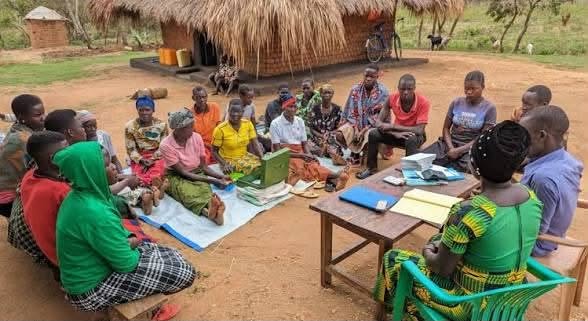
In Uganda, Rotary is known in almost every community. If they are not building classrooms, sinking boreholes, refurbishing health facilities, planting trees, or immunizing kids, they are mobilizing resources to set up a cancer treatment center in Nsambya and a blood bank in Mengo. Rotarians like calling themselves people of action and any keen observer would see the good they do in the world.

But they don’t just help others. Members become leaders which enables them to build and improve their leadership skills. Every week day in Uganda, many people meet through their clubs to listen to speakers others may have to pay for while establishing networks for life.

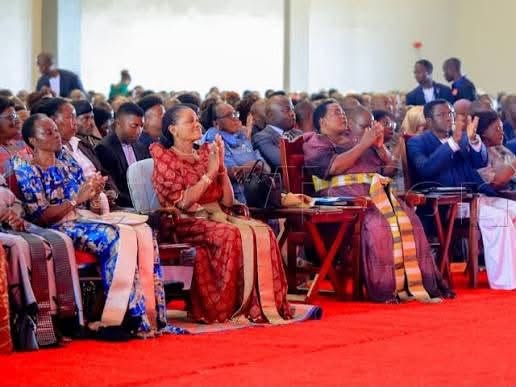
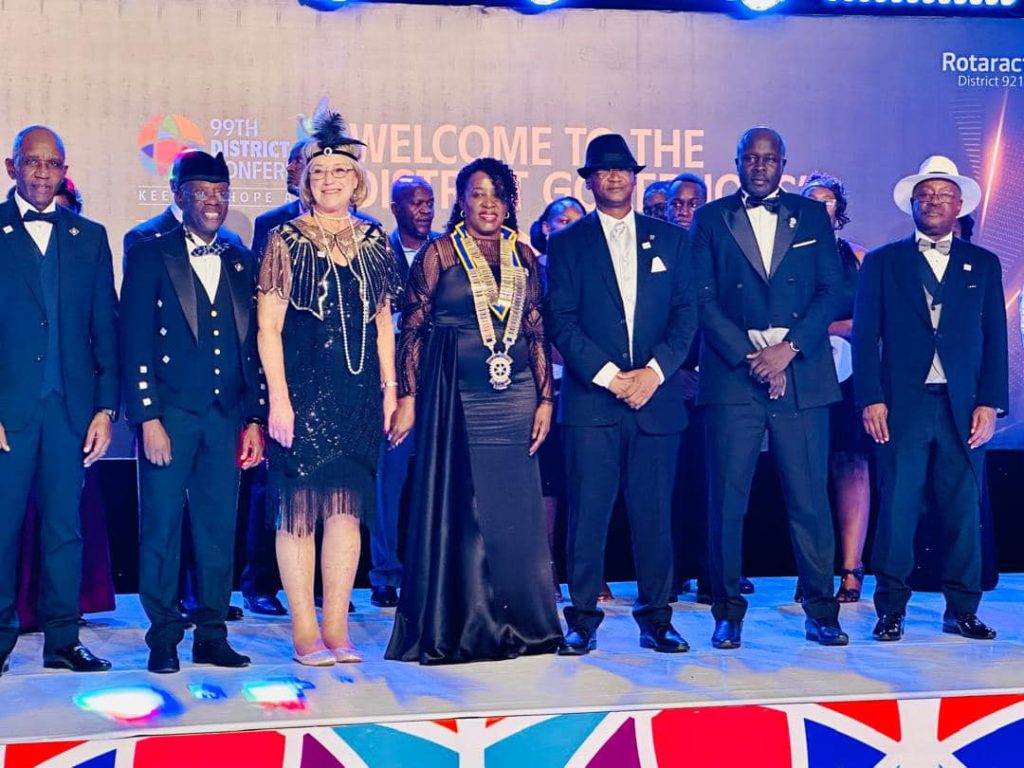
Of course, sometimes they meet and celebrate like last week when a new district governor, Anne Nkutu, was installed. Katikkiro Charles Peter Mayiga was there to talk about keeping hope alive and how the Kingdom of Buganda and Rotary work together to make lives better.
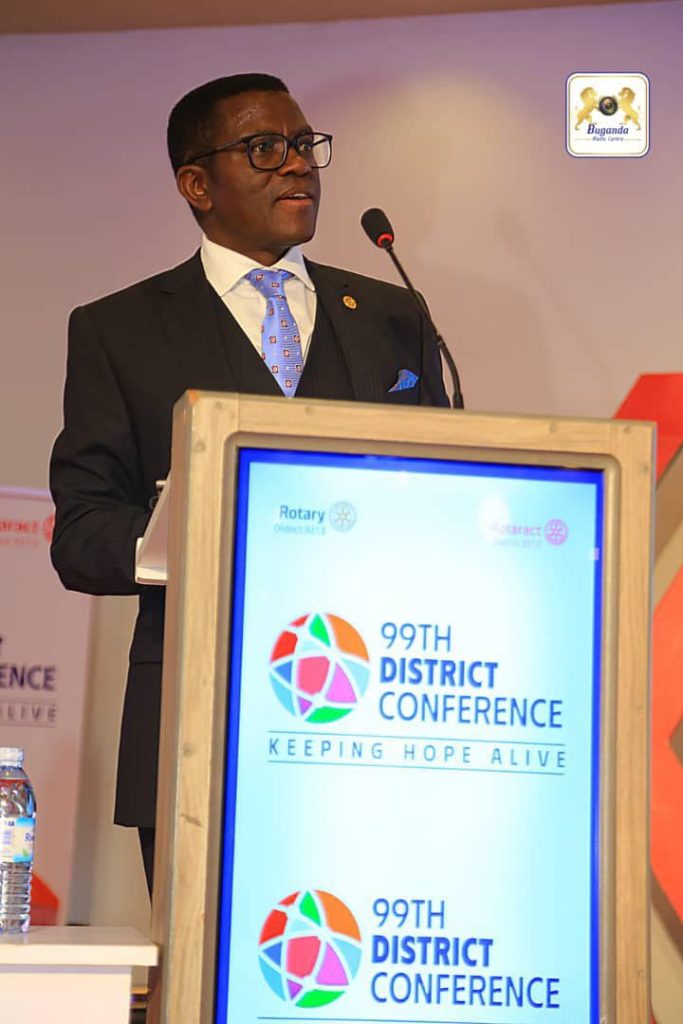
But even at celebrations, the business part of Rotary is always the big thing. And if you want to increase your networking opportunities while honing your leadership skills and at the same time helping others in our communities, you may consider an ‘investment’ in being a Rotary member.
The writer is a communication and visibility consultant. djjuuko@gmail.com
Related

Out to Lunch

#OutToLunch: Africans will continue seeking western citizenships unless governments act

By Denis Jjuuko Many years ago, I decided to go out of the country for my graduate education which lasted about 18 months after which I came back to Uganda. Upon my return, I found myself, like most young people, unemployed. I went to visit a family friend whose children live and work outside Uganda. When I was leaving her home, she told me what I heard many people had said about me but not to my face. Why did I come back? I should have found a way never to return to Uganda to be unemployed. Many people will say oli musiru or you are naïve if you had a chance to run away from Uganda and didn’t take it. It isn’t just in Uganda but in many parts of Africa. That is why athletes participating in international sporting events are known to “disappear” into thin air instead of returning once the tournament is over. They rather become illegal immigrants doing odd jobs (kyeyo) than returning to the dusty streets of African capitals. Many students at graduate schools never return to the continent. Some become career students as they look for opportunities to remain in those countries. West Africans rather die trying to walk the breadth of the Sahara Desert and then jump onto ricket risky boats to cross into Europe than remaining at home riding boda bodas. The few times I visit Entebbe airport, the biggest number of departing passengers I see are young women dressed in abayas and hijabs walking in a choreographed pattern on their way to the Arabian desert to do domestic work. They are happy to finally land a job. If you engage many of those returning to Uganda, their ultimate dream is to find a way to Europe, America or Canada. People of means have been known to fly their pregnant wives to give birth in America or other developed countries where citizenship is guaranteed upon birth, which the current US president wants to ban. He also wants to create a system where people who have the money can buy the US citizenship or permanent residency. If he did that, many wealthy Africans would pay for it. Already, people in Uganda pay hefty sums to conmen promising them US visas and green cards. One time, a visa officer at one of the embassies of the western powers said that many applications arrived with fetishes. That is when paper applications were still the norm. Once some people got the forms, they took them to their traditional healers for blessings. That is how desperate many people are for western visas and permits. Given what people do to get the visas, if the world’s biggest plane arrived at Entebbe airport and said they are taking the first 850 people to arrive to Europe or north America for free and they would be granted citizenship, you would be shocked by who would line up. There would be chaos as the big people try to jump the queue or have their spouses, children or grandchildren be the ones to go. That is why there was pandemonium when parliament didn’t approve some people appointed to ministerial positions due to their possessions of dual citizenships. Many promised to renounce the citizenships of other countries while another turned to theatrics. I highly doubt many people would renounce their western citizenships to serve as cabinet ministers beyond sending an email to some officers somewhere. Many ministers and government officials are the ones who largely send their wives and daughters to give birth in America. They encourage their children who they send to the west to study to remain there until they have processed the paperwork that may lead to citizenship or permanent residency. Publicly, they may renounce the western citizenships and even hire social media influencers to make their case but deep down, they prefer western passports. That is why they acquired them in the first place. They know the benefits of western citizenships. African economies celebrate remittances from their people in the diaspora with fanfare and many are happy to create policies that send their youths to the gulf states to work even though they sometimes publicly denounce those who seek to go and work there. Western citizenships are largely sought after by Africans for economic reasons. What about creating opportunities and an environment here on the continent? If we did, there wouldn’t be many people doing whatever it takes to become western citizens in the first place. The writer is a communication and visibility consultant. djjuuko@gmail.com

Read More »
Out to Lunch

#OutToLunch: English soccer fanaticism provides opportunities for business

By Denis Jjuuko The European soccer season is finally over after reaching its crescendo the other weekend with the Uefa Champions League final in Budapest. The soccer faithful are now bracing themselves for the FIFA World Cup that is kicked off yesterday in Mexico who will co-host alongside USA and Canada. Here, national teams will compete for the world’s biggest soccer prize. Given the time difference, expect emotions running really high late nights and early mornings. Soccer is the world’s most popular sport with an estimated 4 billion fans globally. Stars of the game like Diego Maradona and Pele (now both deceased) are even worshipped in their respective countries (Argentina and Brazil) and in many parts of the world. Current soccer gods, Lionel Messi of Argentina and Christiano Ronaldo of Portugal have hundreds of millions of followers all over the world. It will be both their last World Cup. Messi won it the last time the tournament was held four years ago. Ronaldo is looking forward to add it on his ever-growing list of achievements. In the regular season, the English Premier League is the most popular one in Uganda and indeed many parts of the world. English clubs particularly Arsenal, Liverpool and Manchester United have millions of followers in Uganda. When Arsenal won the premiership title at the end of the season last month, its fans went hysterical. Church events were organised. Concerts were held. People matched several kilometres in mock trophy parades. Rival fans trolled Arsenal. Arsenal fans shot back. Memes were created. The banter has been in high gear. Some of the people trying to be different after watching huge crowds of Arsenal fans in several African capitals wondered why the people were celebrating a foreign team. They called it colonialism. Some of the loudest voices were journalists including those working for media houses that push for western hegemony. Such people argued that Africans must develop their own games or stop worshiping colonizers. Anyway, the globalization of the media (including social media) and the marketing capabilities of European leagues have made European soccer a must watch for many. It is easier to find a TV showing an English soccer match than a Ugandan one. The money involved also means that the development in terms of infrastructure and talent is many centuries ahead of countries like Uganda. Sometimes, a live match involving humans resembles a computer game in execution. The aesthetics of the English Premier League is hard to ignore. But after watching these huge crowds, one wonders what could be done? How can entrepreneurs in countries like Uganda tap in? There are millions of fans, who are so committed to their clubs and they remain faithful even when the titles are elusive for decades. Looking at the sheer numbers of Arsenal fans in Uganda and Kenya, one could tell that they were wearing counterfeit replica shirts. Indeed, very few fans in East Africa can afford a Pound Sterling 140 (approximately Shs711,000) shirt before even shipment and taxes. And many small shops sell these counterfeits for as little as Shs30,000. What if someone negotiated a deal with these clubs to make replica shirts that are affordable for countries like Uganda? The shirts would probably be Ugandan or African themed to make them a bit different from what they sell in Europe and elsewhere. Most fans would love to buy them because they would know that these are original shirts meant for the continent. The franchise owner would of course work with law enforcement to ensure cheap counterfeits aren’t shipped in. And then for those who can afford the European ones, could order from the franchise owner. Other merchandise items could be also be shipped in using the same concept. Soccer is best watched among peers and fans. At home, to the chagrin of most spouses especially the female ones, it can be boring. Rival fans can also be good to troll as the match goes on—those brave enough to go to a bar where they aren’t in the majority. Imagine an Arsenal, Liverpool or Manchester United themed bar? Fans of the particular club would be sure to catch the game on large screens in a friendly atmosphere. One of the challenges of Ugandan bars that show matches is inconsistence. You sometimes find them flipping channels trying to make everyone happy especially when several matches are being played at the same time. Some fans end up leaving to find a place where their team’s match is being shown. A themed bar will dedicate the club’s matches regardless of the opposition. They would also not be playing loud music when 95% of the people are watching soccer instead of commentary. Menus such as cocktails could be club themed as well. Betting company could sponsor some matches and parties. A loyal clientele could be easily established thereby guaranteeing good returns for the investor. The writer is a communication and visibility consultant. djjuuko@gmail.

Read More »
Out to Lunch

#OutToLunch: Surging bank profitability offers critical lessons for small businesses

By Denis Jjuuko It is that time of the year again when commercial banks publish their financial results in the newspapers as part of fulfilling the regulations that govern them. Most of them have registered year on year increases in profitability, lending, deposits and total assets among other metrics. If you only read the commercial banks’ results and made conclusions on the economy, Uganda’s economy is in such great shape. All the commercial banks combined made more than Shs2.1 trillion in profits according to the figures they released. That translates to nearly US$6 billion. The shareholders must be smiling all the way to their banks. Those who haven’t invested in commercial banks, must be wondering how to get in. The good news is that several of these banks are listed on the stock exchange. A big chunk of the money banks reported to have made came from their loan books. It isn’t entirely surprising since the interest rates they charge are some of the highest in the world. Anyone who charges upwards of 16 percent in annual interest should be able to grow every quarter, half year and annually. But I think the steady growth in commercial banks profitability comes at the expenses of other sectors of the economy. Assets of defaulters on these commercial bank loans were advertised on the opposite pages of many of the results of the banks. One hand gives, another takes, isn’t that what we have always been told? However, there is no need to begrudge banks. They aren’t entirely responsible for the high interest rates in the country. The capital requirements to start a commercial bank are prohibitive and those who recently failed to meet them were downgraded to lower tiers. Also, the government borrows at such high rates giving banks carte blanche to charge similar and even higher rates. Those who borrow and default are also many. Banks tell us, lending to Ugandans is high risk. Probably it is. I believe you know somebody who castigated you for depositing money on their mobile money account on which they had renegaded to pay back. Anyway, what can we learn from the financial performance of the commercial banks? There many lessons especially for businesses. Commercial banks just like other big business that publish their results such as telecoms have one thing in common — repeat long term customers. When you sign up for a loan such as a mortgage, you commit to pay back for such a long period. If you borrow for say 10 years, the bank is nearly assured of making money from you for 120 months. Should you fail, they have a property you gave them as collateral to get their money bank. Some of the costs they incurred to sign a customer were a one off. And if you are a disciplined borrower, they almost incur no other costs to recover their money. Long term customers who pay periodically are a goldmine for any business. Unless otherwise, many people don’t change their bank accounts. So even those who don’t borrow, there is some monthly or usage fees they pay. A bank is therefore assured of income. Telecoms make money the same way. How many times have you changed your telephone line? Many people don’t change their telephone lines. That means that a telecom is assured of making money off you until you die. Repeat long term customer at its best. Even when you die, sometimes the family keeps the line so that there is some continuity especially for those involved in doing business. As small businesses, it may not be easy to have an assured customer for 10 years or a lifetime so there is need for them to work hard to attract repeat customers. It means improving the product all the time and constantly marketing so that customers can return regularly. Commercial banks and telecoms do that all the time because if they don’t, customers can move to other banks and telecoms respectively. There is a need to observe how they market, what they do to retain their customers and try to copy that even when small businesses don’t have unlimited budgets. The writer is a communication and visibility consultant. djjuuko@gmail.

Read More »