#OutToLunch Who is your mentor?

#OutToLunch Who is your mentor?

By Denis Jjuuko

It is usually a lonely treacherous journey for innovators especially those working in an industry that may not be established in a particular country. The lack of belief in an idea — the self-doubt that usually creeps in, wondering whether an idea would work. In Africa, the idea of venture capital is still new even though many people are investing in startups especially in the fintech sector.

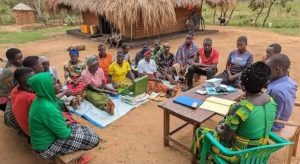
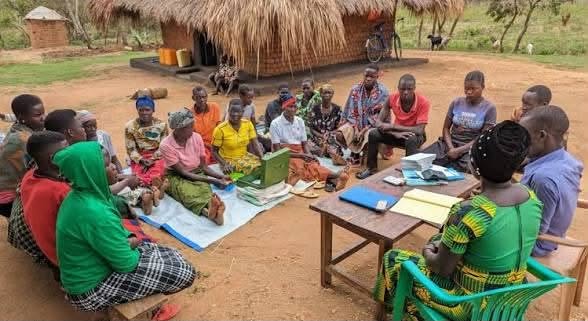
On a Saturday afternoon about a week ago, I was invited to listen to some innovators. All of them were from the informal sector with some of them having not even attended a single formal class in anything. What they lacked in formal education, they had it in ambition. I admired their courage given the grandeur of some ideas they are working on especially that they didn’t have financial resources or technical expertise to write home about.

Uganda is actually full of these innovators. In Katwe and Kisenyi around Kampala, you will find lots of young people making all sorts of things — from wet welding machines, block making machines, popcorn machines, to automotive parts such as taxi seats, exhaust pipes and such other things. Many work in silos instead of working together. Many consider themselves the best and close the door to learning to improve their skills.

Yet putting a product on market requires significant investments in research and development, developing the prototype, establishing the business case and then making the product itself. Many of our innovators in Katwe or Kisenyi don’t have resources for those stages. Many also don’t know whether those stages are necessary which many times leads to products that aren’t worth the printing cost of their price tag.

A friend who is in the real estate sector wanted to expand his business. He thought he would be saving money by making the concrete blocks on site as he developed his properties. After reading a glossy ad in the classified section of a newspaper, he went to Katwe and bought a machine. It couldn’t make the blocks. The maker of the product didn’t want to hear of anything, for him the interest was only to make a sale. My friend is planning to sell it as scrap metal. I don’t think the innovator will stay in business for long, if other customers end up with similar experiences.

In many countries that have been able to develop over the last few decades, their innovators have done so by partnering with others. In India, Maruti partnered with Japan’s Suzuki to develop the automotive industry. The Chinese have been doing the same, working with global brands to build their automotive industry. Now Chinese brands are increasingly dominating the market at least in China. Nike started by making its famous shoes in Japan and partnering with the Japanese as they built their capacity. For many years, they concentrated on shoes and only expanded into clothing and other areas later.

So, the innovators need to ask themselves, what can they make on a product and then outsource the rest. To make a block making machine in Katwe, one doesn’t need to make everything. They can outsource some of the parts from others to make the final product. The automotive industry has mastered this.

On average a car has 30,000 parts which are made by hundreds of companies stationed all over the world. So the guys in Katwe or Abayita Ababiri who are trying to make cars or those in Mbarara who want to make helicopters don’t necessarily need to make everything. They can buy parts from anywhere or most importantly make parts for others. They don’t have to do everything.

These innovators also need business mentorship so they could holistically develop. If one can’t read or write like some of them in that innovators’ meeting, how will they sustainably develop their enterprises? In his autobiography, the late Bulayimu Muwanga Kibirige (BMK) talked about how he had to learn English when he realized that he needed to work with businesses and partners outside Uganda. He had to learn to read and communicate in English.

The Science, Technology and Innovation secretariat which organized the meeting that I attended have started mentorship programs for these informal innovators and partnering them with others in the industry albeit with a bit of difficulty in getting such young people in the informal sector to appreciate systems. Skilling them and reorienting them is the right thing to do but this is needed across board. So if you are a young person, who is mentoring you?

Anyway, have a great new year, won’t you?

The writer is a communication and visibility consultant. djjuuko@gmail.com

📸 internet

Related

Out to Lunch

#OutToLunch: Watoto’s Kabaka anniversary do and why ability transcends DNA

By Denis Jjuuko On the last day of July 1993, a mammoth crowd gathered at Naggalabi hill in Buddo to witness the historical occasion of coronating Prince Ronald Muwenda Mutebi as the 36th Kabaka of Buganda. For many people in Buganda that day, it is something they had not witnessed in their lifetime. The last coronation had taken place in November 1942 and then the kingdom was abolished in 1966, the Kabaka exiled and an opportunity to coronate his heir temporarily lost. I remember my guardian giving us a rare day off to watch the live telecast all day. This is the only day I remember where we didn’t have to be bothered with house chores. You could pick a cup of tea and just sit in front of the tiny television set in the living room—as long as you didn’t make noise to distract the elders. And being a Saturday, it helped. There was no school to attend. Given Uganda’s demographics, many watching the 33rd coronation anniversary last Friday at Watoto Church in Bweyogerere were either too young or not yet born in July 1993. It was therefore refreshing when Katikkiro Charles Peter Mayiga opened his speech with a memory lane of the events of that day in 1993. He perfectly understood the audience of his message. There are many young urbane educated people who sometimes look the other way when it comes to cultural issues. Some see culture as a road block to their Christian values and aspirations. Holding the coronation anniversary at an urbane church for a young largely educated audience sent a message that culture and religion can and should co-exist. The Watoto leadership embraced the occasion like no other and left no stone unturned in organizing a befitting ceremony. I think this was the first time that a major kingdom event, coronation or birthday, had been held outside the usual hills — Namirembe, Lubaga, Namungoona, Namasuba and Kibuli where Anglicans, Catholics, Orthodox, Adventists and Muslims are headquartered or largely based respectively. You rarely see religious leaders from all denominations gathered in a Pentecostal church, some dancing, waving or in deep prayer during the praise and worship sessions that are common with Pentecostals. The religious leaders were also joined by politicians of all colors. Another example of how culture can be a uniting force. Even though the Kabaka wasn’t personally in attendance in adherence to advice of his medical team, the people turned up in huge numbers, prayed for him and commemorated the day like no other. More others spent the day listening to live broadcasts on radio or watching on television and online. Perhaps watching from his Kireka Palace, a stone’s throw from Watoto’s vast Bweyogerere campus, the Kabaka might have smiled or even nodded at some of the energetic performances Watoto put together in his honor. The more I watched the charismatic young leader of Watoto Church, Pastor Julius Rwotlonyo, preside over perhaps the biggest event of his pastoral journey, the more I thought about Ugandan businesses. Watoto, previously Kampala Pentecostal Church or simply KPC, was founded in 1984 by Canadian missionaries Garry Skinner and his wife. Rwotlonyo was either a toddler or not even born yet. He has no known blood relations with the Watoto founders but today, he is the leader of the church. Pastor Skinner and his wife are alive and are known to have children. But they chose a successor that isn’t their relative. They saw somebody who can further advance their mission and decided to retire and give him the executive suite at their famous building in downtown Kampala. Because of the occasion, Skinner sent in a recorded message. Otherwise, he is not known to be involved in every little thing that happens at the church he founded. This teaches us that we can start businesses, set systems in place, and identify teams that can continue leading when our time to go comes. The successors may or may not be our children. That DNA should not be the only requirement for somebody to lead the businesses we start. Ability to deliver should transcend DNA. It should be in the interests of founders to identify and nurture young people who can take over the business. Since the Skinners handed over Watoto to Rwotlonyo, we haven’t heard any fights like it is common for Ugandan businesses when the founders leave. And had they been involved in any scandals, certainly the Kingdom of Buganda wouldn’t have honored them with an opportunity to host a coronation anniversary. It is something founders must ponder. The writer is a communication and visibility consultant. djjuuko@gmail.com

Read More »
Out to Lunch

#OutToLunch: Stronger African economies will create a World Cup winner

By Denis Jjuuko The football World Cup ended recently with Spain lifting the golden trophy after defeating Argentina 1-0 in extra time. This year’s tournament has seen the teams expanded from 32 to 48 of which 10 were from Africa. It is by far the biggest football World Cup ever in nearly 100 years since the competition was first organised in 1930. The organizer, FIFA, is even now talking about further expanding it to 64 national teams. One of the major talking points of the tournament has been the performance of teams from Africa. Only Morocco made it to the quarterfinals. Unlike in the last tournament in 2022 in Qatar, Morocco reached the semifinals. It is the only time an African team had reached that far in the tournament. Countries outside Europe and America didn’t do much either this year. Of the four countries that qualified for the semifinals, only defending champions Argentina is outside Europe. Needless to say, that Argentina was being inspired by Lionel Messi, probably the best player the world has ever seen since Pele and Diego Maradona. Anyway, why don’t African teams perform that well in the World Cup competition yet unlike Asia or the Middle East, football is the most popular sport on the continent? Many young boys on the continent wake up to kick the ball in the streets. Many others try to create professional careers while others watch it for hours on end especially over the weekend. Even though the interest is immense, sports, not just soccer, isn’t considered a major career pathway for many people on the continent. Parents rather push their children into other professional careers than sports. Go to school, get an education, find a job and live a better life thereafter. Sports such as soccer provide very short careers. About 10 years if you are lucky. By the time a player is 30, most likely their career is over. Of course, there are outliers like Messi who is 39 years old and still performing at the top level and Christiano Ronaldo who is 41 years old. But for the majority of players, they don’t stay in the game for that long. Of course, there are other areas in which they can earn after retirement such as coaching, television punditry and podcasting, scouting and even management but the openings are even fewer. Look at the premier league for example, there are only 20 teams and each team has about 30 players, which translates to a paltry 600 players. To make it to the premier league or any of the top leagues in the world is for the exceptional. I think that is why parents usually guide their children away from sports. Besides it is expensive to support a child’s career to develop to a level where he can attract interest of the big highly paying professional leagues. If you are in Africa, the odds are highly against you. Sport is poorly funded. Infrastructure is almost non-existent. A kid with talent needs high quality coaches, kits and infrastructure to make it. Do they exist? Hardly. In many communities, the kids play on bare grounds and in urban areas those grounds are being turned into bland shopping malls. A parent would have to invest in flying a child to European academies to get the best training they need to make it. How many such parents have such resources? And if the kids are good, they would be assimilated in Europe. If you look at the three European countries that reached this year’s semifinals, there are quite a number of immigrants. Some may have been born in Europe, but there are also others who weren’t born there. England’s Marc Guehi was born in Ivory Coast. Of course, north African teams had players born in Europe but usually those are few. And many only chose African teams after failing to impress European countries. We always talk about professionalizing our leagues but it is difficult if the economies are weak. Unless we prioritize developing our economies, African teams will always struggle to win the World Cup. Weak African economies can’t afford to pay top young modern coaches. We end up picking hustlers from eastern Europe or pensioners from western Europe, whose ideas and methods are way past their sell-by dates. Stronger economies would create big companies that can invest in sport as sponsors or even in club ownership (many private equity and hedge funds own clubs in Europe/America for example). Clubs would be able to sell tickets and merchandise at premium rates, develop players they can sell to other clubs in Europe and elsewhere at world market rates and create a sports ecosystem that generates millions of dollars every day. If our economies remain as they are today, we can kiss the World Cup goodbye. The writer is a communication and visibility consultant. djjuuko@gmail.com

Read More »
Out to Lunch

#OutToLunch: Students joining universities could self-teach themselves AI to disrupt sectors like agriculture

By Denis Jjuuko The month of August sees public universities open their gates to first year students. Joining university is one of the milestones many young people celebrate, the last step in the journey to the pinnacle of education. In a few years, they would be out of university and joining the workforce. But also, university in Uganda is really the first time somebody enjoys adulthood. The pampering starts to end once you join university. There are no teachers and wardens chasing you out of your room to attend class. Most universities don’t care much how you dress. If you are female, you decide whatever you want to do with your hair. Nobody sends you back home for having a mobile phone. It is in fact a taboo not owning a smartphone. You can return or not even return to your digs. Real freedom is perhaps only enjoyed while at university. When you leave and get married, you start being accountable for every little thing but then I digress. However, it must also be a mixed feeling for many parents, guardians and the students themselves. Have they chosen the right academic course? Will the jobs be available when students finish their academic journeys given the artificial intelligence (AI) disruptions we hear about every day? Many decades ago, a university degree meant a good job. Employers booked future workers before they even graduated. And upon graduation, people found themselves with decent jobs, housing, cars and whatever they needed to succeed. Today, there is no guarantee. The numbers of people joining the labour force are higher than the jobs available. The majority of Ugandan jobs, more than 70%, are in agriculture. Many young graduates aren’t very comfortable working there. In many poor agrarian economies, the pay is usually low and work is in remote areas. The majority of students are from rural communities and they want to try life elsewhere. They have been told for nearly two decades that education is the clearest pathway to a better life, which it is. If they attain education at the highest level only return to the village to work in agriculture, many people would look at them as failures. Yet it shouldn’t be. If you remove gold, coffee is Uganda’s biggest export earner bringing in billions of dollars annually. People have turned their lives around recently because of coffee. The agronomical practices may have changed a bit thanks to campaigns like Mmwanyi Terimba of Buganda Kingdom but there is still a lot that needs to be done. If we are to reach our target of 20 million bags of 60kg annually from about 8.6 million, we need to send some of our educated people to agriculture. The knowledge acquired at university should be used to improve the coffee value chain or any other agricultural product. It could be sales and marketing, post harvest handling, agronomy, logistics, finance, investments, procurement, accounting, value addition etc. Farmers would also have to appreciate the value that graduates bring to the field if they are to see improved yields. Many people employee the least educated and qualified people to look after their investments in agriculture. Pick a boy who can’t even write his name and put him in charge of a poultry farm of 20,000 birds or a 20-acre coffee farm. The results are expected. Frustrations upon frustrations. Africa’s food import bill is nearing US$100 billion a year yet we have a youthful population that is looking for work. How do we put young highly educated people to work in agriculture? If coffee is improving the lives of farmers in Bukomansimbi, it means it can employ young people and give them decent salaries. And the young people will work hard to improve yields on the farms or profitability in the value chain because that is a guaranteed way for them to improve their incomes too. If we reduce how much food we import, that can be money directly put in the pockets of young people. However, the policy makers might be on other perfunctory things. As young people join universities, they need to think of how they can work in sectors like agriculture and turn them around using whatever qualifications they acquire. That is where the jobs are. The universities will likely teach them basics. The majority of university students have a lot of time. Some have classes for a few days a week or just in the evening or a few hours a day. They can use new technologies like AI to teach themselves a few things that may help them disrupt sectors like agriculture. That way they will create value that leads them to securing decent jobs. The writer is a communication and visibility consultant. djjuuko@gmail.com See less

Read More »