
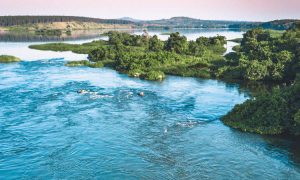
Lake Victoria

Out to Lunch

#OutToLunch: Had Iran been Uganda, what would we have done?

By Denis Jjuuko When the planners of the war on Iran sat to make the final decision, they perhaps envisaged a quick win. Fly in, kill the leader and a few others and the country would collapse. Your chosen leaders would then take over and pledge allegiance, after all you are the world’s super power. Oil would flow to wherever you want it. As the leader of America, Donald Trump would be expected to stand somewhere in the White House and announce how the greatest military on Earth has performed. The new leaders in Tehran would repost his every post. A red carpet would soon be rolled out at the White House where the new leaders in Tehran commit to pay allegiance to the Americans and their Israeli backers. Washington would announce the end of sanctions and beckon American companies to take on the reconstruction of Iran. A date for a return visit to Tehran would be announced. Donald Trump would step on the improvised steps of Air Force One and utter the word ‘freedom’ while clenching his fist. At a speech in Tehran where school kids are waving paper flags of Iran and USA, he would warn others of what will come if they don’t fall in line. Fox News would declare him the greatest leader America has ever had. Trump would demand the Nobel Prize committee to award him. He has saved the world of potential nuclear weapons. Hollywood writers would scramble for pieces of paper to script a blockbuster. However, Iran seems to have had different ideas. The writers must now be writing but not the grand movie. American contractors are waiting, unsure when their reconstruction deals will be inked. Trump posts one thing after another, perhaps once in a while, remembering the famous quote from Sun Tzu’s the Art of War: the best way to win a war is not to fight. Iran defied the odds. Two military powers have dropped thousands of bombs on its facilities and leaders but it has been able to somewhat fight back and even forced ceasefire talks in Islamabad, Pakistan even if they ended without any deal. When you think of Iran, you always want to think of Africa or at least one country in Africa since the continent is not homogenous. Is there one that can stand up to the world powers? Perhaps none. Our natural resources are not used strategically. In fact, they have been a source of endless wars. Look at the Democratic Republic of Congo for example. I consider them the richest country on earth but they can’t even complete their Inga Dam or construct bitumen standard roads. Uganda, a potholed nation, is helping them in the eastern parts of the country. Nigeria had to wait for a private person to build a mega oil refinery. They preferred to export crude and import the refined products. If an individual businessman can mobilize resources and build a refinery, what about a country? And you can say that about all oil producing countries on the continent. We have conditioned ourselves to export raw materials and import everything. The Iranians didn’t wait to import everything. They made their Shahed drones, they developed their missiles program and created a system that wasn’t depending on a single strongman whose assassination would lead everything to crumble. They built universities and given that they are forcing Americans to sit on a negotiation table, it means they didn’t fill their key positions based on blood relationships or who could praise their leaders loudest. They also understood leverage. Their location provided them with the Strait of Hormuz through which 20 percent of the world oil passes. They understood that 20% of the world’s oil can’t be ignored. They understood that their location gives them an opportunity to fight back or take the war to the enablers of their adversaries. They didn’t spend half their time blaming the Americans for the economic sanctions imposed on them. They found a way to prepare themselves for a war that they knew that one day would come. Had the Iranians been some of the African leaders, they would be blaming colonialists while sending their kids to western universities and keeping whatever money they land on in Swiss banks. Research and development would mean nothing. The most energetic labour force would be carted off to find jobs as domestic workers while being urged to save and come back and be job creators. Had we been Iran, how would we be strategically using River Nile, Lake Victoria, the near perfect weather we sing about and all the resources we have? The writer is a communication and visibility consultant. djjuuko@gmaio.com
Read More »
Out to Lunch

#OutToLunch The collapse of Katonga bridge is an opportunity to utilize and protect Lake Victoria

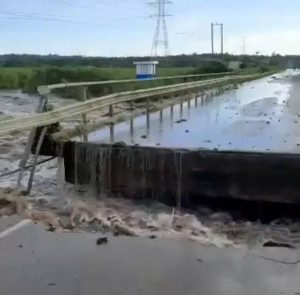
#OutToLunch The collapse of Katonga bridge is an opportunity to utilize and protect Lake Victoria By Denis Jjuuko Torrential rains swept away the Katonga bridge along the main road between Kampala and Masaka. In western Uganda, not just roads were destroyed, some people lost their lives too. For centuries, Katonga river has been known to burst its banks leading to a saying among the Baganda that whatever you do, make sure it is done fast (Abaganda mulya, Katonga ajjula!). This was after Katonga had cut off some people from Buganda who had gone to Buddu for an expedition during those territorial wars but instead of returning in time, they sat down and simply enjoyed what Buddu had to offer. In those days, Buddu was part of Bunyoro Kitara and Katonga formed part of the border. Due to its riches, Kabaka Jjunju annexed Buddu in the 1600s. And for centuries after Buddu was annexed to Buganda, Lwera was protected by the Mamba (lungfish) Clan to ensure that their totem doesn’t become extinct but most importantly to protect Lake Victoria. These guys made all these decisions and enforced them without PhDs in environmental studies and related fields. Anyway, the point is that since the 1600s or thereabouts, we have known how Katonga behaves but we managed to build a bridge that was easy to be swept away. We also knew that building factories, establishing rice farming and sand mining businesses would create an environmental disaster but we simply licensed them. We also knew that every December, some part of the road around Lwera collapses but we simply install some culverts and wait for the disaster to happen again the following year. Some sources claim that although we knew about Katonga and its erratic behaviors, we didn’t have money to build the bridge that would last may be 50 years. We went for the easy part and now we are paying for it. To Uganda National Roads Authority or UNRA’s credit, they had worked on a route through Gomba and Ssembabule that motorists could use though it makes the Kampala-Masaka distance longer by nearly 100km. However, the Katonga river still passes through this Gomba route and if torrential rains continue, chances are that this road will also be cut off. Nabajjuzi near Bukalasa in Villa Maria may do the same too. Building roads and bridges is expensive but we should not be constructing them for short term. If the Gomba route had been planned as the alternative one, the bridges or culverts should have been made in a way to last longer. If the Gomba route becomes inaccessible, it will be a disaster of unimaginable levels for Uganda’s economy, which is already suffering from high inflation and rampant unemployment. Goods to south western Uganda and neighboring countries would have to be taken through Fort Portal, Kamwenge to Mbarara. Many people would not be able to afford basics not just in that part of the country but also the capital Kampala. Matooke and other food stuffs would become more expensive. Coffee would remain in stores in Masaka. So as UNRA temporarily fixes the Katonga bridge which will take three weeks according to their official statement, the Katonga disaster is a call to get back to the basics. Factories should not be licensed to establish themselves in wetlands where they easily dump their toxic waste. People shouldn’t be allowed to build in wetlands either. Rice farming and sand mining should be restricted as well. The ecological systems of our water bodies are far more important than growing rice. And like former Vice President Gilbert Bukenya taught us, rice can be grown upland. Factory owners can think of waste disposal beyond doing so in wetlands. Those who want to build residential homes can still find land elsewhere. The challenge with Uganda’s development has been the concentration of every little thing within a radius of about 80km of Kampala and where they are established elsewhere, it is still in wetlands around the major towns like we saw in Mbale. Can’t factories be established in areas that aren’t wetlands? How come factories exist in other countries that were largely deserts before? However, the Masaka-Kampala highway is also getting old even though was constructed less than 20 years ago with many parts especially on the left-hand side as you go to Masaka in need of repair or replacement. This is mainly because of the heavy trucks that use it yet Lake Victoria is underutilized. Goods from Kenya to Masaka or even Rwanda and DRC could be loaded at Kisumu on ferries and transported to Masaka from which trucks can take them. Lake Victoria can also be an alternative route in decongesting the Masaka-Kampala road. Regular scheduled ferries and modern boats can pick people from Port Bell and drop them in Bukakata or even towards the Tanzania border. This would create a water economy. We are underutilizing Lake Victoria while burdening it with our excesses in environmental destruction. The writer is a communication and visibility consultant. djjuuko@gmail.com

Read More »