
Kiira Motors Corporation

Out to Lunch

#OutToLunch Embracing electric mobility will reduce the cost of doing business

By Denis Jjuuko Cars may have started as means of transporting people and goods from one place to another. That may still be the case today but how a car looks like and functions matter more than ever. In a world, where car models are released every so often, how they look also matters. A global automotive executive once told me that cars are fashion statements. Besides functionality, people buy cars for almost the same reasons they buy other stuff like clothing, shoes or which hangout to frequent. In Uganda and most of rapidly urbanizing Africa, there are other aspects to consider too. Besides the financing options, the cost of running a vehicle for a day in a clogged city with unbelievable traffic can be enormous. Many people drive with one eye on the fuel gauge and the other on the price boards at fuel stations. A small variation in price, sees motorists thinking of abandoning their trusted brands to stations whose name they can’t recall even after a few times of prompting. As the cost of buying cars and maintaining them skyrockets, the other alternatives like public transport in most of Africa remain challenging. Many young people end up working for transport and remaining with nothing thereby entrenching them into generational poverty. There is no continent that is as urbanizing as Africa today. If we don’t solve transport challenges, we will miss the opportunities that come with urbanization. One way of solving the challenge is by fast tracking processes that can increase electric mobility on the continent. The Uganda Revenue Authority licensing regime is still stuck in expensive internal combustion engine vehicles. There are no clear guidelines on how one can get a license for an electric vehicle. In 2021! There are some companies in Uganda that are trying to turn motorcycles into electric bodabodas, which enable the riders to earn a little bit more income while at the same time protecting the environment. Due to unclear guidelines and/or lack of incentives, they largely have to get the typical motorcycle, remove its engine and replace it with batteries. This makes the motorcycle expensive to acquire although it’s cheaper to operate and increases the rider’s daily incomes. I believe if there was a critical mass of electric bodabodas in the city, the transport rates would go down. Bodabodas aren’t only transporting people, they are playing a critical role in e-commerce. Almost all people doing online businesses in Kampala, somewhat depend on motorcycles to deliver goods and even services such as laboratory blood tests. Electric mobility would significantly reduce the cost of doing business, increase the profitability of these businesses and ensure that we reduce the common statistic of businesses not celebrating their fifth anniversary. Although the numbers are hard to come by, there is an increasing number of especially young people starting online businesses, selling all sorts of stuff. From passion fruits, clothing, and even offering services such as home education and they all largely depend on the bodabodas or motorcycles. Sometimes they don’t make sales though because of transport. To deliver 60 passion fruits worth Shs10,000 from Nateete to Najjeera costs almost the same cost of the passion fruits themselves. A customer who is willing to buy from a certain trader ends up failing to place an order just because the transport cost is too high. The trader’s business then fails to make a sale, which reduces its profitability, leading to eventual collapse. Bodabodas also employ a lot of people. As we talk of electric mobility and as the world abandons internal combustion engines, cars and even bodabodas will increasingly need electronic components such as advanced control units. These components will contribute as much as 50% to the price of the vehicle by 2030. Can the likes of Kiira Motors and all these electric bodaboda companies be buying these units from Uganda instead of importing them? Engineering students at Makerere and other universities can easily make these components. A car is perhaps the most complicated technically advanced consumer good ever made. It is a unit of approximately 30,000 parts. Once many of the components can be made by a country, then almost anything can be made. If one can make a vehicle’s control unit, they would be able to make MRI scans and such other devices. The automotive industry is a catalyst for sustainable manufacturing. And transport is a key business cost, which can be reduced by electrifying it. The writer is a communication and visibility consultant. djjuuko@gmail.com *Kiira Motors’ Kayoola EVS, a fully electric bus.

Read More »
Out to Lunch

#OutToLunch Covidex and Kiira provide a case for indigenous knowledge investment

By Denis Jjuuko In many parts of rural Uganda, when people wake up in the morning, they grab some water in a small container and head to the kitchen where they pick a piece of charcoal from firewood used the previous night and then start brushing their teeth. If you have lived in urban areas all your life, you will be shocked by this practice. You will call these guys villagers, which they are and you may add that they are backward, which they might not be. Recently, multinational toothpaste conglomerates have started packaging charcoal-based toothpastes and they cost more than ordinary toothpastes. They also have packages that are labelled herbal. What do villagers know that urbanites don’t? Yet the reason most people in villages use charcoal and other plants to clean their teeth today is because they don’t have money to buy packaged toothpaste. For many years, we regard western products as superior and our indigenous ones as inferior. Ugandans on social media love coming up with memes with those in English or have western names as superior and those in local names or languages as inferior. We abandoned our indigenous knowledge in pursuit of products whose intellectual properties we don’t own. How do we return to indigenous knowledge in making our products? Last week, the National Drug Authority (NDA) under enormous public pressure approved Covidex, a herbal drug said to provide relief to COVID-19 patients. Covidex was developed by Prof Patrick Ogwang at Mbarara University of Science and Technology (MUST) if you ask one group. Another group will say Prof developed it on his own. Whatever the story, it shows that it is time to invest more in our indigenous knowledge. Covidex is said to be largely from a tree known as Mukuzannyana/Mukuzannume or Warbugia Ugandensis. The tree has been around for generations and has been used to treat respiratory ailments but we hadn’t done much to exploit it before. There are hundreds of other plants which are medicinal and used to cure people before western medicine took over. Had Covidex been made elsewhere, NDA wouldn’t have perhaps taken the path they took to authorize its use. If Covidex continues to do its magic against the monster that is COVID-19, it presents a case for much more research and investment in indigenous products. However, even if it doesn’t, it provides a case for more research and investment in indigenous knowledge. Before the Bazungu turned up in Uganda, people knew and had developed expertise to deliver babies through caesarean births using local brew as disinfectant among other innovations. Today, we even import some ingredients for sanitizers! If we are to succeed with the next Covidex, we need to significantly invest in research and development. We must encourage young people to innovate beyond the development of payment apps. It is not a surprise that Covidex has its origins at a university or developed by people involved in a university, just like Kiira Motors before it. Universities are centres where people dream and develop capacities to research products. Many innovative products (Google, Facebook, Microsoft etc.) start that way but we must be intentional about them by providing the necessary funding. Talking of Kiira Motors, as the country was consumed by the approval of Covidex and indeed the deaths as a result of COVID-19, there was a story that didn’t grab national headlines. Kiira Motors has entered into agreement to produce 1,030 buses for Tondeka, a company that wants to deploy them in Greater Kampala Metropolitan Area (GKMA). The deal is financed by Rentco, an outfit that is involved in asset leasing and has worked on similar projects in Tanzania and Kenya among other countries. The automotive technology partner is Xiamen Golden Dragon, a Chinese giant that specializes in making buses. This partnership will lead to the development of our nascent automotive industry. Kiira Motors should now bring in its indigenous knowledge as it builds not only these buses but also its other products. What are those things that make a car truly Ugandan and we can sell to the world? How do we keep very old cars on the old and what kind of knowledge do we have that can make vehicles last longer? But for this to work, it means that there is need for much more effort to exploit indigenous knowledge. If you go to rural areas, parents immunize their kids with indigenous medicine. They cut kids on the shoulder (same area where jabs are administered for some vaccines) and apply it. How can we use this indigenous knowledge to come up with vaccines and other innovative products? The writer is a communication and visibility consultant. djjuuko@gmail.com

Read More »
Out to Lunch

#OutToLunch Africa must industrialize or wait for COVID to decimate it

By Denis Jjuuko Less than 10% of 1.3 billion people in Africa have been vaccinated against COVID-19. The major reason is because Africa is comfortable with importing everything. We have never looked at ourselves as producers. So when COVID-19 struck, we didn’t do much, waiting for what the west would do. I listened to a government official say that the reason we don’t have enough beds in intensive care units is because they take time to be imported. We also heard that oxygen gas cylinders also take time to be imported. What do we make then? We are told repeatedly that Africa’s comparative advantage is in producing food. How much do we grow and how much do we import? Africa imports food worth US$35 billion a year and the figure is estimated to hit US$100 billion by 2030. So is this our comparative advantage as we wont to claim at each conference and in every little paper we publish? If we can’t even grow enough food for ourselves then what are we good at? We export the coffee and then import the dregs in the name of instant coffees that we proudly consume. Africa has a very young population compared actually to most other continents. This is the right age group to retool and ensure that they can take on manufacturing. Let us look at the automotive industry, which makes economies truly industrial. Annual car production pre-COVID-19 days is averagely 97 million cars. Of these 30% are made in China. China’s population is just 1.4 billion people, roughly the same population as Africa. Africa only produces 1% of the world’s cars. Does it then surprise anyone that when it comes to COVID-19 we are simply begging other countries? Look around, if the big pharma that have developed the vaccines tomorrow decided to release the formula for making them, shall we even manage to make them? Are we setting up factories that can even do contract manufacturing? What makes it so difficult to assemble an ICU bed and its accessories? The reason is that we are extremely comfortable importing every little thing. Africa’s businesspeople are essentially importers. Flights from Africa to Asia are always full of people on trade excursions. Many, after a long day’s work and relaxing in sauna brag about the number of containers they are shipping in. Not containers of machinery to make the products at home. Why should a businessperson import goods for 30 years without trying to make that same product? The Chinese from whom the Africans import stuff simply study these traders and then come to Africa and set up factories to make the stuff the Africans have been importing for decades. The Africans then run to the media to cry that the foreigners are getting incentives and are undercutting them. Why should the government not give factories owners incentives? Drive around the entire country and ask who owns the new shinny mall or apartment block and then ask who owns the factories, the answers will be different. We have failed to build capacity in making products and we have left that role to foreigners. The foreigners will also build stuff that may not be strategic for our country. The government needs to get involved in manufacturing again. The structural adjustment programmes of the 1990s that led to the government abandoning manufacturing and being involved in business was a mistake. It is time for the government to go back in there and look at the industries that many other people may not want to invest in because of money and long period it would take to make profits and take them on. Its involvement in Kiira Motors is a good start. Cuba, a small, impoverished island has developed a COVID-19 vaccine that is more than 90% effective. Africa is yet to come up with one, 60 years after gaining independence. When COVID-19 first struck, most African leaders created theories about the weather and a youthful population. When Merinda Gates argued that Africa will be severely hit, African elites went on social media and attacked her instead of planning for a pending crisis. Today, we are holding national prayers to pray COVID away! African leaders love guns and military hardware but even those they gladly show off during Independence Day celebrations are mainly imported. And they are usually second or fourth hand. Why don’t they start making them here on the continent? Many of the most important innovations we have today were originally invented for the military. The telephone, internet and even drones quickly come to mind. Africa to develop and solve the challenges of our time must industrialize. The writer is a communication and visibility consultant. djjuuko@gmail.com

Read More »
News

Technology and Development Enthusiasts Impressed by Kiira Motors Vehicle Plant

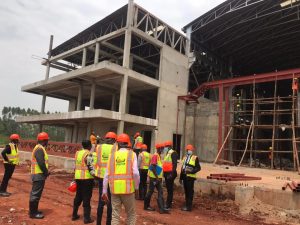
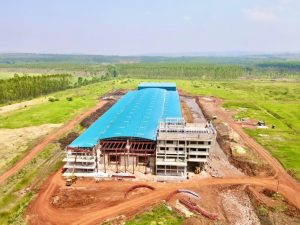
By Sierra Ruth Arinaitwe Kiira Motors Corporation hosted a team of technology and development enthusiasts who experienced the comfort of the luxurious Kayoola Coach during their ride to the Kiira Motors vehicle plant currently undergoing construction at the Jinja Industrial and Business Park. Upon arrival at the plant, they were welcomed by Kiira Motors CEO Paul Isaac Musasizi with whom they had a rich engagement about the automotive industry and its contribution to Uganda’s development agenda. They were taken on a guided tour of the plant. Tusiime Samson, a team leader at Veritas Interactive Uganda said his view of Kiira Motors was always based on a misconception which always clouded his judgment about the corporation. “I had always been skeptical about what Kiira Motors is doing. This trip has been really informative and given me an insight of what is intended to transpire at Kiira Motors vehicle plant,” he said. “I am really impressed by the direction Uganda is taking in the automotive industry and the fact that Uganda has talent to manufacture products like the Kayoola Diesel Coach.” Tusiime further stated that engagements with the Kiira Motors CEO and the visit to the plant informed him about what is on ground, what has always been communicated about Kiira Motors and as well rule out the misconceptions he had about Kiira Motors. Daniel Bwambale, a judicial officer who also works at the Uganda Legal Information Institute said he always had questions whether Kiira Motors was simply “another Ugandan story.” “My main reason for this trip was to prove that there is a plan, if the plan is under implementation and that the plan would come alive and not just die just like many other plans have died out in Uganda,” he said. Bwamble referred to Kiira Motors Corporation as one of Uganda’s good stories that people should be told and with it, he believes that Uganda can do more. Another automotive enthusiast and IT professional engineer with Yo Uganda Ronald Sebuhinja, says his main concern was to get a sense of scale of what Kiira Motors really does. Sebuhinja says it was unclear to him what Kiira Motors is doing when it comes to vehicle manufacturing. “Visiting the plant gave me a clear plan of what is done at Kiira Motors and an idea of what will be done once the construction is complete and is in use.” “I was really impressed by the human resource who have knowledge of whatever transpires here most especially by the speed and execution of work by NEC ( the construction company) who have been able to do such amazing work in a short period of time and am sure they will meet the deadline,” he said. David Birungi, a Public Relations tutor at the University of Nairobi who also works with UMEME said before, he was a bit skeptical as he thought importing cars gave Uganda an advantage over manufacturing here. “After this trip, I have come to understand the Kiira Motors story and this has completely changed my thinking about Uganda’s automotive industry,” he said adding that he looks forwards to coming back to witness how vehicles will be built. Jeremiah Ahumuza Birungi, a 12-year-old pupil at Kampala Parents School who was also the youngest enthusiast said he was looking forward to vehicles made in Uganda. “I am impressed by the progress of the plant. I can’t wait to see how it will look like once its complete,” he said. The first phase of construction of the Kiira Motors vehicle plant is slated to be complete by this. Upon completion, it will be the new home of Kiira Motors Corporation from which it intends to build about 22 cars per day and about 5000 cars per annum.
Read More »
News

Kiira Motors Vehicle Plant Nears Completion

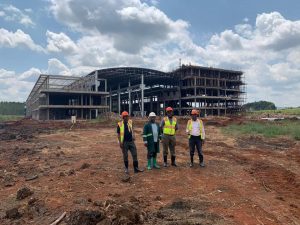
By Sierra Ruth Arinaitwe The Kiira Motors vehicle plant is nearing completion with 75% of the construction work complete. The plant, which sits on 100 acres of land in the Jinja Industrial and Business Park includes the assembly building floor, warehouse area, site circulation roads, water and power reticulations, parking areas, perimeter fence and gate facilities. The construction contractor National Enterprise Corporation (NEC) said during the site visit over the weekend that they will be able to meet the deadline, which is slated for June 2021. Maj. Arthur Kyoffa, the head of electrical works at NEC says the general structural progress is now at 75% and is confident that by June 2021, they will have met the client’s expectations. “At this point, most of the super structural work is almost done. We are now mainly looking at the internal and external finishing to the building. We are sure that the plant is going to be ready by June and we are going to deliver to the expectations of our client,” Maj. Kyoffa said. Upon completion, the plant will be the new home of building buses in Uganda.  Allan Muhumuza, the Director Marketing and Sales at Kiira Motors says the plant will have the capacity to build about 22 cars per day and about 5000 cars per annum. Lydia Nakanda Mugoya, the clerk of works at the site, says they had a few setbacks in the beginning of the project but amidst them, they were able to embark on the work. “In 2019, our biggest challenge was the weather. It rained almost every day which slowed us down. In 2020, we were also affected by the COVID-19 lockdown which resulted into delayed some activities. The lockdown also interrupted the importation of some construction materials but we are positive that we shall meet the client’s deadline,” she said. Kiira Motors Corporation is a government owned initiative aimed at creating the automotive industry in the country. The country has so far built three production ready buses with two of them fully electric for city mass transit and an internal combustion one for long distance travel.

Read More »
News

Ministers urge private sector to invest in making parts for the automotive industry

By Sierra Ruth Arinaitwe Kiira Motors Corporation, a government of Uganda and Makerere University initiative has taken concrete steps in the development of an indigenous motor vehicle industry with the near completion of the Kiira Vehicle Plant in Jinja. The Minister of Science, Technology and Innovation, Dr Elioda Tumwesigye, hailed the progress Kiira Motors has made so far saying it will provide an unprecedented opportunity for promoting value addition to Uganda’s minerals and other natural resources with the view of import substitution and export promotion of vehicles, parts, components and systems as well as automotive engineering services. “Import substitution is something we need to work on. Uganda motor vehicles are the second leading valued import with over USD 450 Million annually after petroleum at USD 1.3 Billion. Imagine if we made these vehicles here?” Dr. Tumwesigye noted. Dr Tumwesigye made the remarks while opening a multi-sector meeting on building of an indigenous motor vehicle industry at Kiira Motors’ vehicle plant construction site in Jinja. The meeting was presided over by Joy Kabatsi, the State Minister for Transport who represented her boss, Minister of Works and Transport, Gen Edward Katumba Wamala. Prof Nawangwe, the Makerere University Vice Chancellor and Edward Hightower, a global automotive engineer and executive also attended the meeting. Dr Tumwesigye explained that with the market for vehicles growing at 12%  year to year and estimated to reach over 630,000 vehicles sold in the East African Community annually, it is of paramount importance that Uganda puts in place the relevant policy interventions for promoting automotive local content participation while placing emphasis of enhance environmental stewardship. “Invest in the automobile industry. Form companies that make parts, we can make these parts from our raw materials so that 70% of vehicle parts are done by independent suppliers. If you don’t invest, we will get the parts from elsewhere,” he advised. The minister further added that strategic government investment in the Kiira Vehicle Plant is expected to create over 14,000 jobs directly and indirectly; catalyze upstream investment in the manufacture of auto-parts from bamboo, steel, banana fiber, etc.; while affirming Uganda’s commitment to enhancement of local content participation as an enabler for industrialization along with enhanced environmental stewardship. On her part, Minister Kabatsi said that Uganda believes that the automotive industry is a catalyst for industrial development. “The government will continue to support your efforts to create an indigenous automotive industry. I will continue to support your development,” she pledged. She too urged the private sector to get involved in the local content value chain by making parts.

Read More »
News

#OutToLunch The car industry is ready for the taking

By Denis Jjuuko Cars are the second-highest value import in Uganda after petroleum products. It goes without saying that the majority of the petroleum products imported are used in cars, making the automotive industry one of the biggest in the country.   In many countries, the automotive industry is a key actor in the economy where many independent small and large enterprises supply parts that put together to make a car. Cars also naturally use a lot of consumables once they are off the assembly lines — fuel and oil to grease the parts of internal combustion engines and many other parts. We saw during the 2008 economic meltdown that the United States moved swiftly to bail out their auto industries as they create millions of jobs directly and indirectly.   With poor infrastructure and lack of reliable public mass transport, the automotive industry has enormous potential.   Once many people in Uganda get a somewhat meaningful job, one of the first assets they spend their money on is a car — many times a fifth hand they spend more time under repairing than inside enjoying it. A few years ago, I witnessed a transaction that amused me where somebody bought a very old car. The transaction took place in a famous restaurant in Kampala in the evening. The buyer came with about five friends and once he received the car logbook and keys, the party started. His friends high-fived and hugged him and all admired the car after which several drinks were opened and enjoyed. The buyer sat in the middle cross-legged, like a prince. You could tell his friends admired him immensely wondering when they will be able to achieve as much as him. One of their own had become “middle class,” he was now a “my car.”   Young men tell me that these days girls of their dreams first inquire whether they have cars before they decide whether to date them or not. Once they own a car, the question of which car is also asked. I don’t know why one would be so interested in a car that doesn’t belong to them but I think I have heard that it is easier to cry in a car than some ramshackle bicycle! A car isn’t just a means of transport; it is a status symbol. You may argue that we are exchanging values for possessions but that is the reality today. You have heard about washing bay workers in Wandegeya crashing their clients’ cars around hostels where female university students reside or those who thought they had landed on a young millionaire just because he had access to car keys.   I remember during my university days, a young man who bought a car key and dropped it on the table the moment he sat down to create an impression that he had a car whereas he didn’t even know what a gear lever was. We always laughed at his theatrics.   As long as people migrate from rural to urban areas to escape poverty and the cities or towns remain with poor public transport, a car will be one of the most important assets people will ever buy. We won’t be like in some countries in Scandinavia where a prime minister rides a bicycle to office. Ugandans also love buying and building their own houses which are now located 20km or more from their workplaces. Those who are joining universities today will live further away from the city. They will need cars to ease their mobility unless significant investments are made in public mass transport.   The majority of the imported vehicles are very old and susceptible to frequent breakdowns, which creates massive opportunities. Uganda is also developing its automotive industry with the construction of a plant in Jinja nearing completion.   With poor or non-existent public transport as mentioned above, Uganda’s automotive industry potential is enormous and due for disruption. Technology advancements in 3D printing and availability of machinery on the world market mean that an entrepreneur can start looking for opportunities to make some of the parts right here in the country. We have the raw materials and a market that is so huge and ready for disruption. What one needs is to think of ways to disrupt the industry as it is ready for taking.   The writer is a communication and visibility consultant. djjuuko@gmail.com          

Read More »
News

#OutToLunch We can’t make face masks and then wear used underpants

By Denis Jjuuko A week ago, seven factories were opened in Namanve near Kampala. The president was there as ever to launch them. As ever, none of these factories which will make stuff such as tarpaulins and gumboots belonged to a Ugandan. It seems foreigners are seeing what we can’t see. What makes foreigners set up factories while we happily board the planes to go to China to import stuff the Chinese are happy to make here? There are many theories I hear one being that the government favours foreigners. I don’t want to agree. Foreigners come from a background where stuff are made and have understood that making things isn’t as difficult as many Ugandans think. The seven factories, according to The New Vision, were worth a mere US$12 million or approximately Shs44.4 billion. Each factory, therefore, cost just Shs6.4 billion. These seven factories will employ more than 2,000 people. This sadly reminded me of the debate some Ugandans love to make about manufacturing and assembling especially when it comes to vehicles. These Ugandans like to argue that you can’t manufacture cars in Uganda (yet 90% of buses on Ugandan roads are made in Kenya). That you can only assemble them and therefore that Uganda has not manufactured a car! Can anyone manufacture a car? An average car has more than 20,000 parts. Carmakers the world over source parts from the global automotive value chain. This value chain is comprised of hundreds of companies majority of which many of us have never heard of. I drive a small Japanese car. At the back of its key, there is a logo of the carmaker and something in small print that reads “Omron Corporation.” Omron Corporation made the key system as well as its automation system that detects many stuff including rain and whether I need a break from driving or not among others. Another company called Takata made its airbags. The music system is from Sony while the tyres are from Bridgestone. I can list many other parts but it will bore you. If you are keen about cars, you will also notice that some vehicles resemble each other even when they carry a different nameplate. Spear Motors sells Fiat Fullback Double Cabin pickups that look exactly like the Mitsubishi Sportero double cabs sold by Victoria Motors. The Tata lorries of the 1980s, if you are above 40 years old, that belonged to your school look exactly like the Mercedes Benz trucks of 40 years ago. South Korea’s Ssangyong Musso has a partnership with Mercedes Benz to use its technology same way Kiira Motors works with China electric car giant CHTC. There are many collaborations when it comes to the production of stuff. Buying parts or technology from the various suppliers is how stuff are made. If you are reading this on iPhone, know that Apple made no single part of what you are holding. Every part comes from somebody in the smartphone value chain. Let us bring this closer to home. Think of Kampala Serena, a 5-star hotel in Kampala. They prepare a buffet every day. The stuff they use to make that buffet comes from various suppliers from the food value chain. They don’t grow matooke or peanuts. They make no cooking oil. They don’t produce cooking gas either. Many suppliers bring the ingredients that Kampala Serena uses to make the buffet. Serena designs the menu and their chefs decide how it tastes and how it is presented to the customer. And ladies and gentlemen, cars are not made any different from the way Kampala Serena makes its food. The foreigners have understood that any product is made by many suppliers. That is how they come here and set up factories to make or assemble TV sets and fridges as we Ugandans fly to Dubai, of all places, to import finished products. We like to argue that something isn’t made in Uganda simply because many of its parts were sourced from suppliers from all over the world. The foreigners simply say this is Ugandan made, walk into Uganda Investment Authority and get tax incentives. In a few years, the foreigners who come here with little money are billionaires while we Ugandans are crying of slow business. We are happy to call them to employ our kids who we were paying Shs2m a term for 19 years. If you have been importing TV sets and fridges, I am sorry but Hisense is going to lead to the closure of your shop. If you used to import ceramic tiles, you know this so well. Ugandan entrepreneurs must think beyond importation, stop arguing that they can’t make anything and line themselves up to become suppliers of parts for the factories that are being launched every day or set up these same factories. Kiira Motors is building a factory in Jinja to make vehicles. Can’t a Ugandan set themselves up to provide nuts and bolts? What is so difficult in making brake pads for vehicles? Why do we still import car wipers and even headlight bulbs? How can we be so happy to replace parts in our cars with the junk that is sold in Kisekka Market? If we have managed to wear new face masks made by Ugandans, why do we still wear used underwear? The writer is a communication and visibility consultant. djjuuko@gmail.com

Read More »