#OutToLunch Let us have coffee over affordable housing

#OutToLunch Let us have coffee over affordable housing

By Denis Jjuuko

There are skits on social media of a landlady called Nakayiza. She can visit her tenants at any time and if she finds them eating chicken or meat, she wonders how they can be enjoying expensive foods while still renting. She castigates them for being such poor planners who enjoy life’s excesses instead of becoming landlords like herself.

But if the tenant made a mistake of not inviting her to partake in the meal and/or giving her a drumstick and gizzard, they would be in trouble. She would grab the saucepan and go with it telling them to report her to whoever they want and see if they would still live in her houses. She always strikes at meal time. Nakayiza is hilariously brutal to her tenants especially those who may be in arrears.

Nakayiza may be drama and she excels at it but her script writers know exactly what happens in the communities especially informal settlements where the majority of urban dwellers live in Uganda. Like Nakayiza, tenants in real life face such dehumanizing landlords every day.

Yet as Uganda’s population continues to grow, so is the need for decent housing especially in urban areas. Uganda is one of the most urbanizing countries on the continent thereby putting pressure on already strained housing facilities. The country has a deficit of about 2.3 million housing units and growing by about 200,000 annually.

Lack of proper housing leads to diseases and increases household poverty. A person fearing when Nakayiza would strike wouldn’t be able to have a decent meal at home. One time she complained of a family eating avocado yet a necessary food for children’s growth. But also, one wouldn’t be able to concentrate at anything because they spend all their time fearing when Nakayiza would strike.

This calls for more investment in affordable decent housing. By affordable I mean a house the majority of people would be able to own over a long period of time say 10 to 30 years. People would consider that they have a stake in the country and will work hard to ensure they can own the property at one stage in their lifetime thereby leading to economic growth.

I recently came up a report titled “A Ladder Up: The construction sector’s role in creating jobs and rebuilding emerging market economies,” commissioned by Habitat for Humanity and it had some interesting findings. For “every US$1 million in construction output creates an average of 97 jobs across countries ranging from 43 jobs per US$1 million in Mexico to 182 jobs per US$1 million in India,” the report reads.

I believe in Uganda, one US$1m invested in housing could create as many as 500 jobs. From informal workers such as porters and bricklayers to professional workers such as architects and engineers. No need to mention indirect workers at steel factories and the entire value chain and money paid to government for permits and such other things.

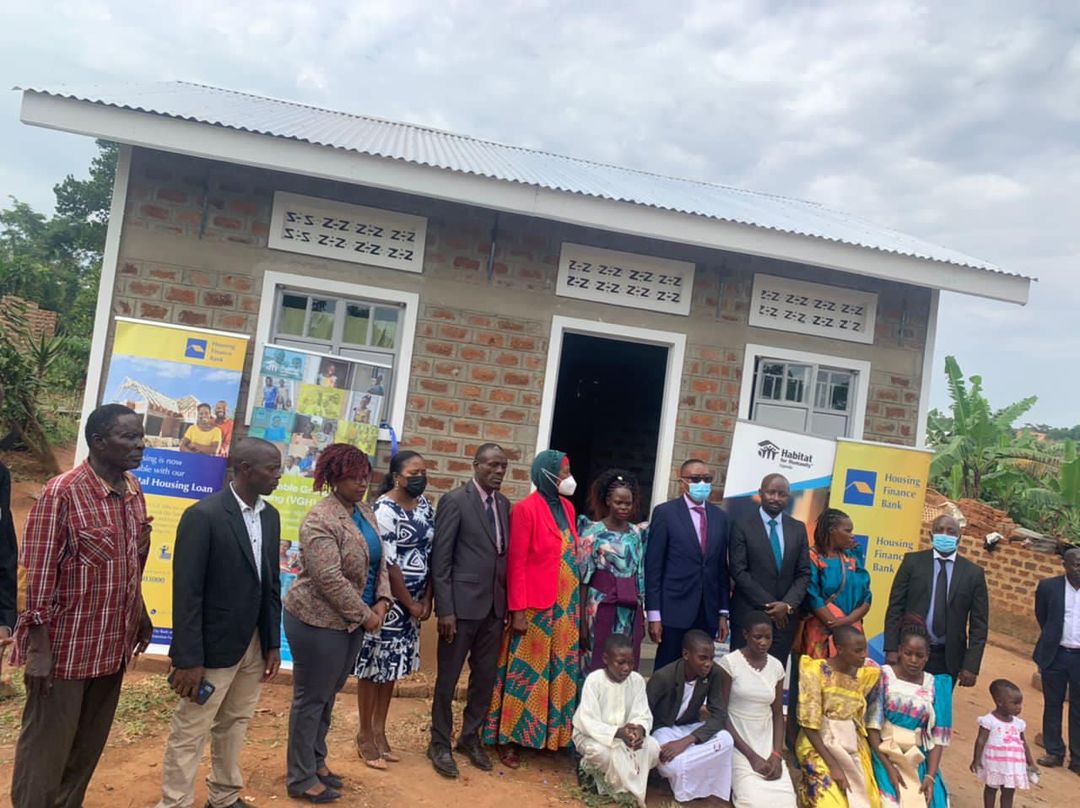
According to Habitat for Humanity Uganda, a two-bedroom affordable house in an urban area cost approximately Shs35m or US$9,000 (doesn’t include the cost of land). So, with US$1m, one can be able to build at least 100 houses in an urban area. In a not so urban area, the cost is Shs25m.

These numbers could go further down if the government lowered taxes on construction materials and there were massive projects planned so that they could enjoy economies of scale. Banks could be incentivized to provide affordable financing. Residential construction has a lot of potential.

“Investment in residential construction, in particular, represents a potential win-win for low- to middle-income countries, as it creates quality jobs while filling a massive void in affordable housing,” the report mentioned above further reads.

An investment of just US$1m in a community would change it forever. Once people aren’t worried of returning home during the rainy season when the landlord has removed one of the iron sheets, they would be able to push their other dreams.

As we have seen with Nakayiza and landlords like her, commercial tenants don’t go through the humiliation that residential tenants face. When a commercial tenant defaults, the landlord simply locks up the premises. The tenant’s family isn’t dehumanized. So residential housing for the country’s development is where we should put much more emphasis. It is high time we seriously had coffee on affordable housing.

The writer is a communication and visibility consultant. djjuuko@gmail.com

Related

Out to Lunch

#OutToLunch: How Uganda’s next president could easily reduce the housing deficit

By Denis Jjuuko It is not uncommon to find a social media post in Uganda regarding the price of land or property being shared many times. The argument is that land prices are extremely high especially around Kampala and in many major cities or towns across the country. With an ever-increasing population and poor infrastructure and services a few kilometres outside these major urban centres, it shouldn’t be entirely surprising that land is expensive. I have always given an example of Mpigi town, which is nearer to Kampala than Entebbe but a difficult place to commute due to poor infrastructure. Yet with the Entebbe expressway or even the old road, Entebbe is an easier place to access. So, land prices around Entebbe will always be high as not many people would make Mpigi their area of residence while working in Kampala. That though will change when the Kampala-Mpigi Expressway is complete. However, construction of infrastructure such as expressways in Uganda takes a very long time leading to people crowding around the urban areas where it is easier to commute to their workplaces and services such as hospitals and schools are better. This increases pressures on land for housing purposes in urban areas. And as the population grows, land, an inelastic resource becomes more expensive. Many young people end up struggling to build houses. With the current housing shortage said to be over 2.4 million units in Uganda, poor infrastructure and services and an ever increasing population, the price of land will only continue to rise unless the government does something. And that wouldn’t be nationalizing land like some people urge whenever there are delays in executing infrastructure projects or when the price of land is seen as a hindrance to young people owning houses. Government must realize that the most valuable asset the majority of Ugandans will ever own is a house. Once people own property, they wouldn’t want to create so much chaos that could lead to destruction. Empowering young people to own houses should therefore be in the government’s best interests. Since land in Uganda for housing is largely owned by private entities or communities who determine its cost without any guiding principles, government could create a land bank from which individuals could buy land or a house. How would this work? And since we are going to the polls next week, the country’s next president has his work well cut out. In urban areas like greater Kampala, government could buy large tracts of land in Mukono, Mpigi, Mityana and Luweero and demarcate it for planned housing estates similar with what private land dealers do but a bit better. Land would be divided into small pieces with architectural plans drawn by leading experts. Schools, recreation, and health facilities would be planned. The government would then sell the land at a rate lower than the private sector. Nobody would be allowed to deviate from the architectural plan. If you bought in an area with bungalow houses, you build the exact bungalow. If you bought in an area for storied villas, you build a storied villa as per the architectural plan. Each person or legally married couple would be allowed to buy only one plot and you can’t sell it to another person at any rate. If a buyer prefers to sell, he sells it back to the government at the price he bought it. This would protect the land from speculators who buy, hoard and then sell at an exorbitant price. Because the cost of building a house with a given architectural plan is easy to establish, banks would only rent a certain amount of money. Banks willing to lend the money would not give it to the individual as is usually the case, rather a prequalified construction company that can deliver the house within the established cost of building it with a capped interest rate or profit. This is how Islamic banking works and therefore not a novel idea that is difficult to implement. Should a person fail to pay, the government buys it from the bank at the set amount and then sells it to somebody else. People could pay in installments over a given period. Monthly deductions could be made to salaried workers such as civil servants interested. The government can then construct roads and expressways to those areas as many people would be living in these housing estates. Public transport, schools and health facilities would be prioritized. More young people would end up owning houses and therefore a huge stake in their country and ministry of urban planning would have something big to deliver. The price of land for housing would plummet too enabling more people to own houses. The writer is a communication and visibility consultant. djjuuko@gmail.com

Read More »
Out to Lunch

#OutToLunch: Replicate innovation hubs in Kampala and refugee settlements across the country

By Denis Jjuuko Airpods in the ears. Hands busy with a smartphone. Shoulders holding a leather laptop carry bag. Legs covered in sagging pants. Torso well covered in a jumper with a hoodie. Hair spiked. Sunglasses on. It is a familiar sight at a building in Kampala where young people trying to replicate Silicon Valley converge to work on largely fintech applications. At least a floor in the building provides open spaces where these people work on their ideas while sipping iced coffees sold at a cafeteria in the corner. Walls are covered with inspiring graffiti of quotes by famous people or even bible verses. The young people are on a mission to make it big in the tech world. Those who find some breakthrough, which usually means nailing somebody willing to invest in their ideas or provide a grant, move to the office cubicles partitioned with glass, providing more inspiration to those still on the journey. These workspaces have many names. Incubation centres, ideation labs, entrepreneurial hubs, job centres. They are usually funded by development partners as a way of subsidizing the cost for these emerging entrepreneurs, developers, inventors, creators or whatever they prefer to call themselves. Perhaps having seen some impact in urban areas, these centres were replicated in many of Uganda’s refugee settlements across the country. At these centres, youthful refugees and host communities access high speed internet, get access to computers and sometimes machinery and tools that enable them to bring their ideas to life. The development partners sometimes throw in training like how to use multimedia platforms to market their businesses or find work. Small grants for groups with innovative ideas or even for those who are dedicated to their work are common. Access to high-speed internet has helped a few of them to create great products. On a visit to the Nakivale Refugee Settlement, I found an interesting group that makes guitars. They taught themselves via YouTube tutorials and they are able to market their shiny guitars to global customers through social media. They have been supported by Partnership for improving prospects for forcibly displaced persons and host communities (PROSPECTS), a project implemented by the International Labour Organization and funded by the Netherlands. It is remarkable what young people can do once they are enabled to innovate. Skilling is critical not just in vocational jobs. But also, in soft skills such as communication and digital marketing. How can they use WhatsApp Status, YouTube or TikTok to push their products out? How can they use YouTube to learn a new skill? I don’t think there is a vocational school that sets itself out there to teach making guitars but those refugees in Nakivale found a niche and made it work even though they have a long way to go. I have heard of people who taught themselves baking, weaving, and a few other things via YouTube tutorials and are now earning a living and even employing others. Once young people have access to affordable internet, many can teach themselves similar skills once they appreciate what they can do with a smartphone. Multimedia skilling programs for youth such as those offered by the Uganda Communications Commission (UCC) through Uganda Communications Universal Service and Access Fund (UCUSAF) are a good starting point. I have seen people learn making professional posters through platforms like Canva or videos using CapCut thereby joining the creator economy. I think there is a need to replicate the incubation hubs in Kampala and job centres in refugee settlements at subcounty level or even district level to start with. Here, young people would converge even if once a week to discuss with like-minded individuals, teach themselves skills and form partnerships and synergies that would enable them to scale their ideas or enterprises. Of course, regular trainings and mentorship would be important. They would be able to access high speed internet, computers or virtual reality gadgets. They would also test out their ideas and over time have access to those who may have been able to succeed. They would also provide markets to themselves. If one has mastered digital marketing, another involved in another industry would be able become their customer. We have also talked about value addition for a long time. Machinery is expensive. Knowledge is scarce. If people grow some coffee in Bukomansimbi or Budadiri and you want them to add value, a roastery can be installed at this hub where those interested can roast and package their coffee. As they grow, they would be able to scale on their own. If the hubs are somewhat working for youths in Kampala and refugee settlements, they can work too in rural communities. The writer is a communication and visibility consultant. djjuuko@gmail.com

Read More »
Education

From Smartphones to Sustainable Livelihoods: Manafwa Youth Power a New Digital Future

By Sandra Nakafeero A fresh sense of purpose swept through the Manafwa District Hall as more than 100 young people gathered for the close of an intensive digital skilling programme. Phones in hand and ideas taking shape, the participants demonstrated how simple digital tools are reshaping the way young people learn, create, and earn. During the hands-on sessions, trainees explored practical skills ranging from graphic design and social media branding to virtual collaboration. Using Canva and other mobile-friendly applications, the youths learned how to develop marketing visuals, select effective colour schemes and fonts, and package messages for online audiences. For many, these skills marked their first step toward turning creativity into income. Abikala Munyanda stood out among the cohort, emerging as the overall best performer. Like many of his peers, he described the training as a confidence booster that transformed digital platforms from sources of entertainment into tools for enterprise. The training was further energized by guest facilitator and content creator Dr. Solomon Kimera, whose journey resonated strongly with the participants. A medical doctor by profession, Dr. Kimera shared how he built a massive digital following by starting small and staying consistent. “I didn’t begin with expensive equipment or a studio,” he told the youth. “I started with an ordinary smartphone and the courage to put myself out there. If you wait for everything to be perfect, you may never begin.” Today, Dr. Kimera commands an online audience of nearly 2.5 million followers on TikTok, with content that blends education and entertainment. His story underscored a key lesson of the training: innovation is less about resources and more about mindset. Addressing the participants at the closing ceremony, the Chief Administrative Officer of Manafwa District, Mr. Ssenku Kimuli Samuel, urged the youth to translate their new skills into meaningful livelihoods. “This training has equipped you with skills that are relevant to today’s economy,” Mr. Ssenku said. “You already have powerful tools in your hands, your smartphones. Use them responsibly to create value, to earn honestly, and to contribute to the development of Manafwa. The future of this district depends on how well you apply what you have learned.” He emphasized that digital skilling is no longer optional but essential for young people seeking employment, entrepreneurship, and participation in national development. The Resident District Commissioner, Hon. Saleh Kamba, commended the trainees for their commitment and encouraged them to remain innovative and disciplined as they venture into the digital space. He noted that digital literacy offers young people an opportunity to improve their livelihoods using resources they already possess. The initiative was implemented by the Uganda Communications Commission (UCC) through the Uganda Communications Universal Service and Access Fund (UCUSAF), in partnership with Prime Time Communications. The programme targets youths in five eastern Uganda districts—Kumi, Kapchorwa, Manafwa, Butaleja, and Kamuli—with more than 500 young people benefiting in the current rollout. Overall, nearly 1,400 youths across 13 districts in central and eastern Uganda are being equipped with practical ICT and multimedia skills. In the first quarter of 2026, the programme will extend to Butaleja and Kamuli districts, enrolling an additional 200 youths. At the conclusion of the training, three participants were recognized for outstanding performance: Abikala Munyanda as Overall Winner, Leah Edith Namono as First Runner-Up, and Derrick Kalibo as Second Runner-Up. As the youths of Manafwa step forward with newly acquired digital competencies, they carry more than certificates—they carry the potential to create jobs, grow incomes, and transform their communities. One design, one post at a time, a new digital chapter is unfolding in Manafwa District.

Read More »