#OutToLunch Subsidize charges for patients in ICUs in private hospitals

By Denis Jjuuko

There is a hospital in my neighborhood that is usually not very busy. Over the last few days, you can see people getting their intravenous treatment in the parking lot. The hospital is near a popular bar, if you are not a keen observer, you may think that the vehicles parked alongside the road are for the bar patrons. Yet the bar is closed. The cars belong to patients and their caretakers.

Another photo trended over the weekend over a guy on oxygen as he sat in the car. I am not sure where the photo was taken but I wasn’t surprised. Pharmacies in Wandegeya have queues that rival those of young people lining up at offices wherever they have heard of a job opening!

The real COVID-19 wave is finally here. Every day, you hear of somebody you know who has died. It is gloom everywhere. However, I believe this is the time the government should take the bull by the horns.

Vaccinations
There are very many people right now who are interested in vaccines and the government officials must be working the phones to find them in the required quantities. We made some mistakes by ordering a few the last time out. It is time to have them now available in the required quantities. And when they are available, they should have them available everywhere just like those of polio and measles. Members of the G7 meeting over the weekend pledged to give out a billion vaccines to developing countries. The Ugandan leadership should ensure that we are on the priority list with the right quantities. It is time those responsible for managing the country showed what they are made of. Those responsible for communication need to double their efforts too to ensure that the right messages are widely available.

Tests
On average, on the fliers I am seeing, the cheapest COVID-19 test in Kampala is Shs70,000. Assuming the average Kampala household has six people, that is Shs420,000. This doesn’t include the transport to the facility or the transport for the health worker to come to your home. Some facilities are charging Shs200,000 for a PCR test! That would be Shs1.2m for a household. These amounts are out of reach for most people. This means that many people who need to be tested will not go for tests. They will resort to taking each herb that is being circulated on social media. The health cost of steaming and taking all sorts of stuff people are selling in the name of a cure of COVID-19 is going to be very high. Yet last year, people like Alibaba founder, Chinese billionaire, Jack Ma donated lots of test kits. What happened to them? The government should come in and subsidize the cost of tests so that those who need them can have them. They can also widely offer them for free by setting up testing centres everywhere. COVID-19 tests shouldn’t only be for those going to attend parliamentary meetings.

Home based care
The Ministry of Health has come up with a treatment regimen that people can order over the counter in pharmacies for those suffering from mild COVID-19. Such drugs include azithromycin, amoxicillin and zinc among others. The cost of these drugs is high. In some of the pharmacies in my neighbourhood, a 20-tablet pack of a combination of zinc and vitamins D and C is being sold at Shs45,000 while a dose of azithromycin is at Shs12,000. I saw people paying upwards of Shs200,000 for their COVID-19 patients. I must admit that the cost might be lower in some parts of Kampala such as downtown Kampala but you get the drift. Again, government must show leadership and subsidize these drugs they are recommending people to take at home. They can also make them widely available for free. A simple database linked to the national ID can be created to ensure that people don’t take more than at least one dose to ensure equity.

Subsidize ICU charges in private hospitals
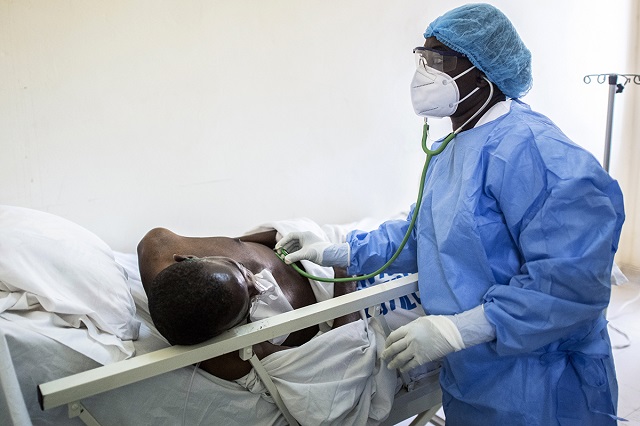
Without the private hospitals including those owned by religious institutions, Uganda’s healthcare system wouldn’t be worth the ink of this article. Intensive Care Units in private hospitals are charging an arm and leg. I wouldn’t call them greedy like most people are doing because the owners instead of investing in apartments like most Ugandans with money, they went into healthcare. Without them, we wouldn’t do much. Some acquired loans at more than 20% per a year to get the beds and equipment. So as businesses, they want a return on their investment. Who would blame them?

Government however can subsidize what private hospitals are charging COVID-19 patients and even those suffering from other diseases.

The beds aren’t too many and government can easily pay some of the bills for such patients. The same can be done for those in High Dependence Units. Government can pick the allowances of healthworkers in private ICUs and HDUs, supply medical oxygen, and such other stuff.

The government cannot watch as families sell all their assets to clear bills for people who have even died. Sometimes the assets sold aren’t even enough to clear the bills.

The writer is a communication and visibility consultant. djjuuko@gmail.com

Related

Digitalization

From a simple smartphone to nearly 2.5m followers: Dr. Solomon Kimera inspires Kapchorwa youths to start now

By Gloria Kembabazi Digital skilling is opening new opportunities for young people who dream of building careers in content creation. In today’s digital world, many youths aspire to make a living online, yet procrastination and self-doubt often hold them back. Many wait for the perfect equipment, ideal timing, or enough money before they begin delays that keep their dreams on pause. It is under this background that Uganda Communications Commission (UCC) through the Uganda Communications Universal Service and Access Fund (UCUSAF) working with Prime Time Communications is implementing a program to skill youth groups in Information and Communication Technologies (ICT) and multimedia in five districts in eastern Uganda. The districts are Kumi, Kapchorwa, Manafwa, Butaleja and Kamuli. The training will see more than 500 youths acquire digital skills that are critical in enabling them to find or create meaningful work. Through the partnership between UCC and Prime Time Communications, more than 1,200 youths have so far been trained in central and eastern Uganda. When the digital skills training program kicked off at the Kapachrowa Community Hall in Kisenyi Sub-County within Kapchorwa Municipality, Kapchorwa District, the atmosphere was filled with inspiration as a famous TikToker and content creator Dr. Solomon Kimera took to the stage. Dr. Kimera, widely recognized for his engaging and educational TikTok videos, has built a strong online community by blending entertainment with knowledge. His relatable delivery and ability to simplify complex topics have earned him admiration from thousands of young people across the country. Addressing the youth, Dr. Kimera shared the authentic story of his journey. Although he is a medical doctor with a professional background in clinical practice, his rise in the digital world did not begin with expensive tools or a perfect setup. Instead, it began with confidence and creativity. “I started with the most basic equipment; an inexpensive smartphone. I was my own camera operator,” he revealed. “If I had waited to earn enough from my medical career to buy a better phone, I wouldn’t have the following I have today. I might never have existed as a content creator. You must start now!” His message resonated deeply with the young audience. Today, Dr. Kimera has nearly 2.5 million followers on TikTok, with his videos attracting millions of views and likes. His success is proof that passion and consistency can open doors, even when resources are limited. Through the UCC digital skills training, the youths in Kapchorwa are being empowered with practical skills to create content, build online brands, and tap into the growing digital economy. Dr. Kimera’s story served as a powerful reminder that success begins with the courage to start using whatever is available. His final encouragement to the youth was simple but profound: “Don’t wait for perfect conditions. Start with what you have. Your journey begins today.” One participant, Siya Deo, described the engagement and training as “an eye-opening.” Previously, he viewed his smartphone as a tool for basic tasks. “Now I know I can use my phone to do video content creation,” he shared.

Read More »
Out to Lunch

#OutToLunch: Rampant unemployment is a key national security issue

By Denis Jjuuko The public service ministry recently announced that more than 40,000 people applied for 287 jobs across different government ministries, departments and agencies. More than 28,000 of those who applied qualified, meaning they were selected for aptitude tests which were to be held at the Mandela National Stadium at Namboole. It must be frustrating looking for job in Uganda. The news came after a bombshell report emanating from research by the Inspectorate of Government (IG) and the Economic Policy Research Centre (EPRC) that indicated that Ugandans pay a whopping Shs42.34b annually to district service boards to get jobs. Averagely, the report indicated, 130,000 people pay bribes to land jobs. The people who ask for these bribes know that the jobs are scarce and people are desperate and willing to do anything to land the jobs. When somebody who bribed their way to a job gets employed, it means a few things. First, the person is not the best for the job. They just had the money to pay a recruiter. The best candidate may not have had the money and therefore wasn’t considered. Because the person knows they only got the job through bribery, they will continue bribing their way into senior positions. That is how we end up with incompetent people in positions of authority. People who can’t execute anything and making sure things don’t work or looking at everyone who is competent as a threat or what people call work politics. The people who are competent end up doing very little at work so that the incompetent boss doesn’t feel insecure and threatened. That is how we end with yes people—they won’t advise their bosses. They will do whatever the boss wants whether it makes sense or not. Remember, there are no jobs and these people have families to feed. Rocking the boat isn’t something that they want to do. Second, the people who bribed their way to jobs will only hire those who pay them a bribe. That way you end up with a corrupt layer at every level and an incompetent lot everywhere. Service delivery is impacted. Government then fails to create jobs that young people can apply for and get on merit. Third, because the public service is corrupted, the private sector suffers too. People can’t start and run businesses professionally. The people who are in positions because they paid a recruiter will endlessly try to get a return on their investment (read bribe). Procurement processes will be compromised. Payment for services and goods delivered will be frustrated unless somebody is paid. The bribery doesn’t end at public service. We recently saw many statements from politicians who lost elections for positions in their political parties claiming their rivals won through bribery. Some wondered why people were bribing for positions that were actually “voluntary.” We hear that candidates for Members of Parliament in some constituencies spend more money than they would get in the five years they would spend in the office should they win. If somebody spends more money than they would be officially paid, it means they are doing so to illegally get something. Somebody who sells their house to get money for election will do anything to get their house back. That is how we end up without jobs and seeing young energetic people leaving the country for the Middle East not to do highly technical jobs but menial ones or being trafficked for sex like we recently heard from a BBC investigation. Government has been saying that they are intending to grow the economy to US$500 billion annually. Great stuff but with rampant corruption, it will be a tall order. There is a need to nip corruption in the bud in order to create sustainable jobs for the working age population. Otherwise, we shall continue to see thousands of people filling up soccer stadiums to apply for a few jobs they know they stand no chance of getting. That is what they call desperation. And desperate people can do pretty much anything. Unemployment ends up being a key national security issue that the government must urgently address. The public have a chance to play a key role here by voting people in 2026 not because they bribed them with a t-shirts or some cheap alcohol but those who can address the challenges they face such as unemployment. The writer is a communication and visibility consultant. djjuuko@gmail.com

Read More »
Out to Lunch

#OutToLunch: What employees should know before launching a side hustle

By Denis Jjuuko On Friday 29 August this year, I was invited to speak to the staff of Uganda Registration Services Bureau (URSB) about side hustles for corporates during their end of month Fireplace session. The Fireplace is an internal meeting where guest speakers discuss various topics every last Friday of the month. Here is an abridged version of my presentation. I believe others could find an interesting thing or two. In August 1972, Idi Amin launched his so-called economic war which led to the expulsion of Asians. In the months that followed, Uganda experienced unprecedent inflation. With the economy in free fall, many workers realized that their salaries were no longer sufficient. At Makerere University, the country’s premier higher institution of learning, professors took to driving taxis to supplement their income. One professor, until recently a minister in Museveni’s government, was the taxi driver. His colleague, an education professor, was the ‘turn boy’ or conductor. Others became teachers in secondary schools. Their wives turned the garages of their residences into unofficial canteens. Amin’s economic war led to the birth of side hustles in Uganda, where employees do something outside their official jobs to supplement their incomes. The importance of side hustles was further cemented in 1990s when the Structural Adjustment Programme led to thousands of people losing their jobs. Recent mergers of government agencies (rationalization as they call it) and closure of funding organizations like USAID continue to make employees think of life beyond their offices with polished floors. So, if you are thinking of starting a side hustle, what key things should one think about? Here are a few points to ponder. Time: Side hustles for people doing 8-5 jobs should not be too time consuming. Get a hustle like buying and selling land, flipping houses, buying and selling cars, bonds and unit trusts (if you can call them side hustles), or even supplies. Bars, salons, and restaurants require a lot of time when starting which you may not have as you have to concentrate on your job as well. Also, workers in such sectors are unreliable. You don’t know which day they will not turn up. Or when they will sell a crate of beer and replace it creating an impression there are no customers. Still, you don’t want to stay awake in a kafunda so that a few men not eager to get home can finish their beer and leave to enable you close the day’s operations. Cash payments: Avoid side businesses where most of the payments are made in cash. You don’t know when the workers will disappear with it. Most side hustles are small and may not have systems to protect revenues especially in the beginning. Side businesses where people pay in the bank are better. There you can protect your revenue. I know there are mobile money payment codes these days but there are still a few issues with them to be fully embraced. Small is beautiful: All business plans show profitability at one stage. Also, however much research you do, there will always be stuff you will only learn when doing the business. Start small and allow yourself to learn the trade. Don’t throw all your life savings in a business at the beginning. Don’t borrow to start. If you are to borrow, maybe from family. Start with your savings or pool money with others. Six months rule: Before you quit your job to fully concentrate on the side hustle, instruct your bank to send 100% of your salary to an investment account or unit trusts or bonds. Don’t touch this money. Now, see if you can rely on the side hustle for six months. Pay all business and personal expenses from the business. That way you will know if the business is profitable or if you have been subsidizing it with your salary. That way you will avoid looking for a job a few months of leaving one. Do what others are doing: Your side hustle doesn’t have to be innovative or ground breaking. Do what others are doing. See a sector you can invest in, where you can easily raise start up capital and get going. But run it better than others. Ground breaking ideas can then be implemented when you have money you can afford to lose or can raise the required capital from angel investors. Cashflow is the lifeblood of business: Look for businesses which have good cashflows. Planting trees that mature after 20 years should be for people investing for retirement. But doing something that brings in money regularly helps keep the business operational without necessarily relying on the salary or salary loans. Do people need to do typical side hustles? Should everyone do business? There is no clear answer. One just needs to find a model that works for them. Apart from some telecoms and banks, many businesses in Uganda that publicly publish their returns show net profitability of around 10%-15% annually. This means that an employee who invests in treasury bonds or unit trusts is likely to earn the same percentage without any hustle of running after the ever-elusive customers. It can also be a strategy of accumulating capital to venture into capital intensive side hustles that don’t require a lot of time like real estate. The writer is a communication and visibility consultant. djjuuko@gmail.com

Read More »