
#OutToLunch: How Uganda’s next president could easily reduce the housing deficit

By Denis Jjuuko

It is not uncommon to find a social media post in Uganda regarding the price of land or property being shared many times. The argument is that land prices are extremely high especially around Kampala and in many major cities or towns across the country.

With an ever-increasing population and poor infrastructure and services a few kilometres outside these major urban centres, it shouldn’t be entirely surprising that land is expensive. I have always given an example of Mpigi town, which is nearer to Kampala than Entebbe but a difficult place to commute due to poor infrastructure. Yet with the Entebbe expressway or even the old road, Entebbe is an easier place to access. So, land prices around Entebbe will always be high as not many people would make Mpigi their area of residence while working in Kampala. That though will change when the Kampala-Mpigi Expressway is complete.

However, construction of infrastructure such as expressways in Uganda takes a very long time leading to people crowding around the urban areas where it is easier to commute to their workplaces and services such as hospitals and schools are better. This increases pressures on land for housing purposes in urban areas. And as the population grows, land, an inelastic resource becomes more expensive.

Many young people end up struggling to build houses. With the current housing shortage said to be over 2.4 million units in Uganda, poor infrastructure and services and an ever increasing population, the price of land will only continue to rise unless the government does something.

And that wouldn’t be nationalizing land like some people urge whenever there are delays in executing infrastructure projects or when the price of land is seen as a hindrance to young people owning houses. Government must realize that the most valuable asset the majority of Ugandans will ever own is a house. Once people own property, they wouldn’t want to create so much chaos that could lead to destruction. Empowering young people to own houses should therefore be in the government’s best interests.

Since land in Uganda for housing is largely owned by private entities or communities who determine its cost without any guiding principles, government could create a land bank from which individuals could buy land or a house. How would this work? And since we are going to the polls next week, the country’s next president has his work well cut out.

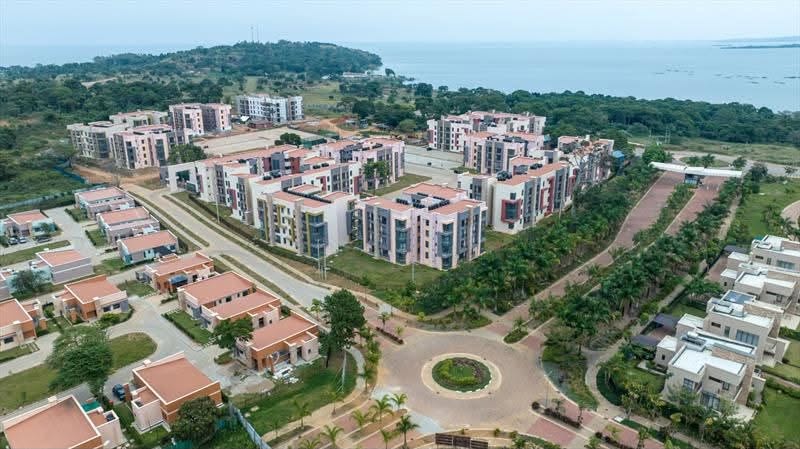
In urban areas like greater Kampala, government could buy large tracts of land in Mukono, Mpigi, Mityana and Luweero and demarcate it for planned housing estates similar with what private land dealers do but a bit better. Land would be divided into small pieces with architectural plans drawn by leading experts. Schools, recreation, and health facilities would be planned.

The government would then sell the land at a rate lower than the private sector. Nobody would be allowed to deviate from the architectural plan. If you bought in an area with bungalow houses, you build the exact bungalow. If you bought in an area for storied villas, you build a storied villa as per the architectural plan.

Each person or legally married couple would be allowed to buy only one plot and you can’t sell it to another person at any rate. If a buyer prefers to sell, he sells it back to the government at the price he bought it. This would protect the land from speculators who buy, hoard and then sell at an exorbitant price.

Because the cost of building a house with a given architectural plan is easy to establish, banks would only rent a certain amount of money. Banks willing to lend the money would not give it to the individual as is usually the case, rather a prequalified construction company that can deliver the house within the established cost of building it with a capped interest rate or profit. This is how Islamic banking works and therefore not a novel idea that is difficult to implement. Should a person fail to pay, the government buys it from the bank at the set amount and then sells it to somebody else. People could pay in installments over a given period. Monthly deductions could be made to salaried workers such as civil servants interested.

The government can then construct roads and expressways to those areas as many people would be living in these housing estates. Public transport, schools and health facilities would be prioritized. More young people would end up owning houses and therefore a huge stake in their country and ministry of urban planning would have something big to deliver. The price of land for housing would plummet too enabling more people to own houses.

The writer is a communication and visibility consultant. djjuuko@gmail.com

Related

Out to Lunch

#OutToLunch: Corporate farmers, side hustlers must pay “school fees” to succeed

By Denis Jjuuko Over the weekend, a video surfaced online of a Kenyan who grew watermelons, looked for buyers, loaded them to the city, failed to sell them, stored them and they fermented overnight. The video went viral largely because many Ugandans especially those who hold day jobs in corporate bodies could relate. Known as ‘corporate farmers’ and under pressure to have a side hustle, many start businesses such as farming. These ventures — small gardens or even large farms, salons, clothing shops (known as boutiques), bufundas (small bars), grocery shops (labeled supermarkets), and restaurants among others are everywhere. One in Uganda must be seen to be doing a side hustle business or they are considered failures. There is a historical perspective to it. In the 1990s, many civil servants were retrenched and had no jobs. Kids saw how their parents or guardians without any other income suffered and swore not to suffer the same fate. In order to avoid those missteps, many decide to be different. Those who survived retrenchment saw their mothers open grocery shops at universities or doctors’ villages to supplement the family income. Today, many people are driven to start farming. Favourable weather patterns, abundant arable land, a growing population, affordable labour etc. On paper and indeed like for most businesses, it is all rosy. It doesn’t, however, take long before stories start springing up on social media platforms. Grown something and got nothing out, the platform is available to broadcast. But for many, the desire for a side hustle is hard to contain. In order to be different from their parents and grandparents, today’s side hustlers tend to think differently. Like the Kenyan watermelon man, if you harvest a sizeable number of them, hire a truck and take them to the market yourself, you would cut out the middlemen and make significant returns than if you sold them at the farm. Without much research or due diligence, the corporate farmer arrives at the market and everyone laughs at them. Nobody is willing to buy. There is a story of man in a suburb just outside Kampala known as Muvunza. The story goes that he one day arrived in Kampala with a truckful of matooke from his garden. He moved around several markets in Kampala and they were giving him peanuts per a bunch. He decided to offload the matooke at his home and watch them rot. The locals nicknamed him Muvunza (the one who lets stuff rot). Many corporate farmers or side hustlers are Muvunzas. If they are not letting matooke rot in their compound, they throwing money after money in ventures that are not sustainable or profitable. High rents, taxes, a small customer base and many other hinderances don’t enable them to make profit. Sometimes they don’t know because the salaries at their formal jobs cushion them from these losses. It is when they start running these businesses fulltime that they realize that the ventures were sinkholes. The main challenge for most hustlers is lack of experience or giving up before they have paid what Ugandans call “school fees.” For every venture, it will take time for the entrepreneur to crack it. To establish a network of clients or to be known for doing something requires time. If watermelons are your thing, the traders in Nakasero, Nakawa or Kalerwe markets won’t know you if you deliver once and even on the wrong day. They already have their suppliers. So, you will need to court them over time. They aren’t going to abandon guys they have been dealing with for the last 10 years just because you have shown up with a truck of watermelons or tomatoes. Maybe you even arrived when they stocked up a day before. You convince them one by one over a period of time. If you are to do farming and you do it for one season, there is no way you are going to succeed. Those who succeed do it for over time. Some seasons they make profits. Other seasons they make losses. Once they gain experience, they can then stabilize and be able to predict their incomes. By this time, the “school fees” paid have started to provide a return on investment. Networks have been established That is how traders in the Kampala markets start to call and place orders before even the seller arrives. That is how credit lines are established. That basically means that there is no excuse for experience. The writer is a communication and visibility consultant. djjuuko@gmail.com

Read More »
Out to Lunch

#OutToLunch: Moses Matovu defined music. Others must posthumously learn from him

By Denis Jjuuko When news started filtering through that Moses Matovu had been killed in Kibuli last Thursday, the first question I asked myself was who would want him dead? I can’t claim to have known Moses Matovu very well. I only met him a few times; the first while interviewing him more than 20 years ago for a newspaper I worked for. The other occasions were whenever I was involved in organizing events and his Afrigo Band was set to perform. He was always calm and even measured. He dressed smartly and there was hardly a hair out of place. His army green Land Rover always looked immaculate and you could think he wasn’t driving it in dusty Kampala. You never saw it with a coat of dust. Moses Matovu also known by Papa Moi carried the personality of a man who had seen it all. Indeed, he had, having started performing when people reading this were not even yet born. He survived the turbulent 1970s and early 1980s when Uganda was engulfed in wars and extrajudicial killings. Some of his colleagues were actually killed. His band equipment was looted during those days but he didn’t give up. He re-assembled his ensemble and got back to work. Deaths of his fellow colleagues didn’t stop Afrigo. Last year in August, his legendary band celebrated its 50th anniversary with a deserving performance at the Millennium Grounds in Lugogo. Hopefully his death won’t be the end of a group that represent the best of Ugandan music even though we will miss his melodious voice. One could only hope that over the last 51 years or so, he had time to mentor others who could take over from him. Afrigo Band didn’t last this long in the industry known to have a high mortality rate because of just the vocal and saxophonizing ability of Moses Matovu. They are a disciplined lot. I have never heard that Afrigo was booked to perform somewhere and they didn’t turn up or turned up drunk and unable to perform. You didn’t hear them spend half their performance time talking about haters. Or even performing when their soul wasn’t there. Unlike today’s bands, you hardly saw them reading the songs off their smartphones strapped on the microphone stands. They only performed songs they knew at heart or had spent time practicing. They arrived on time and indeed finished their shows on time. Today, there is a band performing somewhere every single day. Many of these bands actually have large followings but I doubt any of them will be around for half the time Afrigo has been on stage. Once they become famous, they split and each member starts a band. Soon after, you see interviews on TikTok when one group is dissing the other. Each splinter group accusing the other of greed, unprofessionalism and all sort of things. Before you know it, the groups are all struggling to create a distinctive brand and then you hear one member disappeared with the drums, another with a keyboard. In Afrigo, Herman Ssewanyana a.k.a Omwana w’Ensenene has been with the band for 44 years. Joanita Kawalya for 36 years. Rachael Magoola for as long as one can remember. Even when she was elected Member of Parliament, she remained with the band. Each of those people I mention and many others could have started offshoots of Afrigo. They didn’t. They instead remained together and built a brand like no other. But also, Afrigo don’t just do covers. They don’t just recruit singers who can’t sing. They don’t appear to read songs instead of singing them. And most importantly, they have their distinctive voice. If you are abruptly woken up, you could immediately tell that it is Afrigo performing. I think because they have their own songs. Many other bands, you have to first see the vocalists to tell which one it is. And they all follow the same performance format. Start with ballads and end with Congolese songs! Why are today’s bands unable to have their own songs? How can a band, even those with good vocalists and other musicians be unable to record just one original song? How can they be comfortable to only perform other people’s songs for years (for those which are good enough to last a year or more)? Why should anyone pay a band Shs5m or even Shs7m to do karaoke at their wedding or any other events? Why should we actually pay bands to sing Afrigo songs? There is quite a lot to learn from Moses Matovu, unfortunately now, posthumously. The writer is a communications and visibility consultant. djjuuko@gmail.com

Read More »
Out to Lunch

#OutToLunch: A daily brunch could be what one needs as cost of living skyrockets

By Denis Jjuuko A few months ago, if you owned a small car and fueled it with just Shs100,000 or about US$30 at the time, you almost forgot about fuel for a whole week if you lived and worked around Kampala. Today, Shs100,000 worth of fuel lasts a day or two in the same vehicle while covering the same distance. If you went to a market for groceries, what you used to walk away with a few notes of the shillings is now significantly less. There was a time when meat was affordable to at least an average middle-class home in Kampala. Today, a kilogram costs as much as Shs20,000 at a roadside makeshift butchery. The cost of alternatives like beans has also gone up. If you add on the money one can spend on energy to boil them, things are now very tight. As the cost-of-living skyrockets, there is a need for households or individuals to tighten the ship. A few ways to do so. *Brunch*– Many Kampalans especially the youths love brunches. There is a brunch in Kampala almost every weekend in so many places. A brunch means a late-morning meal that combines both breakfast and lunch. It is now time to do that every day to save some money. That way money that would have been spent on two meals is saved by having one meal. This means eating a late breakfast or an early lunch but not both. *Rideshare*– It is time to share rides to work. Since most of you are already in the neighborhood WhatsApp group, it is time to now establish who works near each other and is willing to share a car. If you are five people, each can decide to drive one day. That way you have saved fuel for four days and significantly reduced your expenses. Of course, you will have to forego something when you share a vehicle. Online meetings are now more important than ever. *Bodaboda riding* – If the boda is your main means of transport, it is now time to learn how to ride one if you didn’t know already. Go buy a scooter that is electric and be your own rider. You can actually buy an electric bicycle. They cost about Shs2m on average. You have seen those ones ridden by the food delivery guys. If you have been spending on average Shs10,000 per a day on the conventional boda, with your own electric bicycle, you will be spending about Shs2,000 a day or less covering the same distance. You just need to ensure you have enough electricity units at home to charge a few days (you can charge at work and your manager won’t even notice). This means you have saved Shs240,000 per a month or Shs2.88m a year, enough to buy the bike and even keep some change. If you charge at work and your boss covers the cost of charging, you are traveling for free and saving everything. The last time I was in Ouagadougou, everyone seemed to ride a bike. Corporate bankers, suited lawyers, nurses, civil servants, everyone including the female ones. Today, I won’t mention some European cities. *Eat at home or pack lunch* – If your workplace doesn’t provide a free lunch, you may have to now wake up early, warm the food and pack for the brunch. You would not only eat the stuff that you are sure of the quality, you would also be saving money. If you work in some formal organization, I believe that somebody has donated to you a flask cup (is that what they call them?). Time to put it to work. Pack the porridge or the tea to your workplace. It is even considered fancy. Want to go out on a date? I hear it is romantic to cook the food at home. *Cook only what we will be eaten* – Globally, statistics from United Nations Environmental Programme show that about 30-40% of the food prepared for consumption is lost or wasted. If you look at your kitchen sink or garbage bin, you will realize how full it is after every meal with wasted food. Be strict on what your people prepare especially if they aren’t the ones who buy it with their money. Let them cook either what they will eat or buy some packs so they can have it stored. Leftover food once warmed before consumption has never caused a problem to anyone. *Tame the water bill* – Water in Kampala used to be affordable or even cheap. Not anymore. Regularly check your toilets to ensure there is no leakage. Recycle water as well whenever possible. Harvest some water as well. The rains are coming or already here. *Electric pressure cooker* – They are very affordable and efficient nowadays. Buy one and reduce your costs and even times of preparing meals. There is nothing cool about eating food prepared using firewood or charcoal. Lastly, invest whatever you have saved. The writer is a communications and visibility consultant. djjuuko@gmail.com

Read More »