#OutToLunch: Replicate innovation hubs in Kampala and refugee settlements across the country

By Denis Jjuuko

Airpods in the ears. Hands busy with a smartphone. Shoulders holding a leather laptop carry bag. Legs covered in sagging pants. Torso well covered in a jumper with a hoodie. Hair spiked. Sunglasses on.

It is a familiar sight at a building in Kampala where young people trying to replicate Silicon Valley converge to work on largely fintech applications. At least a floor in the building provides open spaces where these people work on their ideas while sipping iced coffees sold at a cafeteria in the corner. Walls are covered with inspiring graffiti of quotes by famous people or even bible verses.

The young people are on a mission to make it big in the tech world. Those who find some breakthrough, which usually means nailing somebody willing to invest in their ideas or provide a grant, move to the office cubicles partitioned with glass, providing more inspiration to those still on the journey.

These workspaces have many names. Incubation centres, ideation labs, entrepreneurial hubs, job centres. They are usually funded by development partners as a way of subsidizing the cost for these emerging entrepreneurs, developers, inventors, creators or whatever they prefer to call themselves.

Perhaps having seen some impact in urban areas, these centres were replicated in many of Uganda’s refugee settlements across the country. At these centres, youthful refugees and host communities access high speed internet, get access to computers and sometimes machinery and tools that enable them to bring their ideas to life.

The development partners sometimes throw in training like how to use multimedia platforms to market their businesses or find work. Small grants for groups with innovative ideas or even for those who are dedicated to their work are common.

Access to high-speed internet has helped a few of them to create great products. On a visit to the Nakivale Refugee Settlement, I found an interesting group that makes guitars. They taught themselves via YouTube tutorials and they are able to market their shiny guitars to global customers through social media. They have been supported by Partnership for improving prospects for forcibly displaced persons and host communities (PROSPECTS), a project implemented by the International Labour Organization and funded by the Netherlands.

It is remarkable what young people can do once they are enabled to innovate. Skilling is critical not just in vocational jobs. But also, in soft skills such as communication and digital marketing. How can they use WhatsApp Status, YouTube or TikTok to push their products out? How can they use YouTube to learn a new skill?

I don’t think there is a vocational school that sets itself out there to teach making guitars but those refugees in Nakivale found a niche and made it work even though they have a long way to go. I have heard of people who taught themselves baking, weaving, and a few other things via YouTube tutorials and are now earning a living and even employing others.

Once young people have access to affordable internet, many can teach themselves similar skills once they appreciate what they can do with a smartphone. Multimedia skilling programs for youth such as those offered by the Uganda Communications Commission (UCC) through Uganda Communications Universal Service and Access Fund (UCUSAF) are a good starting point. I have seen people learn making professional posters through platforms like Canva or videos using CapCut thereby joining the creator economy.

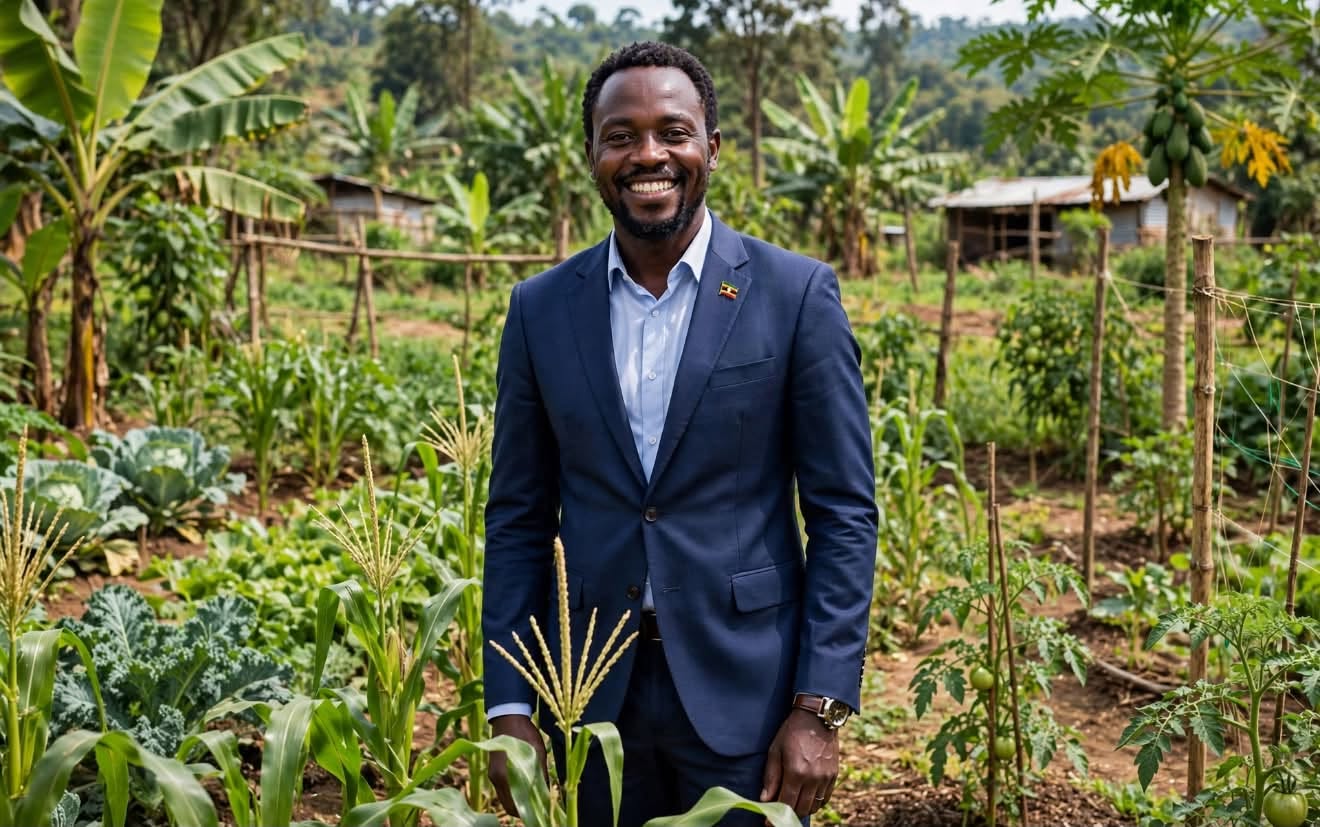
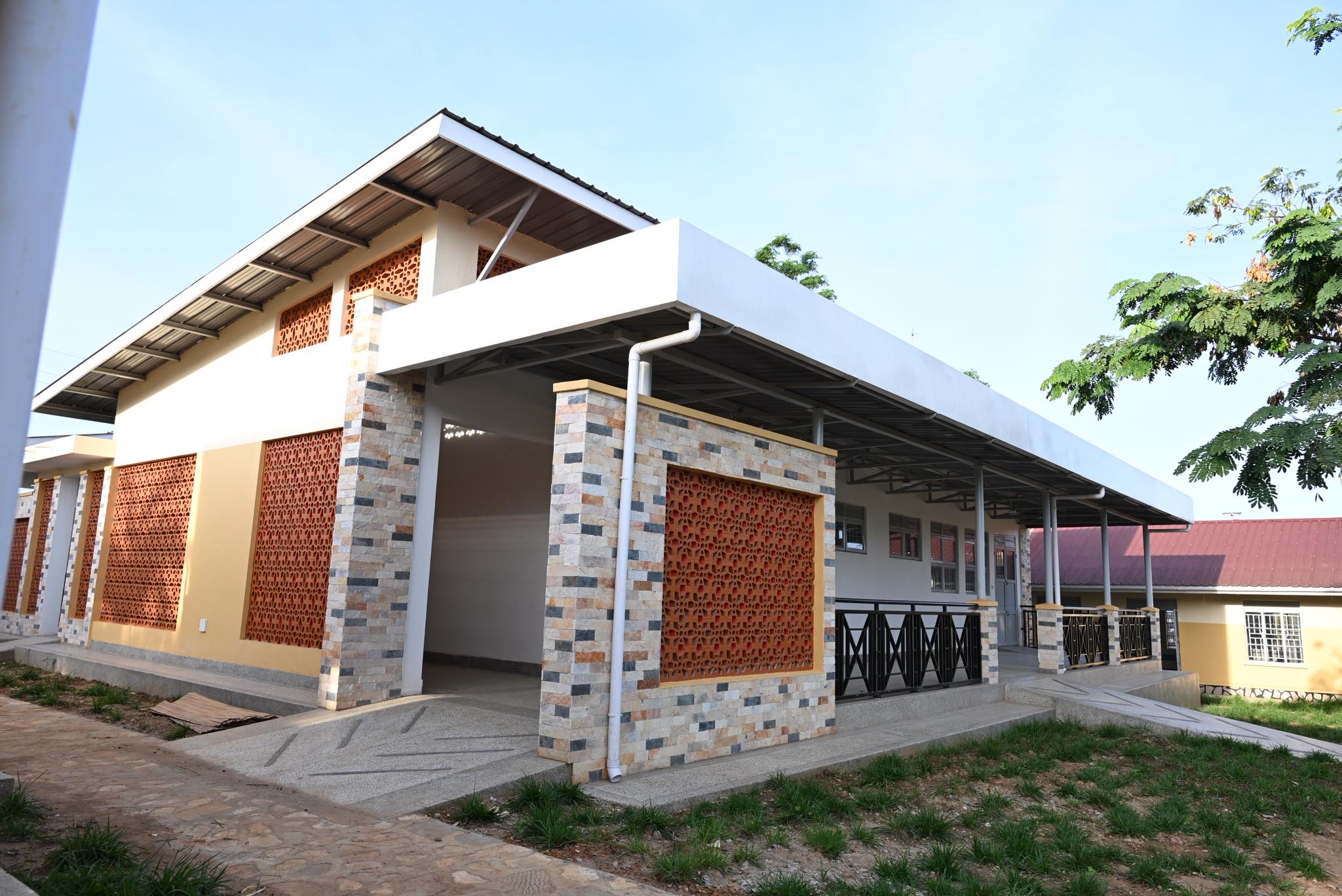
I think there is a need to replicate the incubation hubs in Kampala and job centres in refugee settlements at subcounty level or even district level to start with. Here, young people would converge even if once a week to discuss with like-minded individuals, teach themselves skills and form partnerships and synergies that would enable them to scale their ideas or enterprises. Of course, regular trainings and mentorship would be important.

They would be able to access high speed internet, computers or virtual reality gadgets. They would also test out their ideas and over time have access to those who may have been able to succeed. They would also provide markets to themselves. If one has mastered digital marketing, another involved in another industry would be able become their customer.

We have also talked about value addition for a long time. Machinery is expensive. Knowledge is scarce. If people grow some coffee in Bukomansimbi or Budadiri and you want them to add value, a roastery can be installed at this hub where those interested can roast and package their coffee. As they grow, they would be able to scale on their own.

If the hubs are somewhat working for youths in Kampala and refugee settlements, they can work too in rural communities.

The writer is a communication and visibility consultant. djjuuko@gmail.com

Related

Out to Lunch

#OutToLunch: Make cylinders of 1kg, 2kg if gas is to replace charcoal

By Denis Jjuuko On a trip to northern Uganda some years ago, I asked the transport team to provide a sports utility vehicle (SUV). I prefer SUVs for long journeys as they are more comfortable and can handle the terrain. We were to spend a week traversing the breadth of northern Uganda. It didn’t take long to realize that some of the people I was traveling with were unhappy but I couldn’t put a finger to it. I thought maybe they didn’t want to make the trip. Along the way, the driver pointed to a roadside makeshift market and said in Luganda, “laba emaali,” loosely translated as look at money while pointing at sacks of charcoal that were packed beyond the rims with a fibre net holding the extra black pieces together. That is when my colleagues said that I have made them miss returning to Kampala with charcoal. That I should have asked the transport team to provide a pickup truck. “We are not ministers to travel in this kind of car,” another angrily quipped. I was ably informed that a sack of charcoal cost a fraction of what the traders in Kampala charged. I understood their sentiments. I offered lunch and dinner for the weeklong trip, arguing that they can use that saving to buy charcoal when they returned to Kampala. I ceased being a fan of buying stuff along our highways to return with to Kampala after realizing that prices quoted by traders or vendors depended entirely on the car you drive and how you look but that is another story. Also, I have never been a fan of charcoal. I find it expensive, easily wastable by households, dirty and cumbersome to use. After that trip, I understood the place charcoal occupies in people’s hearts and households. It wasn’t, therefore, surprising when panic engulfed Ugandans especially the urban dwellers when there was an announcement that charcoal had been banned in Uganda ostensibly to protect the environment. Social media went gaga. Parliament swiftly stepped in and advised the government to give it a week by presenting its comprehensive plan. Charcoal is a byproduct of trees and many have been felled to make it. Truckloads of it used to dominate certain routes to urban areas. Many roadside kiosk owners survived by vending charcoal. We have just experienced a severe drought in Uganda and I believe that many people won’t have food to eat in a few months. I perfectly understand why government wants to ban it. As somebody who isn’t a fan of it, I have no tears to shed to be honest. But that would be selfish. The majority of households can’t afford the alternatives — electricity and gas or even briquettes. Beyond price, both forms of energy also have distribution limitations in Uganda. Liquefied petroleum gas in Uganda is largely sold in cylinders of 6kgs and 12kgs. If you don’t have a cylinder, the startup cost is approximately Shs170,000 for 6kgs and Shs266,000 for a 12kg. The median monthly income in Uganda is Shs200,000! What makes charcoal the preferred choice by at least many urban households is because with Shs1,000, one can get a palmful of it which they can use to cook something. Many of our people don’t earn a predictable regular income. They wake up, go to work (if they find it) and are paid per a day or work done. Once they get that money, they can buy some charcoal of Shs1,000 and some maize flour or a few fingers of Matooke and prepare the day’s meal. They can’t afford to spend more than their monthly income on the gas equipment. There was a time government distributed some gas cylinders freely. I believe that at Shs60,000 for a 6kg and Shs112,000 for a 12kg for a refill respectively, the majority of our people can’t afford it. Gas cylinders even if distributed for free will most likely end up as decorative materials. What then can be done? Government must or support the private sector to make gas cylinders of 1kg or 2kg which means that the majority of households can afford to refill at Shs10,000 for a 1kg or Shs20,000 for a 2kg or even lower. That is why manufacturers of consumer goods like sugar or cooking oil don’t sell only 25kgs or 5 litres respectively. They sell in small quantities that the majority can afford. Our people buy sugar by spoonful, diapers by a piece, eat beans but ask the restaurant to add in meat soup (because they can’t afford meat). They can only afford gas by a kilo or a half not 6 or 12kgs. The writer is a communications and visibility consultant. djjuuko@gmail.com
Read More »
Out to Lunch

#OutToLunch: Medical apprenticeship programs critical in improving diagnosis and treatment

By Denis Jjuuko You probably know somebody who after trying many healthcare facilities, they were told there was nothing wrong with them and they should go back home. The symptoms persisted though and the more facilities they visited, the more they were told the same. Sometimes they were given painkillers to psychologically manage them. Desperate, they visited a traditional healer whose Thursday clinic deep in the village is thronged by many people who share similar experiences. The healer is basking in glory. He saved so and so; his marketing team disguising themselves as waiting clients assure them. After a few months of some relief, the pain comes back and this time more excruciating. But since they tried everything and failed, they give up and wait to die. And indeed, they die. At their funeral, we claim that it was God’s plan! Well, if you don’t know anyone who has gone through that, at least you heard of King Oyo’s story. The now deceased Tooro Kingdom leader visited some high-end hospitals in Kampala after feeling persistent backpain. X-rays, MRI scans later, they told him they saw nothing. Being a person of means, he flew to a hospital in Nairobi where he was diagnosed with cancer. A year later he was dead. What did the people in Nairobi saw that the Kampala ones couldn’t? Well, Nairobi has a PET Scan or a few. Kampala and the whole of Uganda don’t. A PET Scan costs about US$3m or approximately 17 Landcruisers. If there was a meeting of government officials, you would run out of space to park them. That is how many we have in Uganda but a PET Scan is not something we have been able to buy and install yet. But it isn’t just the lack of technology that is a problem. You can have a PET Scan and still fail to diagnose a patient properly. Patients aren’t sent for a PET Scan on their first visit to a clinic as it is rarely used as a diagnostic test rather one that determines an extent of the disease. Other tests have to be done. And still a diagnosis can be missed depending on who has done the scan or X-ray and the reading of the results. If for example a child has a bone tumor, a pediatric radiologist would probably pick up the first signs that an adult radiologist may easily miss. Even then, the doctors who ordered the tests and other specialists can sit as a group and discuss what they are seeing. They may even disagree. After that, they could order for a biopsy and eventually a PET Scan if it is needed. You see, that means that you need to have a team of specialists with not only adequate training but also experience that exposed them to a diverse spectrum of patient diseases and how to diagnose them. If you only train in Uganda and practice in Uganda for a year or two, it is most likely you won’t be able to diagnose many diseases even with advanced technologies at your disposal. Doctors in Europe struggle to diagnose and even treat malaria, which is many times chicken feed to Ugandan doctors. When did your doctor last consult anyone before prescribing drugs? Most likely he or she listened to you, sent you to the lab, looked at the results and sent you to the pharmacy or told you to go back home. Isn’t that likely to lead to a wrong diagnosis? I am not saying that a team needs to look at each and every case but you get the drift. To have good doctors in Uganda, there is a need for a robust apprenticeship program so that the graduate doctors can learn from as many experts as possible. When we spend years discussing intern doctors’ wages, it means we are delaying their learning. They aren’t getting the right exposure from the seniors. And if they aren’t properly apprenticed, they will not become good doctors. There is no two ways about it. We also need to have a critical number of health workers sent elsewhere for exposure. They should learn how medicine is practiced elsewhere while getting exposed to different diseases and treatment methods. Government should be talking for example to American hospitals for medical residency. We could send some to Aga Khan in Nairobi as well. Those who are sent by government, they should be contracted and incentivized to come back to work here. The right technology and generally good working conditions should be in place. Upon return, they should train others through apprenticeships. They should spend a certain number of hours a week for a few years in public hospitals with the list of young doctors they have mentored as part of their deliverables. Ensure that those trained doctors remain in hospital wards too. This is actually cheaper than sending politically connected patients abroad for treatment because Uganda can only send so many. The writer is a communication and visibility consultant. djjuuko@gmail.com

Read More »
Out to Lunch

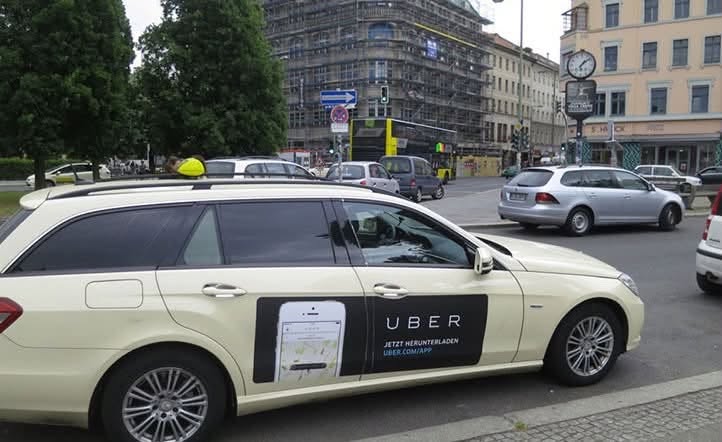
#OutToLunch: Uber’s abrupt exit calls for regulation of international brands to protect users

By Denis Jjuuko Ten years ago, Kampala was all the rage. Uber, the global taxi hailing app launched in Kampala with fanfare. The razzmatazz that comes with a global brand that promises to change the world. All our transport problems, at least in Kampala, would be sorted. It was cool to order a Uber or arrive at a fancy party in one. If you hadn’t installed the app, you were being left behind. There was no need to buy a car. Uber would sort that at the fraction of the cost. If you had a car, it was so cool to use it as a Uber on your way to or from work. And if you didn’t like your boss, you could quit your job and become your own boss as a Uber driver. It wouldn’t get any fancy than that. Some people cashed out their savings, bought a few corollas, got their cousins who had previously graduated from university and made them Uber drivers. Side hustle had never been so simple. Special hire drivers cried. Calls placed to their previous customers went unanswered. The suitor had a new lover. You were exploitative. Uber transported someone to wherever they wanted at the cost of a chapati! Some young people decided to create Uber for all sorts of things. Looking for somebody to wash your clothes over the weekend, a “uber” was created for that. Need a truck to transport something? There was a “uber” for it. Need a boda? Well, another “uber” was created before Uber itself introduced bodas. Innovation hubs were full of ideas with young people dressed in hoodies spending all their time trying to create the next Uber. To be fair, it wasn’t just in Uganda. Every new innovation has somebody trying to replicate it for another industry. With apps like Uber and AirBnB and their early global success, other platforms for gig work or sharing were created everywhere. UpWork, Fiverr, DoorDash… the list is endless. We were told the sharing economy was the new thing. That we didn’t need to own stuff. We could easily share. The problem though with international brands like Uber is that they can wake up and make a decision that affects many people. Like they did when they announced that they will no longer be available in Uganda. And within a few minutes, they were gone. They didn’t even have the courtesy to inform the drivers signed up on their app for at least a week. I believe some were even still processing the news and maybe even parked at malls waiting for clients only to realize that the application had gone mute. I believe those who hadn’t checked their communications platforms restarted their phones several times. Developing economies like Uganda shouldn’t just allow these brands to come in, do and go as they wish. They can’t just be making abrupt decisions from Silicon Valley. Why couldn’t Uber give time before exiting the country? They could have given a 90-day notice so that their drivers and customers have enough time to prepare. To operate here, the government should force them to follow some rules and regulations. Usually when they start offering service in smaller economies like ours, there is something they want which isn’t direct revenue. It is global presence that enables them to have an explosive initial public offering on the New York Stock Exchange or attract some funding. Once they achieve those goals, their mission is over and can do whatever they want especially where there is no regulation. In markets where they are regulated, they can’t just wake up and announce that they have closed. Also, the actions of brands like Uber mean that there is a need to identify our challenges and find applicable solutions. For many years, I wonder whether Uber drivers made any money. The rates were so low prompting many of them to try to negotiate out of the app. What had made Uber appealing to drivers was the near guarantee of a return trip. Unlike a special hire (cab), the driver would be able to find a customer after dropping off somebody. That increasingly became difficult yet the rates remained low. When fuel prices went up, Uber didn’t respond appropriately. Apparently, increments had to follow some policy created based on the American or western European economy. Bad roads and traffic jams were never factored in. Ugandans largely drive old cars which means that they consume a lot of fuel and susceptible to breakdowns. If the roads are potholed, maintenance and repair become costly. An unregulated global brand wouldn’t care much about that while setting rates especially when they don’t own the asset that guarantees their return (25% of each trip in the case of Uber). Regulation of global brands is critical in protecting the interests of users. The writer is a communication and visibility consultant. djjuuko@gmail.com

Read More »