
#OutToLunch: Group savings could help young people become homeowners

By Denis Jjuuko

For most people, owning a home is the ultimate dream. It is a key component of what constitutes the American dream. In many parts of Africa, a boy only becomes a man if they owned a house.

At kwanjula (betrothment) events, you hear spokespersons of the groom to be bragging that the man who is intending to marry already owns a house, when they are mentioning his home address to which the congregation claps incessantly in wonder. It confirms, somewhat, the potential of the man to look after the bride.

But like we heard recently as the country marked the World Habitat Day, housing in Uganda is increasingly becoming a pipe dream for the majority of Ugandans. Apparently, 76% of the population won’t be able to afford to build or own a decent home. That is such a huge number. The cost of land and building materials are way too out of reach for the majority of Ugandans.

That shouldn’t be very nice for any government to hear. Home ownership is a cornerstone of stability. The biggest asset the majority of people will ever own is a home. And once they own a home, it means that they have a big stake in their country. They will do whatever it means to protect their biggest asset. So, they won’t be involved in burning down a street on which they own a home.

There is a lot government can do to ensure that this happens. Ensuring people have sustainable jobs, affordable mortgage rates, social security linked to home ownership, tax deductions on building materials etc.

However, sometimes, the government may not do all those things. They may leave individuals to do it on their own. So how can people, especially those that banks may not describe as “high net worth”, be able to afford a decent house?

Home ownership in Uganda, at least for the majority, starts with the ability to own land. Land that is affordable is usually far from urban centres without any utilities such as water and electricity. For many young people, living in such an area can be scary so they end up postponing to buy land.

By the time they have raised some money to buy land in a place that they consider livable, they are taken to the same place which was extremely rural a few years ago but it is now unaffordable to them. The places they can afford are again so rural.

However, they now have school going children which means less money at their disposal. Before they know it, it is retirement time and no house. They now hope that their children would be able to look after them. The poverty cycle continues.

How can young people afford to build and own homes affordably? At least those who earn a regular income?

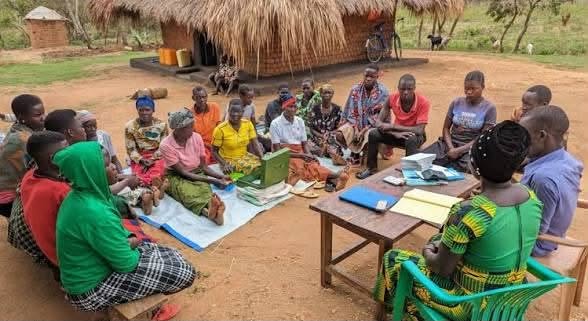
They will need to come together either as friends or relatives and save money together consistently for some time. They don’t have to be so many, a maximum of about eight people. When they are too many, so many interests will come up and they may lose focus. They can consistently save money for about 3 years. If each of them saves Shs50,000 per a month, it means that that they will have Shs4.8m by the end of the first year. If they invest this money in a unit trust at about 12% annually, they will have an extra Shs576,000 after one year of investing it.

If they invest Shs400,000 every month after their initial investment of Shs4.8m, at the end of the 3-year saving cycle, they will have at least Shs16,197,120 according to an online compound interest calculator. That is why compound interest is sometimes called the 8th wonder of the world.

With Shs16.1m, the group of eight can now look for an acre of land to buy at about 15m, which they can now divide among themselves. If eight of you decide to buy land in an area you consider rural, you won’t be scared of living there because you will have the security of your neighbours.

Anyaway, each member should be able to get a 50x100ft plot in a well organised estate. With the Shs1.1m balance, they can now employ the services of an architect to design eight houses for them. The houses should look exactly the same and should be of the same size. They should not be fancy storied houses that are too expensive to build. Simple would do it. The dream is to own a home, not a Hollwood-esque home!

In the design, there are things they can share, such as septic tanks and a perimeter wall but that can come in later.

Now that they are good at saving and investing, they can double their monthly savings to Shs100,000. If they invest Shs9.6m and continue investing Shs800,000 per a month at 12% annually, they would have Shs32,394,240 by the end of 3 years. Depending on the design they choose and materials they use, they could now be able to build a house or two for every member every 3 years. In 12-24 years, each of those members will be able to own a decent mortgage free house.

The writer is a communication and visibility consult. djjuuko@gmail.com
Related

#OutToLunch: Xenophobic attacks call for investments in home countries

By Denis Jjuuko In the early 1990s, the world started to witness the dismantling of one of the most antediluvian official racist regimes ever assembled. Nelson Mandela, leader of the African National Congress would be released from prison in 1990 after 27 years of inhumane confinement on Robben Island. A new South Africa was on the horizon. Mandela would win the country’s first multiracial presidential elections in 1994 after his ANC won a large majority of parliamentary seats. Mandela and his ANC’s victory marked the end of official apartheid in South Africa. Mandela mentioned from the beginning that he wasn’t replacing official white racism with official black racism. He called the new South Africa, a rainbow nation. A country that embraced you regardless of the color of your skin. Unlike the majority of the so-called revolutionaries, Mandela ruled for one term. He ended up as one of the world’s most revered statesmen and even became a celebrity! At home, after the euphoria of the 1994 elections, many black South Africans realized that the end of apartheid didn’t mean that they would move from their shebeens in the townships to white homes in leafy suburbs and take over white businesses and send the whites to wherever. South Africa wasn’t Idi Amin’s Uganda. They realized that the rainbow mantra meant co-existence. They rejected it but they were still a bit hopeful. The ANC understood the sentiments of many black people and created policies like black economic empowerment (BEE), which provided opportunities for blacks and other people of color. If a white owned a business, they needed some black people in top management and on the board. Some black people also needed to own shares. Government tenders were reserved for business that embraced BEE. But such opportunities were of course reserved for elite blacks — educated in Europe, America or even in the exclusive South African universities. The majority of the beneficiaries of BEE were ANC stalwarts and that is how they became billionaires and today’s captains of industries. Others became tenderprenuers (influencing government tenders). Apartheid had denied the majority of blacks quality education and other opportunities. They didn’t have skills. The apartheid regime preferred to import professionals from elsewhere to work in black communities or do jobs the whites didn’t want to do. That is how Ugandan teachers and medical doctors ended up in South Africa in the 1980s. They settled there quickly and established themselves as hard working, set up private practices and generally built better lives than many of those they left at home. South Africa had (still does) world class universities and when they opened up the country in 1994, many people started attending school there. I would also end up at an elite South African university 10 years after Mandela had been elected for my graduate education. South Africa was and remains the continent’s most sophisticated and largest economy. As economies of many African nations crumbled, South Africa’s soared. Many Africans unable to be externalized to America or Europe for kyeyo saw it as the next perfect frontier and arrived in droves. Many had seen the doctors and teachers who had migrated earlier living better lives. Those who visited Johannesburg, Cape Town, Durban or Pretoria saw a modern country where they wished to work and live. South African TV soap operas Egoli, Generations and Isidingo created a desire that many people wanted to experience themselves. Those who had made it to South Africa arrived back in Kampala every December with fancy cars and threw white-dress themed parties. Another Bantu migration of sorts had to happen but this time to kuyiriba (hustle) including becoming Sangomas (fake traditional healers). In South Africa, ANC riddled with corruption forgot to create jobs for the majority of blacks who were largely uneducated and unskilled. Populist politicians like Julius Malema saw an opportunity and fanned the flames that lead to today’s xenophobic attacks against blacks from outside South Africa. Hundreds have been evacuated back home in Uganda. They are now chilling in Kyankwanzi, ostensibly undergoing orientation. I am not sure what that means. But the xenophobic attacks should be a wake up call for migrants as well as governments of their home countries. People largely migrated to South Africa to find better opportunities for themselves. If we created jobs here, the majority wouldn’t have left. There must be a deliberate way to encourage migrants to invest back home. NSSF should be pushing them for voluntary savings. Capital Markets Authority should be doing drives for collective investments. National Housing should be building houses they can buy. Uganda Investment Authority should be making presentations on where to invest. It used to happen until when politicians hijacked platforms like the Uganda North American Association Convention. Buganda Kingdom is trying with its Buganda Bumu Convention but it is a drop in the ocean. If we refocused, people wouldn’t be evacuated or even deported and returned home with nothing. And lastly an enabling environment that enables businesses to thrive. The writer is a communication and visibility consultant. djjuuko@gmail.com

Read More »
Out to Lunch

#OutToLunch: Skills and investment portal could help those fleeing xenophobia

Denis Jjuuko Just like that, we are already in the second half of 2026. Six months to the end of the year. Time really flies fast even when you may not be having a great time. The year kicked off with presidential and parliamentary elections in Uganda and a war in Iran that disrupted global economies. Skyrocketing fuel prices mean a tough economy for ordinary people. As if that wasn’t enough, an Ebola outbreak was declared in Democratic Republic of Congo (DRC) and a few cases in Uganda. Some countries reacted by banning Ugandans from entering their countries. Businesses and opportunities were lost. Covid-19 taught people that travels can easily be disrupted. Yet if you live in Kampala, you won’t tell there is any Ebola outbreak. Life as far as Ebola is concerned is normal. Anyway, a new government is now in place. More ministers than Uganda has ever had and a few acting ones, holding more than one docket. They have promised an economy that jumps from USD50-60 billion to a USD500 billion one annually. Government says it will do a lot of stuff to achieve this. Sometimes though, government is government. We pray to be alive to enjoy this. The end of the first half of the year in Uganda means the start of a new financial year. As you may notice, your fuel pump prices are going up as the government has increased the tax it charges on each litre of fuel. The fuel prices have been high already due to the closure of the Strait of Hormuz due to the war in Iran, now they will even be higher. Time to implement some austerity measures at home. Life is for the brave, not so? You probably made some resolutions at the beginning of 2026. Hope you have already achieved them or you are half way there. If you haven’t started on them, you can still adjust a few things. A clip on social media shows somebody whose goal this year was to buy a car but has easily added the letters p.e.t at the end of car to mean carpet. That is what he will buy. The car is out of reach now but the carpet shouldn’t be. Creative way of achieving some resolutions. Whatever resolutions you may have made, starting a new life in South Africa may have to be reconsidered. Ordinary black South Africans unable to find jobs have turned to other Africans who migrated there accusing them of depriving them of their apartheid inheritance. Some people have already lost their lives and/or properties. The government of Uganda is evacuating Ugandans facing xenophobic attacks in South Africa. Hundreds have been flown home already. They have had enough of it. I hope the government of Uganda has a plan for them upon arrival from the country that once had leaders like Nelson Mandela. Have the impending returnees gained any skills that can help Uganda drive the economy to the promised land of USD500 billion a year? Do they have some capital they would like to deploy? Those who have some needed skills could be linked to those who need them. A digital portal could be designed where they register indicating the skills and expertise they possess so those who need them could easily find them. Those looking for businesses to invest in could also do the same. Matching businesses with the skills and even capital is a necessity to grow the economy. The portal would of course not be for only those returning from South Africa but for all people to ensure inclusivity. I think some recently returned from Iran and there are always many returning from other countries as well. Millions of others are here in Uganda. They have some skills, but they don’t know how to reach those who need them. Many others have the required capital businesses need to scale but don’t know how to invest. That is how they fall to charlatans promising abnormal returns on investment. Of course, investing in other people’s business would require some sort of public oversight so that people don’t lose their money easily after investing but it shouldn’t be as difficult as going to heaven or listing on the stock exchange. A standard legal agreement or registration of this investment with a public entity like the Capital Markets Authority or Uganda Registration Services Bureau could help. The writer is a communication and visibility consultant. djjuuko@gmail.com

Read More »
Out to Lunch

#OutToLunch: Africa must level up if the continent is to create a trillionaire

By Denis Jjuuko There was hullabaloo recently when the world’s richest man, Elon Musk, yet again launched another initial public offer (IPO) this time for his space exploration, satellite internet, artificial intelligence and social media company SpaceX. The IPO made him the world’s first trillionaire in US, not Zimbabwean, Dollars! It didn’t take long before the usual commentators in Uganda and elsewhere on the continent went into overdrive with many of them running out of superlatives in praise of Musk. Some owned him as an African, since he was born in South Africa while others blamed everyone else but themselves on the state of innovative companies on the continent. Why aren’t Africans developing AI products and companies, many wondered. Many people have probably tried but to scale them is difficult. Look at how many Africans have developed payment applications. In every innovative hub in Kampala, Nairobi, Lagos or Johannesburg, there are many people developing all sorts of payment apps but they remain relatively unknown outside the ecosystems in which they are being developed. Once in a while, a founder will get some funding and there will be some noise evidenced by billboards in various capitals featuring Nigerian musicians and once the rental fees are done, you will hardly hear about them. Until when they receive another round of investments. I have a feeling many founders’ dream ends at raising a certain amount of funding. Once they have money to pay bills, they sit and relax a bit. I hope I am wrong. But I wouldn’t blame many founders or entrepreneurs on the continent. Creating innovative products like building re-usable rockets or even AI applications that can be scaled requires enormous resources that are hard to realize. How many founders or entrepreneurs will refuse a job that pays money immediately to work on a product whose success can’t be easily determined? They need to pay bills and can’t always look on when their beautiful ex-girlfriends remind them that they couldn’t “eat potential.” Many American innovators have become successful because the government provides them tax breaks and subsidies. Elon Musk wouldn’t have been able to scale Tesla and SpaceX if he wasn’t receiving a lot of subsidies, soft loans and even contracts from the US government. How many African governments offer contracts to a start up? How many provide soft loans and subsidies? Nobody wants to do so. We easily run to Indian multinationals to develop simple things like an integrated website for tax collection. Had SpaceX or Tesla been founded on the African continent, most likely Elon Musk would still be operating in a shared space at an innovation hub at Ntinda Complex or Motiv around Bugoloobi. Unless of course if he knew someone who knew someone whose relative worked in the presidential palace. If he was lucky, he would have been given a flyer to borrow money at 10% payable in four years and he would need to be super lucky to actually get the loan amount credited on his account. Banks don’t look at you if you don’t have a statement that shows a lot of cashflow. I won’t talk about collateral today. That is why you find many people going to Guangzhou in China, bring in whatever that can fit in their checked in luggage, clear taxes, sale and repeat. A few trips over a period of 5-10 years and loan officers are knocking on their doors every day. By this time, the innovator at the innovation hub is most likely still scavenging for the next investor, prompting AI to design some fancy slides for the virtual seed funding presentation to potential investors. The investors listen, love the idea, but they are more likely to get their money back if they backed an 18-year-old kid working from his father’s basement somewhere in California. If they decide to invest in an African’s start up, it is very little money. The Africans who have some money don’t want to invest in “weird” things like space exploration or even AI data centres. They rather invest with a guy claiming to be rearing goats or keeping poultry as long as he promises a huge monthly return. The innovator capable of developing an AI product or a rocket sees the chicken guy rolling on Bandali Avenue in a Subaru with some bimbos and wishes he did the same. If he is a honest person, he would join those opening salons and boutiques in Kyanja Mall. No need to reinvent the wheel, he would console himself. I know that some African governments have funded some startups but they are really few and founders are usually well-connected people. Would an African stock exchange list a non-profitable start up? There is a need to level up to create a critical mass of innovators. If we do, once in a while we’ll have an African Elon Musk, Jeff Bezos or another Aliko Dangote. The writer is a communication and visibility consultant. djjuuko@gmail.com

Read More »