
#OutToLunch: Opportunity a great pathway to professional career

By Denis Jjuuko

Young lawyers have been incessantly posting on X (formerly Twitter) about the poor pay they receive once they finish their long courses at university and the Law Development Centre. Apparently, they are being paid peanuts yet they have spent nearly five years learning.

They claimed that their employers “force” them to take loans to buy suits and cars to keep up appearances. Of course, nobody expects a lawyer in a round neck t-shirt and ripped jeans. Until further notice, that is for tech entrepreneurs and impresarios.

Although many of the complaining tweeting counsels, as they prefer to be called these days, acknowledged to receiving regular salaries, one of their contentious issues is that once they win cases in court, the senior lawyers and partners of the law firms don’t give them a percentage of the money they have won.

Some senior (read older) lawyers argued that young lawyers needed to be more concerned about their personal professional development than the money they are being paid. They should be lucky enough to have an address, a desk where they can report to experience their profession in real life and practice in the hollowed walls of judges’ chambers while enjoying perks such as WIFI and spiced black tea that some law firms offer.

One day, the senior lawyers argued, their hefty pay day will come. The younglings counter argued that they don’t eat experience and wifi. The spiced tea won’t pay for their fancy apartments in Najjeera and impress the members of the fairer sex. They want money. They want to earn big even when they have little or no experience.

I must admit that I have no idea how law firms operate but I have been hustling for a while. Over the years, I have realized that many young people who walk into businesses begging to be employed cease being serious about their jobs once they get employed. They get so illusioned about what they call little pay and start paying little attention. Many even leave the jobs unceremoniously only to beg for the same jobs back they were despising when they had them. Money, I learnt a long time ago, is usually little when you have it. When you don’t have that money, it ceases being little.

It is unrealistic for a young person who gets employed and is assigned a project to expect to receive the same amount of pay as the partners who have been working for 30 or 40 years. Even when those partners, as young lawyers claimed, may not have done most of the work. Setting up the firms enables them to do that.

Also, gross payments don’t mean there are no expenses. Otherwise, where do law firms get money to pay their young lawyers a monthly salary when there are no cases being won? Where does money to pay for rent, the despised wifi, marketing, networking and other expenses come from?

Many entrepreneurs in Uganda, if you scratch beyond the surface, go through a lot to keep their business working. Many have no days off, work longer hours and under pressure to keep the businesses afloat. Many clients such as the government of Uganda take years to settle invoices for services and goods rendered.

If you are regular reader of Uganda’s newspapers, you will see several pages on a daily basis of properties being auctioned by financial institutions. Many such properties belong to entrepreneurs who invested in businesses that didn’t materialize. The pressure of a person losing their home and their family being evicted from their home is enormous. It can lead to death by suicide, heart attacks or cause irreversible mental health challenges.

This doesn’t mean that entrepreneurs should not renumerate their employees better. They should but there is need for young workers to be realistic of the environment in which they work.

There are more people graduating today than jobs available. Demand and supply forces still exist. Our economy is too small to absorb all graduates. Our annual budget is just Shs70 trillion, approximately US$18.4 billion, not even a half of what Amazon makes in a month. And businesses are being taxed to extinction.

Emerging technologies are changing the way we work. Many jobs will evolve. Work that was done by a few people may be done by one person today, who may not even be in the country where the work is being performed. Artificial intelligence bots will, for example, write a land sales agreement that needs a few edits in seconds and a buyer may prefer not to engage the services of a lawyer for this particular work. A lawyer who appreciates how artificial intelligence works will be better though. A young one who accepts pay comes with experience will live a better life.

Related

Out to Lunch

#OutToLunch: Make cylinders of 1kg, 2kg if gas is to replace charcoal

By Denis Jjuuko On a trip to northern Uganda some years ago, I asked the transport team to provide a sports utility vehicle (SUV). I prefer SUVs for long journeys as they are more comfortable and can handle the terrain. We were to spend a week traversing the breadth of northern Uganda. It didn’t take long to realize that some of the people I was traveling with were unhappy but I couldn’t put a finger to it. I thought maybe they didn’t want to make the trip. Along the way, the driver pointed to a roadside makeshift market and said in Luganda, “laba emaali,” loosely translated as look at money while pointing at sacks of charcoal that were packed beyond the rims with a fibre net holding the extra black pieces together. That is when my colleagues said that I have made them miss returning to Kampala with charcoal. That I should have asked the transport team to provide a pickup truck. “We are not ministers to travel in this kind of car,” another angrily quipped. I was ably informed that a sack of charcoal cost a fraction of what the traders in Kampala charged. I understood their sentiments. I offered lunch and dinner for the weeklong trip, arguing that they can use that saving to buy charcoal when they returned to Kampala. I ceased being a fan of buying stuff along our highways to return with to Kampala after realizing that prices quoted by traders or vendors depended entirely on the car you drive and how you look but that is another story. Also, I have never been a fan of charcoal. I find it expensive, easily wastable by households, dirty and cumbersome to use. After that trip, I understood the place charcoal occupies in people’s hearts and households. It wasn’t, therefore, surprising when panic engulfed Ugandans especially the urban dwellers when there was an announcement that charcoal had been banned in Uganda ostensibly to protect the environment. Social media went gaga. Parliament swiftly stepped in and advised the government to give it a week by presenting its comprehensive plan. Charcoal is a byproduct of trees and many have been felled to make it. Truckloads of it used to dominate certain routes to urban areas. Many roadside kiosk owners survived by vending charcoal. We have just experienced a severe drought in Uganda and I believe that many people won’t have food to eat in a few months. I perfectly understand why government wants to ban it. As somebody who isn’t a fan of it, I have no tears to shed to be honest. But that would be selfish. The majority of households can’t afford the alternatives — electricity and gas or even briquettes. Beyond price, both forms of energy also have distribution limitations in Uganda. Liquefied petroleum gas in Uganda is largely sold in cylinders of 6kgs and 12kgs. If you don’t have a cylinder, the startup cost is approximately Shs170,000 for 6kgs and Shs266,000 for a 12kg. The median monthly income in Uganda is Shs200,000! What makes charcoal the preferred choice by at least many urban households is because with Shs1,000, one can get a palmful of it which they can use to cook something. Many of our people don’t earn a predictable regular income. They wake up, go to work (if they find it) and are paid per a day or work done. Once they get that money, they can buy some charcoal of Shs1,000 and some maize flour or a few fingers of Matooke and prepare the day’s meal. They can’t afford to spend more than their monthly income on the gas equipment. There was a time government distributed some gas cylinders freely. I believe that at Shs60,000 for a 6kg and Shs112,000 for a 12kg for a refill respectively, the majority of our people can’t afford it. Gas cylinders even if distributed for free will most likely end up as decorative materials. What then can be done? Government must or support the private sector to make gas cylinders of 1kg or 2kg which means that the majority of households can afford to refill at Shs10,000 for a 1kg or Shs20,000 for a 2kg or even lower. That is why manufacturers of consumer goods like sugar or cooking oil don’t sell only 25kgs or 5 litres respectively. They sell in small quantities that the majority can afford. Our people buy sugar by spoonful, diapers by a piece, eat beans but ask the restaurant to add in meat soup (because they can’t afford meat). They can only afford gas by a kilo or a half not 6 or 12kgs. The writer is a communications and visibility consultant. djjuuko@gmail.com

Read More »
Out to Lunch

#OutToLunch: Medical apprenticeship programs critical in improving diagnosis and treatment

By Denis Jjuuko You probably know somebody who after trying many healthcare facilities, they were told there was nothing wrong with them and they should go back home. The symptoms persisted though and the more facilities they visited, the more they were told the same. Sometimes they were given painkillers to psychologically manage them. Desperate, they visited a traditional healer whose Thursday clinic deep in the village is thronged by many people who share similar experiences. The healer is basking in glory. He saved so and so; his marketing team disguising themselves as waiting clients assure them. After a few months of some relief, the pain comes back and this time more excruciating. But since they tried everything and failed, they give up and wait to die. And indeed, they die. At their funeral, we claim that it was God’s plan! Well, if you don’t know anyone who has gone through that, at least you heard of King Oyo’s story. The now deceased Tooro Kingdom leader visited some high-end hospitals in Kampala after feeling persistent backpain. X-rays, MRI scans later, they told him they saw nothing. Being a person of means, he flew to a hospital in Nairobi where he was diagnosed with cancer. A year later he was dead. What did the people in Nairobi saw that the Kampala ones couldn’t? Well, Nairobi has a PET Scan or a few. Kampala and the whole of Uganda don’t. A PET Scan costs about US$3m or approximately 17 Landcruisers. If there was a meeting of government officials, you would run out of space to park them. That is how many we have in Uganda but a PET Scan is not something we have been able to buy and install yet. But it isn’t just the lack of technology that is a problem. You can have a PET Scan and still fail to diagnose a patient properly. Patients aren’t sent for a PET Scan on their first visit to a clinic as it is rarely used as a diagnostic test rather one that determines an extent of the disease. Other tests have to be done. And still a diagnosis can be missed depending on who has done the scan or X-ray and the reading of the results. If for example a child has a bone tumor, a pediatric radiologist would probably pick up the first signs that an adult radiologist may easily miss. Even then, the doctors who ordered the tests and other specialists can sit as a group and discuss what they are seeing. They may even disagree. After that, they could order for a biopsy and eventually a PET Scan if it is needed. You see, that means that you need to have a team of specialists with not only adequate training but also experience that exposed them to a diverse spectrum of patient diseases and how to diagnose them. If you only train in Uganda and practice in Uganda for a year or two, it is most likely you won’t be able to diagnose many diseases even with advanced technologies at your disposal. Doctors in Europe struggle to diagnose and even treat malaria, which is many times chicken feed to Ugandan doctors. When did your doctor last consult anyone before prescribing drugs? Most likely he or she listened to you, sent you to the lab, looked at the results and sent you to the pharmacy or told you to go back home. Isn’t that likely to lead to a wrong diagnosis? I am not saying that a team needs to look at each and every case but you get the drift. To have good doctors in Uganda, there is a need for a robust apprenticeship program so that the graduate doctors can learn from as many experts as possible. When we spend years discussing intern doctors’ wages, it means we are delaying their learning. They aren’t getting the right exposure from the seniors. And if they aren’t properly apprenticed, they will not become good doctors. There is no two ways about it. We also need to have a critical number of health workers sent elsewhere for exposure. They should learn how medicine is practiced elsewhere while getting exposed to different diseases and treatment methods. Government should be talking for example to American hospitals for medical residency. We could send some to Aga Khan in Nairobi as well. Those who are sent by government, they should be contracted and incentivized to come back to work here. The right technology and generally good working conditions should be in place. Upon return, they should train others through apprenticeships. They should spend a certain number of hours a week for a few years in public hospitals with the list of young doctors they have mentored as part of their deliverables. Ensure that those trained doctors remain in hospital wards too. This is actually cheaper than sending politically connected patients abroad for treatment because Uganda can only send so many. The writer is a communication and visibility consultant. djjuuko@gmail.com

Read More »
Out to Lunch

#OutToLunch: Uber’s abrupt exit calls for regulation of international brands to protect users

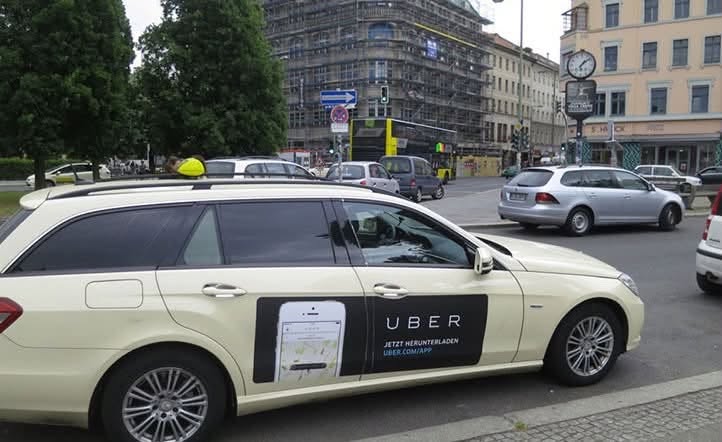
By Denis Jjuuko Ten years ago, Kampala was all the rage. Uber, the global taxi hailing app launched in Kampala with fanfare. The razzmatazz that comes with a global brand that promises to change the world. All our transport problems, at least in Kampala, would be sorted. It was cool to order a Uber or arrive at a fancy party in one. If you hadn’t installed the app, you were being left behind. There was no need to buy a car. Uber would sort that at the fraction of the cost. If you had a car, it was so cool to use it as a Uber on your way to or from work. And if you didn’t like your boss, you could quit your job and become your own boss as a Uber driver. It wouldn’t get any fancy than that. Some people cashed out their savings, bought a few corollas, got their cousins who had previously graduated from university and made them Uber drivers. Side hustle had never been so simple. Special hire drivers cried. Calls placed to their previous customers went unanswered. The suitor had a new lover. You were exploitative. Uber transported someone to wherever they wanted at the cost of a chapati! Some young people decided to create Uber for all sorts of things. Looking for somebody to wash your clothes over the weekend, a “uber” was created for that. Need a truck to transport something? There was a “uber” for it. Need a boda? Well, another “uber” was created before Uber itself introduced bodas. Innovation hubs were full of ideas with young people dressed in hoodies spending all their time trying to create the next Uber. To be fair, it wasn’t just in Uganda. Every new innovation has somebody trying to replicate it for another industry. With apps like Uber and AirBnB and their early global success, other platforms for gig work or sharing were created everywhere. UpWork, Fiverr, DoorDash… the list is endless. We were told the sharing economy was the new thing. That we didn’t need to own stuff. We could easily share. The problem though with international brands like Uber is that they can wake up and make a decision that affects many people. Like they did when they announced that they will no longer be available in Uganda. And within a few minutes, they were gone. They didn’t even have the courtesy to inform the drivers signed up on their app for at least a week. I believe some were even still processing the news and maybe even parked at malls waiting for clients only to realize that the application had gone mute. I believe those who hadn’t checked their communications platforms restarted their phones several times. Developing economies like Uganda shouldn’t just allow these brands to come in, do and go as they wish. They can’t just be making abrupt decisions from Silicon Valley. Why couldn’t Uber give time before exiting the country? They could have given a 90-day notice so that their drivers and customers have enough time to prepare. To operate here, the government should force them to follow some rules and regulations. Usually when they start offering service in smaller economies like ours, there is something they want which isn’t direct revenue. It is global presence that enables them to have an explosive initial public offering on the New York Stock Exchange or attract some funding. Once they achieve those goals, their mission is over and can do whatever they want especially where there is no regulation. In markets where they are regulated, they can’t just wake up and announce that they have closed. Also, the actions of brands like Uber mean that there is a need to identify our challenges and find applicable solutions. For many years, I wonder whether Uber drivers made any money. The rates were so low prompting many of them to try to negotiate out of the app. What had made Uber appealing to drivers was the near guarantee of a return trip. Unlike a special hire (cab), the driver would be able to find a customer after dropping off somebody. That increasingly became difficult yet the rates remained low. When fuel prices went up, Uber didn’t respond appropriately. Apparently, increments had to follow some policy created based on the American or western European economy. Bad roads and traffic jams were never factored in. Ugandans largely drive old cars which means that they consume a lot of fuel and susceptible to breakdowns. If the roads are potholed, maintenance and repair become costly. An unregulated global brand wouldn’t care much about that while setting rates especially when they don’t own the asset that guarantees their return (25% of each trip in the case of Uber). Regulation of global brands is critical in protecting the interests of users. The writer is a communication and visibility consultant. djjuuko@gmail.com

Read More »