#OutToLunch: Extended infrastructure will lead to affordable housing in urban areas

OutToLunch: Extended infrastructure will lead to affordable housing in urban areas

By Denis Jjuuko

The community in Wakiso is stuck with three children whose father abandoned after failing to clear rent for nine months totaling to Shs630,000 or approximately US$160. The father woke up one morning and never returned according to an article that appeared in the New Vision newspaper last week. The eldest of these children is nine years old! When contacted on phone, the father said he couldn’t afford to clear the arrears, the newspaper further reported.

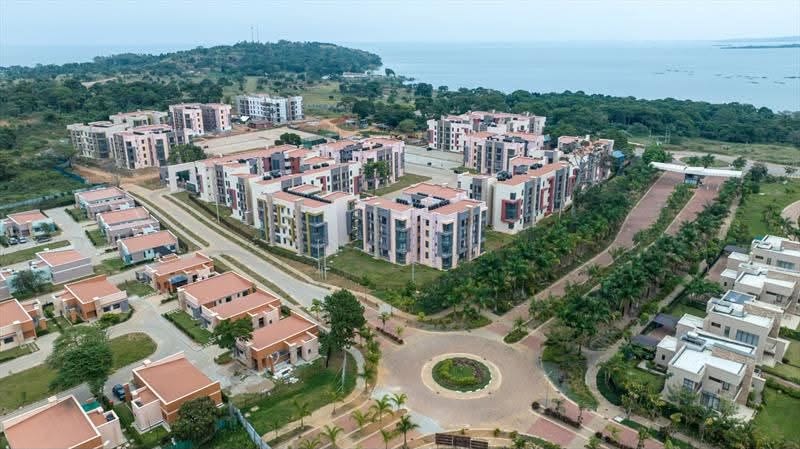
As this story was unveiling, the Uganda National Roads Authority (UNRA) posted on its X (formerly Twitter) handle of the ongoing asphalting of the Buwaate-Najjeera Spur as part of the construction of the Kyaliwajjala-Matugga Road. Buwaate had become famous for dust and social media trolling for those who live in this part of the ever-expanding Kampala. Buwaate is about 15km from the main post office in Kampala’s central business district.

Since the construction of the road commenced in Buwaate, landlords have been licking their lips with glee in anticipation of increased incomes from their properties. Politicians will claim it is their ability to lobby that led to the construction of the road as they campaign for votes in the 2026 general elections. The construction of a road changes everything in this part of the world, an indicator of how far we need to go to achieve some elusive status as a country.

The lack of roads, piped water and electricity is one of the reasons why land is very expensive in greater Kampala and in many other urbanizing areas in Uganda. So, where the roads, electricity and piped water have been extended, property prices go up. In Buwaate, a plot of 50×100 feet or 0.12 decimals is going to nearly double once the road is complete. Landlords will increase rents as people seek to move into this part of the city.

So how does that make land expensive? Because few areas have proper infrastructure, areas that end up getting a road become extremely expensive. Areas that have a bitumen standard road, water and electricity make life easy for those living or planning to settle there. They don’t have to pay much to extend electricity to their homes or suffer fetching water due to lack of access to piped water.

In an area like Buwaate, if a 50×100 feet plot has been selling for Shs70m, it will go to Shs100m or more by the end of this year if it hasn’t gone up already. This means that people who can’t afford there, will now buy further away. Some will sell in Buwaate and look for land in Kalagi or Busiika thereby creating demand in those area. Simple economics teaches us that increased demand leads to increases in prices.

As demand increases in these areas, landlords will increase the price of land and rent too thereby making it difficult for men like that father of Wakiso to afford a decent house for their children.

So, if we want decent affordable houses, what do we have to do? Extend asphalt roads, electricity and piped water to every little part of greater Kampala. Have good hospitals and schools that are affordable in those areas too and have a plan on reliable and affordable public transport.

If we had those everywhere, asphalting a road would cease to be news. It would stop landlords from smiling every time they see a grader in their area. Electricity and piped water would cease to be part of texts in property adverts and promotion campaigns. If there is a good road everywhere, a compactor in an area wouldn’t lead to increased property prices. Electricity poles or trenching earth for piped water wouldn’t lead to abnormal increases in prices.

People would easily live in Kiringente in Mpigi town or Namagunga near Lugazi and still be at their desks at 8.00am on Kampala Road.

Greater Kampala isn’t a very big area where the government can’t do this kind of work. The Buwaate-Najeera Spur that is causing all sorts of excitement is just 5km long. The Kulambiro Ring Road that caused much more excitement earlier is approximately 3.5km. Spear Motors to Ntinda is just 2.2km. So, imagine if government constructed just 10km every year in greater Kampala, the price of land would significantly go down thereby making houses affordable.

I have seen some social media posts by the Ministry of Lands, Housing and Urban Development and its partners notably Habitat for Humanity promoting the upcoming annual Uganda Housing Symposium and the theme is on affordable housing. I hope that they can look at how extending infrastructure as mentioned above could solve the affordable housing issue especially in urban areas, obviously one of the most significant challenges our country is facing today.

Children who are worried of a landlord throwing them out of a house will be affected mentally, denying them the ability to develop to their full potential. In fact, they would also be suffering physically as well.

The writer is a communication and visibility consultant. djjuuko@gmail.com
Related

Out to Lunch

OutToLunch: African Union could help national airlines struggling to fly

OutToLunch: African Union could help national airlines struggling to fly By Denis Jjuuko Sometime back, the Uganda Civil Aviation Authority decided to mark an anniversary by organizing a flying activity. What one needed to do was to arrive at Entebbe airport with Shs50,000. They would then put them on a flight and fly them around Uganda. The queue stretched many miles. The guys at CBS FM also did something similar during one of their Nkuuka y’Omwaka (end of year) events. Pay some little money and they fly you around Kampala. Thousands of people lined up for this once in a lifetime opportunity. If you watch TikTok regularly, you will see many people posting their trips claiming that they “catch flights, not feelings” and all sorts of things. If there is anything many people in Africa love, it is flying even if it is flying to nowhere. Many people on the continent consider flying an element of success. I think it is linked to widespread poverty. In many countries, domestic flights are rare as there is hardly any infrastructure. Where it exists, air tickets are expensive, thereby eliminating many people from boarding flights from one town to another. Those who manage to fly are considered the lucky ones. That probably explains why many family members escort their relatives to the airport in droves. Minibuses full of people descend at airports, drumming and dancing as the traveler busks in glory. They have finally made it. Upon return, some even hold parties. Parents pray for their children to also get an opportunity to fly. If you eavesdrop at Entebbe before departure, you may hear of somebody calling a relative or friend to engage them in prayer so that they also find some luck one day to fly and I am not making this up. It is that serious. Flying to many isn’t just a means of travel. It is status. It is arrival on the big stage. It is success. That same mindset many times explains the desire by countries to set up airlines. Every country on the continent wants to set up a flag carrier. The reasons given are many. National pride is usually among the top five. Airport or aviation authorities also with the same mindset slap huge taxes on each ticket. Airport ground handling is one of the most lucrative businesses in Africa even when the number of passengers going through these airports is minimal. Passengers who have longed to fly expect five-star experiences even when they don’t want to pay for them — champagne to flow endlessly, great food, free internet, movies and the like. To keep these few passengers happy, airlines end up charging a premium, thereby eliminating many people who would have been able to fly. It then becomes difficult to make money from a very small base of regular passengers. Yet, we many times complain about the exorbitant air ticket rates forgetting that everything we consume on board comes at a price. The equipment is expensive to buy, operate and maintain. Also, the majority of Africans have no reason to travel much. Their incomes are meagre and majority are subsistence farmers without any real need to fly anywhere. Without improved incomes, African airlines will continue to struggle. Also, because poor countries love owning national flag carriers without putting in enough resources, the airlines will continue to struggle to compete with middle eastern carriers. How on earth is a national airline with global or even continental ambitions but operating just 4-6 planes going to compete with Emirates, Qatar or even Air Arabia? It is always going to be frustrations for passengers who in the era of social media who are going to create one communication crisis after another. Brand reputation tanks. The few passengers end up preferring to pay a premium to fly the reliable carriers from Middle East, Europe or even Ethiopia. The national airline ends up in the cemetery. Flying within Africa could provide a lifeline for African national carriers but many countries demand visas from each African while allowing Europeans and North Americans to fly in without them. If people need expensive visas that are also difficult to access, it then becomes very difficult to create a critical mass of travelers within the continent. Look at Europe for example, it is almost borderless. People just wake up and travel without worrying about access. Although it is a very rich continent, being borderless is one of the reasons many people fly in Europe and air tickets are very cheap. The African Union need not be an organization that issues communiques only rather one that facilitates movement and trade across the continent by removing barriers that keep us under developed. The writer is a communication and visibility consultant. djjuuko@gmail.com
Read More »
Out to Lunch

#OutToLunch: Some of the big bets for 2026

By Denis Jjuuko It was just the other day when many people were making resolutions for 2025. Days turned into weeks, months and now a whole year. You blink, and it is a new year. I hope that you managed to achieve those targets you set for 2025. If you didn’t, well, you can still list them for 2026 and work on the issues that made you fail to achieve them. Well, there are so many things that are happening in 2026. An election is upon us and it comes fast—starting on 15 January. I hope that your candidate wins and most importantly that they do what they are promising to do. In the meantime, I thought of a few things that could be important in 2026. They could be business ideas or stuff that may make your life better one day. Generators, power back up As I was writing this, a close friend called me and she sounded desperate. Her electricity had failed and she was worried about spending yet another night in darkness. She had bought an inverter but because of a prolonged power shutdown in her residence area, her batteries were drained. She fears darkness. So, she thought I could be a plug for a standby generator for a night. We made frantic phone calls but many people with generators for hire had closed for the night. Anyway, it reminded me of a visit I made a few months ago to a friend’s home. I found people installing a generator. My friend had rightly predicted that the transition from one electricity distributor to another wouldn’t be that smooth and had envisaged the return to darkness. I had thought that he was panicking. He wasn’t. The new distributor has told us that electricity will stabilize in a few years. So, in 2026, either get a standby generator for your home or business or start dealing in them. Water harvesting When electricity fails, the guys at Katosi and Gaba inform us that they can’t pump water from Lake Victoria. This means that the taps soon run dry. When we were younger, we used to ask ourselves a silly question. What would should we rather have? Running water or electricity? We thought we had left those days more than 20 years ago. And it seems the question wasn’t even silly after all. So, what would you rather have in 2026? Water or electricity? Well, in 2026, either get a water tank for rain harvesting or start dealing in them. Car parts The smart guys at the Ministry of Works and Transport have declared a mandatory vehicle inspection at your cost. Not a bad thing if it would make our roads safer. But if you live in some of these parts of Kampala, most likely your car won’t pass the test. If it does, it will not be in a good shape a few days later. Some of the roads in Kampala have the biggest potholes ever seen in the world. If you drive a car that was once owned by somebody in Asia or Europe or north America and got rid of it by selling it to you, be prepared for a new suspension every few weeks. You may also have to budget for a bumper in 2026. If you live in a neighborhood with a paved road and potholes aren’t your problems, well, still budget for some body parts. However much you rivet your car, guys will still pluck off stuff in traffic jam or they will scale your fence and “undress” your car. So, in 2026, plan for car spare parts or start dealing in them. Coffee and gold Coffee and gold are most likely going to continue being top forex earners for Uganda in 2026. You may have to look for ways to get involved. Gold, though, has expensive school fees, so invest with care. Coffee, some call it the green gold, is a bit easy. Entry fees are not so exorbitant and many people have knowledge of how to grow it, trade it or drink it. If growing it is where you want to start, think of some bit of irrigation. Changes in the climate are real but also water in Uganda is easily available in many parts where coffee is grown. A few feet underground, and there is reliable water all year long. In 2026, find a way to deal in coffee, remember “it doesn’t lie” or even gold if you have the school fees. The writer is a communication and visibility consultant. djjuuko@gmail.com
Read More »
Out to Lunch

#OutToLunch: How Uganda’s next president could easily reduce the housing deficit

By Denis Jjuuko It is not uncommon to find a social media post in Uganda regarding the price of land or property being shared many times. The argument is that land prices are extremely high especially around Kampala and in many major cities or towns across the country. With an ever-increasing population and poor infrastructure and services a few kilometres outside these major urban centres, it shouldn’t be entirely surprising that land is expensive. I have always given an example of Mpigi town, which is nearer to Kampala than Entebbe but a difficult place to commute due to poor infrastructure. Yet with the Entebbe expressway or even the old road, Entebbe is an easier place to access. So, land prices around Entebbe will always be high as not many people would make Mpigi their area of residence while working in Kampala. That though will change when the Kampala-Mpigi Expressway is complete. However, construction of infrastructure such as expressways in Uganda takes a very long time leading to people crowding around the urban areas where it is easier to commute to their workplaces and services such as hospitals and schools are better. This increases pressures on land for housing purposes in urban areas. And as the population grows, land, an inelastic resource becomes more expensive. Many young people end up struggling to build houses. With the current housing shortage said to be over 2.4 million units in Uganda, poor infrastructure and services and an ever increasing population, the price of land will only continue to rise unless the government does something. And that wouldn’t be nationalizing land like some people urge whenever there are delays in executing infrastructure projects or when the price of land is seen as a hindrance to young people owning houses. Government must realize that the most valuable asset the majority of Ugandans will ever own is a house. Once people own property, they wouldn’t want to create so much chaos that could lead to destruction. Empowering young people to own houses should therefore be in the government’s best interests. Since land in Uganda for housing is largely owned by private entities or communities who determine its cost without any guiding principles, government could create a land bank from which individuals could buy land or a house. How would this work? And since we are going to the polls next week, the country’s next president has his work well cut out. In urban areas like greater Kampala, government could buy large tracts of land in Mukono, Mpigi, Mityana and Luweero and demarcate it for planned housing estates similar with what private land dealers do but a bit better. Land would be divided into small pieces with architectural plans drawn by leading experts. Schools, recreation, and health facilities would be planned. The government would then sell the land at a rate lower than the private sector. Nobody would be allowed to deviate from the architectural plan. If you bought in an area with bungalow houses, you build the exact bungalow. If you bought in an area for storied villas, you build a storied villa as per the architectural plan. Each person or legally married couple would be allowed to buy only one plot and you can’t sell it to another person at any rate. If a buyer prefers to sell, he sells it back to the government at the price he bought it. This would protect the land from speculators who buy, hoard and then sell at an exorbitant price. Because the cost of building a house with a given architectural plan is easy to establish, banks would only rent a certain amount of money. Banks willing to lend the money would not give it to the individual as is usually the case, rather a prequalified construction company that can deliver the house within the established cost of building it with a capped interest rate or profit. This is how Islamic banking works and therefore not a novel idea that is difficult to implement. Should a person fail to pay, the government buys it from the bank at the set amount and then sells it to somebody else. People could pay in installments over a given period. Monthly deductions could be made to salaried workers such as civil servants interested. The government can then construct roads and expressways to those areas as many people would be living in these housing estates. Public transport, schools and health facilities would be prioritized. More young people would end up owning houses and therefore a huge stake in their country and ministry of urban planning would have something big to deliver. The price of land for housing would plummet too enabling more people to own houses. The writer is a communication and visibility consultant. djjuuko@gmail.com

Read More »