#OutToLunch African leaders must solve maize disputes before negotiating peace for Ukraine and Russia

By Denis Jjuuko

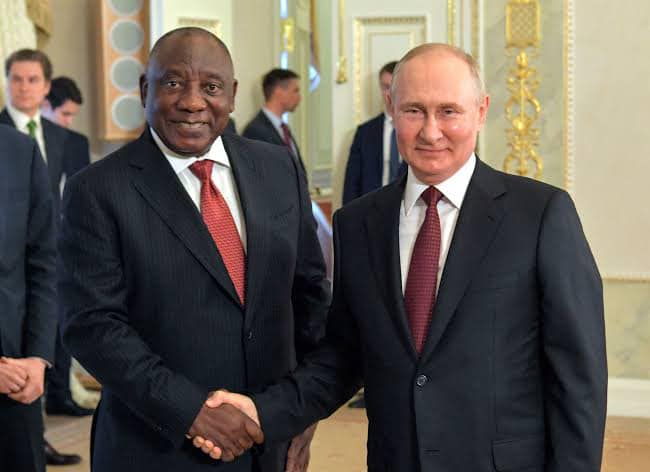
Six African presidents or their representatives flew to Ukraine and Russia allegedly to broker peace. Russia invaded Ukraine more than a year ago plunging Europe into another war. They indeed met the leaders of the warring parties but not before some embarrassing moment.

The South African president’s security detail and media were stranded in Warsaw when the Polish authorities kept them on the plane for more than 24 hours after landing. An uncalled-for embarrassing moment for Africa’s third biggest economy. If the Poles couldn’t allow security and media to get off their plane for a day, what kind of influence does Cyril Ramaphosa and his counterparts have to negotiate a peaceful agreement with Vladimir Putin? In the high stakes global war that is Russia and Ukraine, it is inconceivable that African leaders could negotiate peace. Perhaps they had gone on holiday.

While the six leaders were in Russia being serenaded by Putin’s charm and their delegations enjoying the eastern Europe weather, unknown assailants attacked a secondary school in western Uganda and killed 42 children, seriously wounded many and abducted others. Authorities blamed the Allied Democratic Forces (ADF) and some people fighting over the meagre funds supplied by Canadian donors to the school.

The eastern part of the Democratic Republic of Congo has never known peace. Foreign armies, private militias, rebel groups and even international peacekeepers call this area home. Thousands of people lucky to survive being killed in this endless crisis have ended up in internally displaced people’s camps or as refugees in neighbouring countries or elsewhere.

To access Europe, many African leaders avoided the burning airspace of Sudan fearing that their Gulf Stream private jets could be shot down by anti-aircraft missiles that could be fired at any time. Sudan is the epicenter of a senseless war where two erstwhile friends couldn’t agree on who how to share power or steal the country’s resources. It is hard to believe that many Sudanese have fled to Chad, of all places, for safety. Chad can’t govern itself.

The president of Senegal who came to power through a peaceful democratic process now doesn’t want to leave leading to demonstrations where security forces killed more than 16 protesters. In Somalia, Al Shabab filmed themselves as they attacked the Ugandan peace keepers, killing more than 50 of them. In Mozambique, it is the Rwanda army maintaining peace in some parts of the country. Libya has been at war since the Arab spring.

In Nigeria, Africa’s largest economy, Boko Haram abducts school going children without anyone stopping them.

As the African leaders were talking peace to the Russians and Ukrainians, thousands of Africans were being boarded on rickety boats to cross into Europe. Many don’t make the journey as their overloaded boats capsize.

Many of these people don’t want to go to Europe but they have been forced to seek refuge elsewhere. There are no jobs on the continent. You hardly hear African leaders meeting to discuss concrete steps they can take to create real jobs to help their young populations lead meaningful lives.

A year ago, some African leaders flew to Europe to beg Russia to allow ships carrying food to leave Ukraine ports. Africa, the continent that considers itself an agricultural one can’t feed its own people. It is Ukraine at war that can ship in food. With the current lack of commitment to agriculture, Africa will be importing food worth USD100 billion annually by 2030 according to the African Development Bank. With a population of 1.4 billion, food imports are expected to significantly rise. With every kilo of food imported, a few jobs are lost. These are the people who will be lured to slaughter innocent kids in dormitories in Kasese.

Talking of food, in East Africa, Kenya and Tanzania aren’t allowing each other to import or export maize leading to a long convoy of trucks at the Namanga border. Uganda and Kenya consistently blub over milk and eggs. Tanzania and Uganda squabble periodically over rice. As these non-tariff barriers are being set to deny or delay the movement of food, millions in East Africa starve to death.

African leaders can’t sit together to solve these problems. Once in a while, they fly to Addis, get booked into their presidential suites, drive down to the African Union headquarters and give wonderful long speeches. A communique is circulated with deadlines and timelines that everyone knows won’t be met. After they fly to their countries where a party of dancers and a queue of the most potbellied military officers is organized on the airport tarmac to welcome them back. And the circle continues.

When will Africa stop joking and get serious? How can people think that they can negotiate peace for Russia and Ukraine when they can’t solve a small border dispute over the importation of powdered milk?

The writer is a communication and visibility consultant. djjuuko@gmail.com

Related

Digitalization

From a simple smartphone to nearly 2.5m followers: Dr. Solomon Kimera inspires Kapchorwa youths to start now

By Gloria Kembabazi Digital skilling is opening new opportunities for young people who dream of building careers in content creation. In today’s digital world, many youths aspire to make a living online, yet procrastination and self-doubt often hold them back. Many wait for the perfect equipment, ideal timing, or enough money before they begin delays that keep their dreams on pause. It is under this background that Uganda Communications Commission (UCC) through the Uganda Communications Universal Service and Access Fund (UCUSAF) working with Prime Time Communications is implementing a program to skill youth groups in Information and Communication Technologies (ICT) and multimedia in five districts in eastern Uganda. The districts are Kumi, Kapchorwa, Manafwa, Butaleja and Kamuli. The training will see more than 500 youths acquire digital skills that are critical in enabling them to find or create meaningful work. Through the partnership between UCC and Prime Time Communications, more than 1,200 youths have so far been trained in central and eastern Uganda. When the digital skills training program kicked off at the Kapachrowa Community Hall in Kisenyi Sub-County within Kapchorwa Municipality, Kapchorwa District, the atmosphere was filled with inspiration as a famous TikToker and content creator Dr. Solomon Kimera took to the stage. Dr. Kimera, widely recognized for his engaging and educational TikTok videos, has built a strong online community by blending entertainment with knowledge. His relatable delivery and ability to simplify complex topics have earned him admiration from thousands of young people across the country. Addressing the youth, Dr. Kimera shared the authentic story of his journey. Although he is a medical doctor with a professional background in clinical practice, his rise in the digital world did not begin with expensive tools or a perfect setup. Instead, it began with confidence and creativity. “I started with the most basic equipment; an inexpensive smartphone. I was my own camera operator,” he revealed. “If I had waited to earn enough from my medical career to buy a better phone, I wouldn’t have the following I have today. I might never have existed as a content creator. You must start now!” His message resonated deeply with the young audience. Today, Dr. Kimera has nearly 2.5 million followers on TikTok, with his videos attracting millions of views and likes. His success is proof that passion and consistency can open doors, even when resources are limited. Through the UCC digital skills training, the youths in Kapchorwa are being empowered with practical skills to create content, build online brands, and tap into the growing digital economy. Dr. Kimera’s story served as a powerful reminder that success begins with the courage to start using whatever is available. His final encouragement to the youth was simple but profound: “Don’t wait for perfect conditions. Start with what you have. Your journey begins today.” One participant, Siya Deo, described the engagement and training as “an eye-opening.” Previously, he viewed his smartphone as a tool for basic tasks. “Now I know I can use my phone to do video content creation,” he shared.

Read More »
Out to Lunch

#OutToLunch: Rampant unemployment is a key national security issue

By Denis Jjuuko The public service ministry recently announced that more than 40,000 people applied for 287 jobs across different government ministries, departments and agencies. More than 28,000 of those who applied qualified, meaning they were selected for aptitude tests which were to be held at the Mandela National Stadium at Namboole. It must be frustrating looking for job in Uganda. The news came after a bombshell report emanating from research by the Inspectorate of Government (IG) and the Economic Policy Research Centre (EPRC) that indicated that Ugandans pay a whopping Shs42.34b annually to district service boards to get jobs. Averagely, the report indicated, 130,000 people pay bribes to land jobs. The people who ask for these bribes know that the jobs are scarce and people are desperate and willing to do anything to land the jobs. When somebody who bribed their way to a job gets employed, it means a few things. First, the person is not the best for the job. They just had the money to pay a recruiter. The best candidate may not have had the money and therefore wasn’t considered. Because the person knows they only got the job through bribery, they will continue bribing their way into senior positions. That is how we end up with incompetent people in positions of authority. People who can’t execute anything and making sure things don’t work or looking at everyone who is competent as a threat or what people call work politics. The people who are competent end up doing very little at work so that the incompetent boss doesn’t feel insecure and threatened. That is how we end with yes people—they won’t advise their bosses. They will do whatever the boss wants whether it makes sense or not. Remember, there are no jobs and these people have families to feed. Rocking the boat isn’t something that they want to do. Second, the people who bribed their way to jobs will only hire those who pay them a bribe. That way you end up with a corrupt layer at every level and an incompetent lot everywhere. Service delivery is impacted. Government then fails to create jobs that young people can apply for and get on merit. Third, because the public service is corrupted, the private sector suffers too. People can’t start and run businesses professionally. The people who are in positions because they paid a recruiter will endlessly try to get a return on their investment (read bribe). Procurement processes will be compromised. Payment for services and goods delivered will be frustrated unless somebody is paid. The bribery doesn’t end at public service. We recently saw many statements from politicians who lost elections for positions in their political parties claiming their rivals won through bribery. Some wondered why people were bribing for positions that were actually “voluntary.” We hear that candidates for Members of Parliament in some constituencies spend more money than they would get in the five years they would spend in the office should they win. If somebody spends more money than they would be officially paid, it means they are doing so to illegally get something. Somebody who sells their house to get money for election will do anything to get their house back. That is how we end up without jobs and seeing young energetic people leaving the country for the Middle East not to do highly technical jobs but menial ones or being trafficked for sex like we recently heard from a BBC investigation. Government has been saying that they are intending to grow the economy to US$500 billion annually. Great stuff but with rampant corruption, it will be a tall order. There is a need to nip corruption in the bud in order to create sustainable jobs for the working age population. Otherwise, we shall continue to see thousands of people filling up soccer stadiums to apply for a few jobs they know they stand no chance of getting. That is what they call desperation. And desperate people can do pretty much anything. Unemployment ends up being a key national security issue that the government must urgently address. The public have a chance to play a key role here by voting people in 2026 not because they bribed them with a t-shirts or some cheap alcohol but those who can address the challenges they face such as unemployment. The writer is a communication and visibility consultant. djjuuko@gmail.com

Read More »
Out to Lunch

#OutToLunch: What employees should know before launching a side hustle

By Denis Jjuuko On Friday 29 August this year, I was invited to speak to the staff of Uganda Registration Services Bureau (URSB) about side hustles for corporates during their end of month Fireplace session. The Fireplace is an internal meeting where guest speakers discuss various topics every last Friday of the month. Here is an abridged version of my presentation. I believe others could find an interesting thing or two. In August 1972, Idi Amin launched his so-called economic war which led to the expulsion of Asians. In the months that followed, Uganda experienced unprecedent inflation. With the economy in free fall, many workers realized that their salaries were no longer sufficient. At Makerere University, the country’s premier higher institution of learning, professors took to driving taxis to supplement their income. One professor, until recently a minister in Museveni’s government, was the taxi driver. His colleague, an education professor, was the ‘turn boy’ or conductor. Others became teachers in secondary schools. Their wives turned the garages of their residences into unofficial canteens. Amin’s economic war led to the birth of side hustles in Uganda, where employees do something outside their official jobs to supplement their incomes. The importance of side hustles was further cemented in 1990s when the Structural Adjustment Programme led to thousands of people losing their jobs. Recent mergers of government agencies (rationalization as they call it) and closure of funding organizations like USAID continue to make employees think of life beyond their offices with polished floors. So, if you are thinking of starting a side hustle, what key things should one think about? Here are a few points to ponder. Time: Side hustles for people doing 8-5 jobs should not be too time consuming. Get a hustle like buying and selling land, flipping houses, buying and selling cars, bonds and unit trusts (if you can call them side hustles), or even supplies. Bars, salons, and restaurants require a lot of time when starting which you may not have as you have to concentrate on your job as well. Also, workers in such sectors are unreliable. You don’t know which day they will not turn up. Or when they will sell a crate of beer and replace it creating an impression there are no customers. Still, you don’t want to stay awake in a kafunda so that a few men not eager to get home can finish their beer and leave to enable you close the day’s operations. Cash payments: Avoid side businesses where most of the payments are made in cash. You don’t know when the workers will disappear with it. Most side hustles are small and may not have systems to protect revenues especially in the beginning. Side businesses where people pay in the bank are better. There you can protect your revenue. I know there are mobile money payment codes these days but there are still a few issues with them to be fully embraced. Small is beautiful: All business plans show profitability at one stage. Also, however much research you do, there will always be stuff you will only learn when doing the business. Start small and allow yourself to learn the trade. Don’t throw all your life savings in a business at the beginning. Don’t borrow to start. If you are to borrow, maybe from family. Start with your savings or pool money with others. Six months rule: Before you quit your job to fully concentrate on the side hustle, instruct your bank to send 100% of your salary to an investment account or unit trusts or bonds. Don’t touch this money. Now, see if you can rely on the side hustle for six months. Pay all business and personal expenses from the business. That way you will know if the business is profitable or if you have been subsidizing it with your salary. That way you will avoid looking for a job a few months of leaving one. Do what others are doing: Your side hustle doesn’t have to be innovative or ground breaking. Do what others are doing. See a sector you can invest in, where you can easily raise start up capital and get going. But run it better than others. Ground breaking ideas can then be implemented when you have money you can afford to lose or can raise the required capital from angel investors. Cashflow is the lifeblood of business: Look for businesses which have good cashflows. Planting trees that mature after 20 years should be for people investing for retirement. But doing something that brings in money regularly helps keep the business operational without necessarily relying on the salary or salary loans. Do people need to do typical side hustles? Should everyone do business? There is no clear answer. One just needs to find a model that works for them. Apart from some telecoms and banks, many businesses in Uganda that publicly publish their returns show net profitability of around 10%-15% annually. This means that an employee who invests in treasury bonds or unit trusts is likely to earn the same percentage without any hustle of running after the ever-elusive customers. It can also be a strategy of accumulating capital to venture into capital intensive side hustles that don’t require a lot of time like real estate. The writer is a communication and visibility consultant. djjuuko@gmail.com

Read More »