#OutToLunch: How government of Uganda can solve its motor vehicle problem

By Denis Jjuuko

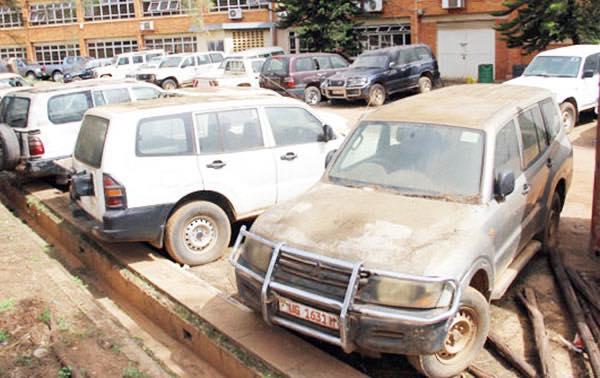
One way to tell that you have arrived at a government of Uganda facility such as a local government district or even ministry headquarters is the sight of motor vehicles rotting away in the compound. The government seems to find it easy to procure new vehicles than maintaining and servicing their existing fleet.

Some of these vehicles such as tractors, rollers, excavators and such other equipment cost billions each to buy but even the usual ordinary standard pick-up truck is expensive. One would think that maintaining and servicing these vehicles is cheaper and indeed more prudent than to buy new ones but this is Uganda.

This could have prompted the Ministry of Finance to announce that they wouldn’t be a budget for new vehicles for the next financial year. The news articles that announced this revelation didn’t mention whether there will be a budget for maintenance and service!

There is perhaps nothing that public servants love than a vehicle that comes with their offices. A car is a status symbol in Uganda for many since the majority of people come from poverty-stricken families. A car announces their arrival. One with the red or even blue license plates puts them on a pedestal they couldn’t probably have imagined while growing up.

In the 1990s, a fight erupted among the highest members of the judiciary. One judge was fighting with his superior over an official car — a Mitsubishi Pajero with a turbo engine or known as an Intercooler then. One judge wondered why his car wasn’t an Intercooler and created such a public circus over it.

Politicians once appointed in office, the first thing they want to know is which car has been assigned to them and if they can upgrade with the latest version. When the current cabinet was appointed, rumors surfaced that some ministers claimed their predecessors had put juju in the vehicles and therefore needed new ones!

I don’t know for how long Ramathan Ggoobi, the finance permanent secretary and secretary to the treasury, will be able to withstand pressure from politicians and public servants who want to buy new vehicles. Admittedly, this isn’t the first such directive government has ever issued. But I don’t remember if this was ever implemented. We shall wait and see.

Though the obvious thing if the ministry of finance wants to control its expenditure is by ensuring that its motor vehicle fleet is in good working mechanical conditions. Largely, the government buys these vehicles when they are brand new and if they are serviced well, they should be able to serve beyond five years.

I was told that government also doesn’t do comprehensive insurance for its fleet. This means if a car is involved in an accident, there is no compensation for it. So instead of getting insurance companies to replace the vehicle, government simply procures an new one. Buying vehicles all the time is more expensive than insuring them.

But does the government need to provide cars for all its officials? In many countries and even companies in Uganda, officers are facilitated to buy their cars. This can be done by providing interest free loans where the officer buys a car that they use for their official duties. The payment is deducted every month until the car has been paid off. The officer is then paid mileage every time they use the car. So the government wouldn’t be involved in maintaining and servicing the vehicle or selling it on the cheap just because the car has done five years. The officer knowing that this is their car, they will handle it with utmost care. Many wouldn’t demand for the expensive SUVs that they use today.

To make these cars cheaper, government can do a partnership with some of the vehicle manufacturers to assemble the cars in Uganda. Already, Kiira Motors has a plant nearing completion in Jinja. This would also create millions of jobs and kick off Uganda’s nascent automotive industry.

Alternatively, government can do what many organizations are doing. Hiring and leasing vehicles for its officers. Many companies and development organizations don’t own cars even those that are branded with their logos. They simply lease them and once they make about 150,000km on the odometer, they return them to the lessors and get new ones. This minimizes a company’s capital and operational expenditures. Maintenance and service is handled by these companies, freeing the lessee from the hustle of fleet management.

Of course, there are vehicles that government may still have to buy such as police and military vehicles and ambulances. But also, it can still lease them.

The writer is a communication and visibility consultant. djjuuko@gmail.com

Related

Education

From Smartphones to Sustainable Livelihoods: Manafwa Youth Power a New Digital Future

By Sandra Nakafeero A fresh sense of purpose swept through the Manafwa District Hall as more than 100 young people gathered for the close of an intensive digital skilling programme. Phones in hand and ideas taking shape, the participants demonstrated how simple digital tools are reshaping the way young people learn, create, and earn. During the hands-on sessions, trainees explored practical skills ranging from graphic design and social media branding to virtual collaboration. Using Canva and other mobile-friendly applications, the youths learned how to develop marketing visuals, select effective colour schemes and fonts, and package messages for online audiences. For many, these skills marked their first step toward turning creativity into income. Abikala Munyanda stood out among the cohort, emerging as the overall best performer. Like many of his peers, he described the training as a confidence booster that transformed digital platforms from sources of entertainment into tools for enterprise. The training was further energized by guest facilitator and content creator Dr. Solomon Kimera, whose journey resonated strongly with the participants. A medical doctor by profession, Dr. Kimera shared how he built a massive digital following by starting small and staying consistent. “I didn’t begin with expensive equipment or a studio,” he told the youth. “I started with an ordinary smartphone and the courage to put myself out there. If you wait for everything to be perfect, you may never begin.” Today, Dr. Kimera commands an online audience of nearly 2.5 million followers on TikTok, with content that blends education and entertainment. His story underscored a key lesson of the training: innovation is less about resources and more about mindset. Addressing the participants at the closing ceremony, the Chief Administrative Officer of Manafwa District, Mr. Ssenku Kimuli Samuel, urged the youth to translate their new skills into meaningful livelihoods. “This training has equipped you with skills that are relevant to today’s economy,” Mr. Ssenku said. “You already have powerful tools in your hands, your smartphones. Use them responsibly to create value, to earn honestly, and to contribute to the development of Manafwa. The future of this district depends on how well you apply what you have learned.” He emphasized that digital skilling is no longer optional but essential for young people seeking employment, entrepreneurship, and participation in national development. The Resident District Commissioner, Hon. Saleh Kamba, commended the trainees for their commitment and encouraged them to remain innovative and disciplined as they venture into the digital space. He noted that digital literacy offers young people an opportunity to improve their livelihoods using resources they already possess. The initiative was implemented by the Uganda Communications Commission (UCC) through the Uganda Communications Universal Service and Access Fund (UCUSAF), in partnership with Prime Time Communications. The programme targets youths in five eastern Uganda districts—Kumi, Kapchorwa, Manafwa, Butaleja, and Kamuli—with more than 500 young people benefiting in the current rollout. Overall, nearly 1,400 youths across 13 districts in central and eastern Uganda are being equipped with practical ICT and multimedia skills. In the first quarter of 2026, the programme will extend to Butaleja and Kamuli districts, enrolling an additional 200 youths. At the conclusion of the training, three participants were recognized for outstanding performance: Abikala Munyanda as Overall Winner, Leah Edith Namono as First Runner-Up, and Derrick Kalibo as Second Runner-Up. As the youths of Manafwa step forward with newly acquired digital competencies, they carry more than certificates—they carry the potential to create jobs, grow incomes, and transform their communities. One design, one post at a time, a new digital chapter is unfolding in Manafwa District.

Read More »
Digitalization

From a simple smartphone to nearly 2.5m followers: Dr. Solomon Kimera inspires Kapchorwa youths to start now

By Gloria Kembabazi Digital skilling is opening new opportunities for young people who dream of building careers in content creation. In today’s digital world, many youths aspire to make a living online, yet procrastination and self-doubt often hold them back. Many wait for the perfect equipment, ideal timing, or enough money before they begin delays that keep their dreams on pause. It is under this background that Uganda Communications Commission (UCC) through the Uganda Communications Universal Service and Access Fund (UCUSAF) working with Prime Time Communications is implementing a program to skill youth groups in Information and Communication Technologies (ICT) and multimedia in five districts in eastern Uganda. The districts are Kumi, Kapchorwa, Manafwa, Butaleja and Kamuli. The training will see more than 500 youths acquire digital skills that are critical in enabling them to find or create meaningful work. Through the partnership between UCC and Prime Time Communications, more than 1,200 youths have so far been trained in central and eastern Uganda. When the digital skills training program kicked off at the Kapachrowa Community Hall in Kisenyi Sub-County within Kapchorwa Municipality, Kapchorwa District, the atmosphere was filled with inspiration as a famous TikToker and content creator Dr. Solomon Kimera took to the stage. Dr. Kimera, widely recognized for his engaging and educational TikTok videos, has built a strong online community by blending entertainment with knowledge. His relatable delivery and ability to simplify complex topics have earned him admiration from thousands of young people across the country. Addressing the youth, Dr. Kimera shared the authentic story of his journey. Although he is a medical doctor with a professional background in clinical practice, his rise in the digital world did not begin with expensive tools or a perfect setup. Instead, it began with confidence and creativity. “I started with the most basic equipment; an inexpensive smartphone. I was my own camera operator,” he revealed. “If I had waited to earn enough from my medical career to buy a better phone, I wouldn’t have the following I have today. I might never have existed as a content creator. You must start now!” His message resonated deeply with the young audience. Today, Dr. Kimera has nearly 2.5 million followers on TikTok, with his videos attracting millions of views and likes. His success is proof that passion and consistency can open doors, even when resources are limited. Through the UCC digital skills training, the youths in Kapchorwa are being empowered with practical skills to create content, build online brands, and tap into the growing digital economy. Dr. Kimera’s story served as a powerful reminder that success begins with the courage to start using whatever is available. His final encouragement to the youth was simple but profound: “Don’t wait for perfect conditions. Start with what you have. Your journey begins today.” One participant, Siya Deo, described the engagement and training as “an eye-opening.” Previously, he viewed his smartphone as a tool for basic tasks. “Now I know I can use my phone to do video content creation,” he shared.

Read More »
Out to Lunch

#OutToLunch: Rampant unemployment is a key national security issue

By Denis Jjuuko The public service ministry recently announced that more than 40,000 people applied for 287 jobs across different government ministries, departments and agencies. More than 28,000 of those who applied qualified, meaning they were selected for aptitude tests which were to be held at the Mandela National Stadium at Namboole. It must be frustrating looking for job in Uganda. The news came after a bombshell report emanating from research by the Inspectorate of Government (IG) and the Economic Policy Research Centre (EPRC) that indicated that Ugandans pay a whopping Shs42.34b annually to district service boards to get jobs. Averagely, the report indicated, 130,000 people pay bribes to land jobs. The people who ask for these bribes know that the jobs are scarce and people are desperate and willing to do anything to land the jobs. When somebody who bribed their way to a job gets employed, it means a few things. First, the person is not the best for the job. They just had the money to pay a recruiter. The best candidate may not have had the money and therefore wasn’t considered. Because the person knows they only got the job through bribery, they will continue bribing their way into senior positions. That is how we end up with incompetent people in positions of authority. People who can’t execute anything and making sure things don’t work or looking at everyone who is competent as a threat or what people call work politics. The people who are competent end up doing very little at work so that the incompetent boss doesn’t feel insecure and threatened. That is how we end with yes people—they won’t advise their bosses. They will do whatever the boss wants whether it makes sense or not. Remember, there are no jobs and these people have families to feed. Rocking the boat isn’t something that they want to do. Second, the people who bribed their way to jobs will only hire those who pay them a bribe. That way you end up with a corrupt layer at every level and an incompetent lot everywhere. Service delivery is impacted. Government then fails to create jobs that young people can apply for and get on merit. Third, because the public service is corrupted, the private sector suffers too. People can’t start and run businesses professionally. The people who are in positions because they paid a recruiter will endlessly try to get a return on their investment (read bribe). Procurement processes will be compromised. Payment for services and goods delivered will be frustrated unless somebody is paid. The bribery doesn’t end at public service. We recently saw many statements from politicians who lost elections for positions in their political parties claiming their rivals won through bribery. Some wondered why people were bribing for positions that were actually “voluntary.” We hear that candidates for Members of Parliament in some constituencies spend more money than they would get in the five years they would spend in the office should they win. If somebody spends more money than they would be officially paid, it means they are doing so to illegally get something. Somebody who sells their house to get money for election will do anything to get their house back. That is how we end up without jobs and seeing young energetic people leaving the country for the Middle East not to do highly technical jobs but menial ones or being trafficked for sex like we recently heard from a BBC investigation. Government has been saying that they are intending to grow the economy to US$500 billion annually. Great stuff but with rampant corruption, it will be a tall order. There is a need to nip corruption in the bud in order to create sustainable jobs for the working age population. Otherwise, we shall continue to see thousands of people filling up soccer stadiums to apply for a few jobs they know they stand no chance of getting. That is what they call desperation. And desperate people can do pretty much anything. Unemployment ends up being a key national security issue that the government must urgently address. The public have a chance to play a key role here by voting people in 2026 not because they bribed them with a t-shirts or some cheap alcohol but those who can address the challenges they face such as unemployment. The writer is a communication and visibility consultant. djjuuko@gmail.com
Read More »