#OutToLunch Align university government sponsorship to national development plan

By Denis Jjuuko

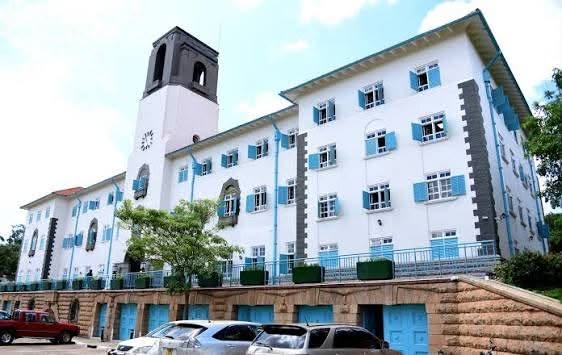
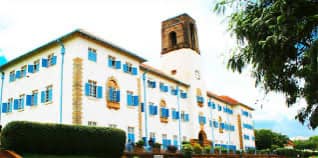
For decades after its founding, Makerere University admitted students according to their performance. Success for most students (and even parents) meant studying hard to qualify to be admitted. Getting admitted to Makerere on government sponsorship was the holy grail of success. Parents bragged about it. School administrators’ profiles were enhanced. Somebody told me, an entrepreneur even named his school “T-Junction to Makerere Secondary School.”

In the 1990s, Makerere started admitting self-sponsored students and government set up other universities. What you needed was money and two principal passes at A-level. Entrepreneurs set up universities too and hostels to offer accomodation. Getting a university degree was demystified even though the percentage of Ugandans with degrees isn’t that high.

With all changes that the government made to ensure more people get admitted to universities, one thing remained unchanged — how to get admitted on government sponsorship. The criterion for one to get admitted is solely based on academic performance. Score the highest points in the final national secondary education exams and you get admitted to a public university on government sponsorship.

The majority of people who score the highest grades are from premium schools where parents and guardians have been paying a lot of money a year. Of the 1,474 students admitted to Makerere on government sponsorship this year, 346 students representing 23.4% were from schools (Kitende, Buddo, Gayaaza, Mary Hill, Mengo and Namugongo) where annual tuition fees on average is Shs6m. At Makerere, the average annual tuition fees is Shs2.4m. So why give a scholarship to a kid whose parents can afford Shs6m in fees a year in secondary schools?

Although they introduced a system that picks highest performing kids per a district, still these are kids attending the most expensive school in that district. There is therefore no need to reward them with government scholarships. They are already privileged. There was even a student from an international school where the average fees is Shs30 million a year that was admitted on government scholarship! It is a mockery!

In fact, I know a few who get admitted to Makerere on government scholarships but their parents never send them there as they can afford fees in ivy league universities in America. When I was at graduate school at Rhodes, I saw a few such kids. Others don’t like the courses government admits them to, so they instead opt to pay for themselves as privately sponsored students.

The blanket admission of students to universities solely based on their academic performance needs to be rethought by introducing a scholarship program that rewards those who actually need and deserve the government programs. Makerere University already runs the Mastercard Foundation Scholars Program for bright but needy students. You only get this scholarship if you really deserve it. To be admitted on the program, the administrators visit your home, talk to the neighborhood, parents, previous school and establish that you truly deserve the scholarship. Makerere and indeed other universities can replicate this.

Of course, this would need parliament and government to think beyond the next political election and make this hard decision. Afterall, the majority of people who vote will never have their kids admitted on government scholarship as they won’t afford the secondary school fees where the majority of those admitted on government sponsorships attend. But selling unachievable dreams is big business for politicians.

Secondly, government can identify academic courses aligned to the national development plan or Vision 2040 and ensure students on government programs are only admitted to those ones. Let us for example look at the automotive industry which is one of the ways through which industrialization can take place in most countries. We can ringfence government sponsorships to those studying courses to do with the automotive and mobility sectors. That way we can build our capacity for this sector. Electric vehicles are here but what are our universities doing about it? Artificial intelligence (AI) is herald as the next big thing that is changing the world. Are we investing in human capital development for it or we can explain?

Thirdly, once anyone is given a government sponsorship, there should be a contract that they will work in the country for a number of years or have to pay back the money with interest. But we sponsor the students to study medicine and they end up working at Aga Khan and Nairobi hospitals in Kenya. The teachers we previously trained ended up in South African schools. Many others we are sponsoring today are ending up in Saudi Arabia and Oman (of all places!). We need to rethink our return on investment when it comes to government sponsorships.

The writer is a communication and visibility consultant. djjuuko@gmail.com
Related

Out to Lunch

#OutToLunch: Stronger African economies will create a World Cup winner

By Denis Jjuuko The football World Cup ended recently with Spain lifting the golden trophy after defeating Argentina 1-0 in extra time. This year’s tournament has seen the teams expanded from 32 to 48 of which 10 were from Africa. It is by far the biggest football World Cup ever in nearly 100 years since the competition was first organised in 1930. The organizer, FIFA, is even now talking about further expanding it to 64 national teams. One of the major talking points of the tournament has been the performance of teams from Africa. Only Morocco made it to the quarterfinals. Unlike in the last tournament in 2022 in Qatar, Morocco reached the semifinals. It is the only time an African team had reached that far in the tournament. Countries outside Europe and America didn’t do much either this year. Of the four countries that qualified for the semifinals, only defending champions Argentina is outside Europe. Needless to say, that Argentina was being inspired by Lionel Messi, probably the best player the world has ever seen since Pele and Diego Maradona. Anyway, why don’t African teams perform that well in the World Cup competition yet unlike Asia or the Middle East, football is the most popular sport on the continent? Many young boys on the continent wake up to kick the ball in the streets. Many others try to create professional careers while others watch it for hours on end especially over the weekend. Even though the interest is immense, sports, not just soccer, isn’t considered a major career pathway for many people on the continent. Parents rather push their children into other professional careers than sports. Go to school, get an education, find a job and live a better life thereafter. Sports such as soccer provide very short careers. About 10 years if you are lucky. By the time a player is 30, most likely their career is over. Of course, there are outliers like Messi who is 39 years old and still performing at the top level and Christiano Ronaldo who is 41 years old. But for the majority of players, they don’t stay in the game for that long. Of course, there are other areas in which they can earn after retirement such as coaching, television punditry and podcasting, scouting and even management but the openings are even fewer. Look at the premier league for example, there are only 20 teams and each team has about 30 players, which translates to a paltry 600 players. To make it to the premier league or any of the top leagues in the world is for the exceptional. I think that is why parents usually guide their children away from sports. Besides it is expensive to support a child’s career to develop to a level where he can attract interest of the big highly paying professional leagues. If you are in Africa, the odds are highly against you. Sport is poorly funded. Infrastructure is almost non-existent. A kid with talent needs high quality coaches, kits and infrastructure to make it. Do they exist? Hardly. In many communities, the kids play on bare grounds and in urban areas those grounds are being turned into bland shopping malls. A parent would have to invest in flying a child to European academies to get the best training they need to make it. How many such parents have such resources? And if the kids are good, they would be assimilated in Europe. If you look at the three European countries that reached this year’s semifinals, there are quite a number of immigrants. Some may have been born in Europe, but there are also others who weren’t born there. England’s Marc Guehi was born in Ivory Coast. Of course, north African teams had players born in Europe but usually those are few. And many only chose African teams after failing to impress European countries. We always talk about professionalizing our leagues but it is difficult if the economies are weak. Unless we prioritize developing our economies, African teams will always struggle to win the World Cup. Weak African economies can’t afford to pay top young modern coaches. We end up picking hustlers from eastern Europe or pensioners from western Europe, whose ideas and methods are way past their sell-by dates. Stronger economies would create big companies that can invest in sport as sponsors or even in club ownership (many private equity and hedge funds own clubs in Europe/America for example). Clubs would be able to sell tickets and merchandise at premium rates, develop players they can sell to other clubs in Europe and elsewhere at world market rates and create a sports ecosystem that generates millions of dollars every day. If our economies remain as they are today, we can kiss the World Cup goodbye. The writer is a communication and visibility consultant. djjuuko@gmail.com
Read More »
Out to Lunch

#OutToLunch: Students joining universities could self-teach themselves AI to disrupt sectors like agriculture

By Denis Jjuuko The month of August sees public universities open their gates to first year students. Joining university is one of the milestones many young people celebrate, the last step in the journey to the pinnacle of education. In a few years, they would be out of university and joining the workforce. But also, university in Uganda is really the first time somebody enjoys adulthood. The pampering starts to end once you join university. There are no teachers and wardens chasing you out of your room to attend class. Most universities don’t care much how you dress. If you are female, you decide whatever you want to do with your hair. Nobody sends you back home for having a mobile phone. It is in fact a taboo not owning a smartphone. You can return or not even return to your digs. Real freedom is perhaps only enjoyed while at university. When you leave and get married, you start being accountable for every little thing but then I digress. However, it must also be a mixed feeling for many parents, guardians and the students themselves. Have they chosen the right academic course? Will the jobs be available when students finish their academic journeys given the artificial intelligence (AI) disruptions we hear about every day? Many decades ago, a university degree meant a good job. Employers booked future workers before they even graduated. And upon graduation, people found themselves with decent jobs, housing, cars and whatever they needed to succeed. Today, there is no guarantee. The numbers of people joining the labour force are higher than the jobs available. The majority of Ugandan jobs, more than 70%, are in agriculture. Many young graduates aren’t very comfortable working there. In many poor agrarian economies, the pay is usually low and work is in remote areas. The majority of students are from rural communities and they want to try life elsewhere. They have been told for nearly two decades that education is the clearest pathway to a better life, which it is. If they attain education at the highest level only return to the village to work in agriculture, many people would look at them as failures. Yet it shouldn’t be. If you remove gold, coffee is Uganda’s biggest export earner bringing in billions of dollars annually. People have turned their lives around recently because of coffee. The agronomical practices may have changed a bit thanks to campaigns like Mmwanyi Terimba of Buganda Kingdom but there is still a lot that needs to be done. If we are to reach our target of 20 million bags of 60kg annually from about 8.6 million, we need to send some of our educated people to agriculture. The knowledge acquired at university should be used to improve the coffee value chain or any other agricultural product. It could be sales and marketing, post harvest handling, agronomy, logistics, finance, investments, procurement, accounting, value addition etc. Farmers would also have to appreciate the value that graduates bring to the field if they are to see improved yields. Many people employee the least educated and qualified people to look after their investments in agriculture. Pick a boy who can’t even write his name and put him in charge of a poultry farm of 20,000 birds or a 20-acre coffee farm. The results are expected. Frustrations upon frustrations. Africa’s food import bill is nearing US$100 billion a year yet we have a youthful population that is looking for work. How do we put young highly educated people to work in agriculture? If coffee is improving the lives of farmers in Bukomansimbi, it means it can employ young people and give them decent salaries. And the young people will work hard to improve yields on the farms or profitability in the value chain because that is a guaranteed way for them to improve their incomes too. If we reduce how much food we import, that can be money directly put in the pockets of young people. However, the policy makers might be on other perfunctory things. As young people join universities, they need to think of how they can work in sectors like agriculture and turn them around using whatever qualifications they acquire. That is where the jobs are. The universities will likely teach them basics. The majority of university students have a lot of time. Some have classes for a few days a week or just in the evening or a few hours a day. They can use new technologies like AI to teach themselves a few things that may help them disrupt sectors like agriculture. That way they will create value that leads them to securing decent jobs. The writer is a communication and visibility consultant. djjuuko@gmail.com See less
Read More »

#OutToLunch: Xenophobic attacks call for investments in home countries

By Denis Jjuuko In the early 1990s, the world started to witness the dismantling of one of the most antediluvian official racist regimes ever assembled. Nelson Mandela, leader of the African National Congress would be released from prison in 1990 after 27 years of inhumane confinement on Robben Island. A new South Africa was on the horizon. Mandela would win the country’s first multiracial presidential elections in 1994 after his ANC won a large majority of parliamentary seats. Mandela and his ANC’s victory marked the end of official apartheid in South Africa. Mandela mentioned from the beginning that he wasn’t replacing official white racism with official black racism. He called the new South Africa, a rainbow nation. A country that embraced you regardless of the color of your skin. Unlike the majority of the so-called revolutionaries, Mandela ruled for one term. He ended up as one of the world’s most revered statesmen and even became a celebrity! At home, after the euphoria of the 1994 elections, many black South Africans realized that the end of apartheid didn’t mean that they would move from their shebeens in the townships to white homes in leafy suburbs and take over white businesses and send the whites to wherever. South Africa wasn’t Idi Amin’s Uganda. They realized that the rainbow mantra meant co-existence. They rejected it but they were still a bit hopeful. The ANC understood the sentiments of many black people and created policies like black economic empowerment (BEE), which provided opportunities for blacks and other people of color. If a white owned a business, they needed some black people in top management and on the board. Some black people also needed to own shares. Government tenders were reserved for business that embraced BEE. But such opportunities were of course reserved for elite blacks — educated in Europe, America or even in the exclusive South African universities. The majority of the beneficiaries of BEE were ANC stalwarts and that is how they became billionaires and today’s captains of industries. Others became tenderprenuers (influencing government tenders). Apartheid had denied the majority of blacks quality education and other opportunities. They didn’t have skills. The apartheid regime preferred to import professionals from elsewhere to work in black communities or do jobs the whites didn’t want to do. That is how Ugandan teachers and medical doctors ended up in South Africa in the 1980s. They settled there quickly and established themselves as hard working, set up private practices and generally built better lives than many of those they left at home. South Africa had (still does) world class universities and when they opened up the country in 1994, many people started attending school there. I would also end up at an elite South African university 10 years after Mandela had been elected for my graduate education. South Africa was and remains the continent’s most sophisticated and largest economy. As economies of many African nations crumbled, South Africa’s soared. Many Africans unable to be externalized to America or Europe for kyeyo saw it as the next perfect frontier and arrived in droves. Many had seen the doctors and teachers who had migrated earlier living better lives. Those who visited Johannesburg, Cape Town, Durban or Pretoria saw a modern country where they wished to work and live. South African TV soap operas Egoli, Generations and Isidingo created a desire that many people wanted to experience themselves. Those who had made it to South Africa arrived back in Kampala every December with fancy cars and threw white-dress themed parties. Another Bantu migration of sorts had to happen but this time to kuyiriba (hustle) including becoming Sangomas (fake traditional healers). In South Africa, ANC riddled with corruption forgot to create jobs for the majority of blacks who were largely uneducated and unskilled. Populist politicians like Julius Malema saw an opportunity and fanned the flames that lead to today’s xenophobic attacks against blacks from outside South Africa. Hundreds have been evacuated back home in Uganda. They are now chilling in Kyankwanzi, ostensibly undergoing orientation. I am not sure what that means. But the xenophobic attacks should be a wake up call for migrants as well as governments of their home countries. People largely migrated to South Africa to find better opportunities for themselves. If we created jobs here, the majority wouldn’t have left. There must be a deliberate way to encourage migrants to invest back home. NSSF should be pushing them for voluntary savings. Capital Markets Authority should be doing drives for collective investments. National Housing should be building houses they can buy. Uganda Investment Authority should be making presentations on where to invest. It used to happen until when politicians hijacked platforms like the Uganda North American Association Convention. Buganda Kingdom is trying with its Buganda Bumu Convention but it is a drop in the ocean. If we refocused, people wouldn’t be evacuated or even deported and returned home with nothing. And lastly an enabling environment that enables businesses to thrive. The writer is a communication and visibility consultant. djjuuko@gmail.com

Read More »