
#OutToLunch Road toll technology can halve accidents on our roads

Road toll technology can halve accidents on our roads

By Denis Jjuuko

On many of our roads in Uganda, it is not uncommon to find a vehicle moving at high speed in the evening or early morning with lights off. Lights don’t consume any fuel or batteries (for electric vehicles) when a car is in motion but many Ugandan drivers delay as much as possible to switch them on. Then, many others switch off the lights as soon as they think they can see a bit of the road in the early morning.

When it’s dark enough that they can’t see, many beam their headlights high enough to blind oncoming motorists. Yet many others have one headlight, giving an impression of a motorcycle to other road users. Many others don’t even have taillights at all making themselves invisible to others. Other times you find a tractor or truck using a torch at night. It is such negligence that has led to many international organizations to ban their staff from traveling at night.

But accidents don’t happen only at night. Police attributes many of these accidents to reckless driving. During the festive season, like we have just seen, many people die in road accidents causing nightmares for families and loved ones.

Nearly 4,000 people die every year in road accidents in Uganda — a number bigger than the deaths attributed to Covid-19 but we don’t put the same emphasis on roads as we do with other some other health issues.

Although road accidents can’t be entirely eliminated, many can be avoided. As a country, we need a serious discussion on this. Halving road accident deaths and injuries is one of the Social Development Goals (SDGs) as detailed by the United Nations. But what are we doing to reach this target by 2030?

We need to train our drivers and ensure that they are competent. This would require changing the way drivers’ licenses are issued by ensuring that people have requisite training to drive. The current model where someone gets a very old car and then starts teaching others to drive needs to be reconsidered.

The mechanical condition of vehicles is another important issue. One, we need to stop the importation of very old cars. We can start by only importing vehicles that are eight years or newer. The government can slash import duty to ensure more people can afford these vehicles and this should include commercial vehicles especially trucks.

Trucks can also be made here. During the festive season, news trickled in that the government had acquired more than 1,300 acres in Bbaale in Kayuga to establish an automotive industrial park. The Kayunga District Local Government has also promptly approved the physical plan paving way for the development of the park.

However, we shouldn’t follow the Namanve model where we just allocate land and wait for investors. The automotive industry is highly competitive and requires significant resources. So the government can do more to lower the cost of entry for investors.

What government needs to do is to establish the necessary infrastructure in Bbaale such as bitumen standard roads, high voltage electricity (Isimba Dam is nearby so transmission and distribution shouldn’t be difficult), piped water (again River Nile and Lake Kyoga are in the vicinity), high speed internet, security and even start up facilities such as warehouses and recreation facilities. A ring road covering the two square mile piece of land could be used as a test track and may be even establish some car racing of sorts at one stage.

I know that Kiira Motors is already building testing facilities in Jinja for their vehicles but Kayunga can be another centre. The inspector of vehicles within the Uganda police can establish a proper high-tech branch where each car is tested either annually or once every two years. Only vehicles that pass the test should be allowed on the road. Some of the money vehicle owners pay should be used to set up road toll-like systems on all the major highways that detect whether a vehicle has been tested and passed the test or not. UNRA can use the experience on the Entebbe Expressway (albeit with better technology) to handle this in partnership with private sector players.

The Uganda Investment Authority, the Science, Technology and Innovation secretariat among other government ministries, departments and agencies need to aggressively attract the right investors. Not all investors need to be car makers because that is not how the industry works. Some can make brake pads, others nuts and bolts, automotive steel, car lights and glass (we have a lot of silica in Uganda), and plastics among others.

If we worked hard and smart, we can achieve the SDG target of halving road accident deaths and injuries by 2030.

The writer is a communication and visibility consultant. djjuuko@gmail.com

Related

Digitalization

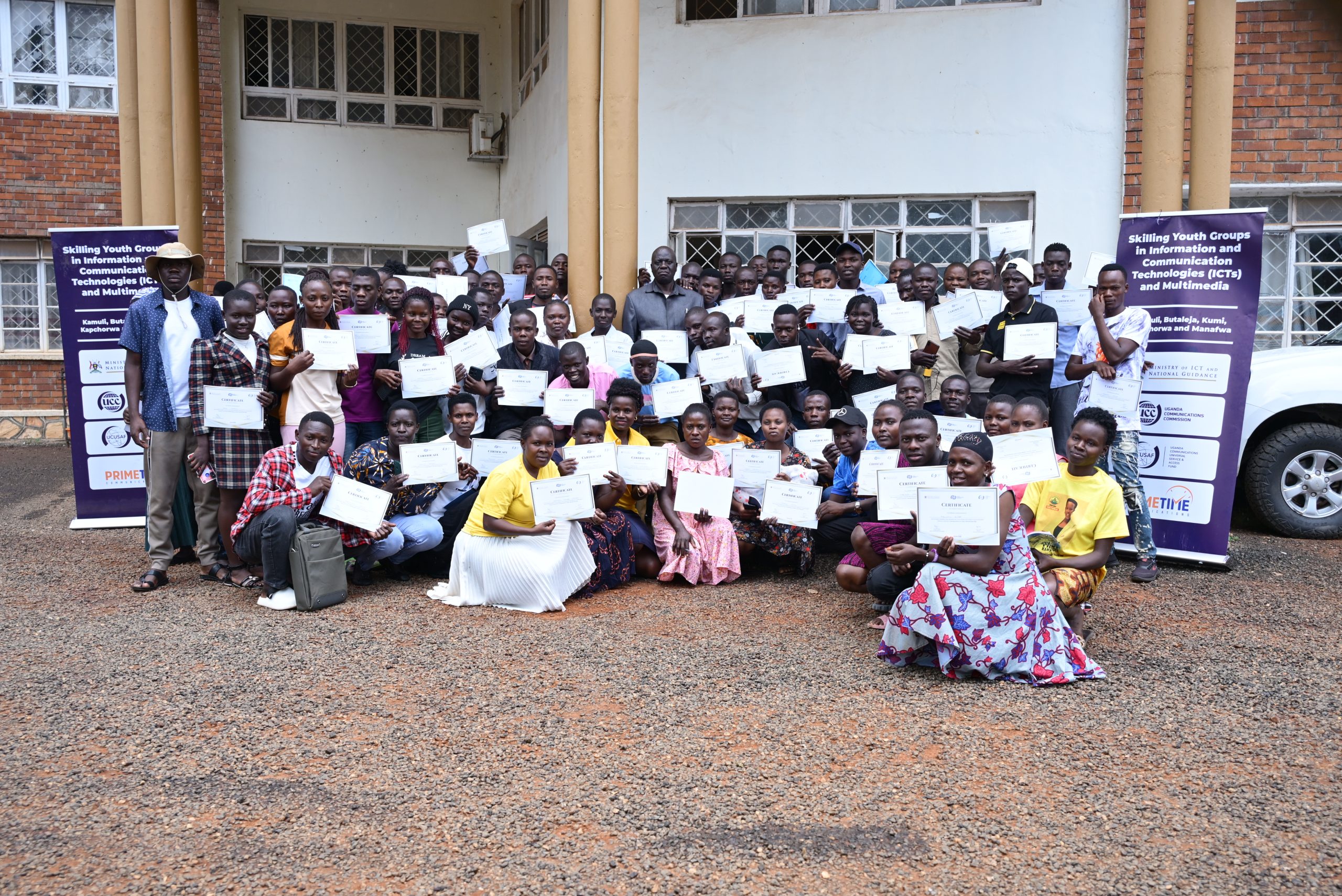
From a simple smartphone to nearly 2.5m followers: Dr. Solomon Kimera inspires Kapchorwa youths to start now

By Gloria Kembabazi Digital skilling is opening new opportunities for young people who dream of building careers in content creation. In today’s digital world, many youths aspire to make a living online, yet procrastination and self-doubt often hold them back. Many wait for the perfect equipment, ideal timing, or enough money before they begin delays that keep their dreams on pause. It is under this background that Uganda Communications Commission (UCC) through the Uganda Communications Universal Service and Access Fund (UCUSAF) working with Prime Time Communications is implementing a program to skill youth groups in Information and Communication Technologies (ICT) and multimedia in five districts in eastern Uganda. The districts are Kumi, Kapchorwa, Manafwa, Butaleja and Kamuli. The training will see more than 500 youths acquire digital skills that are critical in enabling them to find or create meaningful work. Through the partnership between UCC and Prime Time Communications, more than 1,200 youths have so far been trained in central and eastern Uganda. When the digital skills training program kicked off at the Kapachrowa Community Hall in Kisenyi Sub-County within Kapchorwa Municipality, Kapchorwa District, the atmosphere was filled with inspiration as a famous TikToker and content creator Dr. Solomon Kimera took to the stage. Dr. Kimera, widely recognized for his engaging and educational TikTok videos, has built a strong online community by blending entertainment with knowledge. His relatable delivery and ability to simplify complex topics have earned him admiration from thousands of young people across the country. Addressing the youth, Dr. Kimera shared the authentic story of his journey. Although he is a medical doctor with a professional background in clinical practice, his rise in the digital world did not begin with expensive tools or a perfect setup. Instead, it began with confidence and creativity. “I started with the most basic equipment; an inexpensive smartphone. I was my own camera operator,” he revealed. “If I had waited to earn enough from my medical career to buy a better phone, I wouldn’t have the following I have today. I might never have existed as a content creator. You must start now!” His message resonated deeply with the young audience. Today, Dr. Kimera has nearly 2.5 million followers on TikTok, with his videos attracting millions of views and likes. His success is proof that passion and consistency can open doors, even when resources are limited. Through the UCC digital skills training, the youths in Kapchorwa are being empowered with practical skills to create content, build online brands, and tap into the growing digital economy. Dr. Kimera’s story served as a powerful reminder that success begins with the courage to start using whatever is available. His final encouragement to the youth was simple but profound: “Don’t wait for perfect conditions. Start with what you have. Your journey begins today.” One participant, Siya Deo, described the engagement and training as “an eye-opening.” Previously, he viewed his smartphone as a tool for basic tasks. “Now I know I can use my phone to do video content creation,” he shared.

Read More »
Out to Lunch

#OutToLunch: Rampant unemployment is a key national security issue

By Denis Jjuuko The public service ministry recently announced that more than 40,000 people applied for 287 jobs across different government ministries, departments and agencies. More than 28,000 of those who applied qualified, meaning they were selected for aptitude tests which were to be held at the Mandela National Stadium at Namboole. It must be frustrating looking for job in Uganda. The news came after a bombshell report emanating from research by the Inspectorate of Government (IG) and the Economic Policy Research Centre (EPRC) that indicated that Ugandans pay a whopping Shs42.34b annually to district service boards to get jobs. Averagely, the report indicated, 130,000 people pay bribes to land jobs. The people who ask for these bribes know that the jobs are scarce and people are desperate and willing to do anything to land the jobs. When somebody who bribed their way to a job gets employed, it means a few things. First, the person is not the best for the job. They just had the money to pay a recruiter. The best candidate may not have had the money and therefore wasn’t considered. Because the person knows they only got the job through bribery, they will continue bribing their way into senior positions. That is how we end up with incompetent people in positions of authority. People who can’t execute anything and making sure things don’t work or looking at everyone who is competent as a threat or what people call work politics. The people who are competent end up doing very little at work so that the incompetent boss doesn’t feel insecure and threatened. That is how we end with yes people—they won’t advise their bosses. They will do whatever the boss wants whether it makes sense or not. Remember, there are no jobs and these people have families to feed. Rocking the boat isn’t something that they want to do. Second, the people who bribed their way to jobs will only hire those who pay them a bribe. That way you end up with a corrupt layer at every level and an incompetent lot everywhere. Service delivery is impacted. Government then fails to create jobs that young people can apply for and get on merit. Third, because the public service is corrupted, the private sector suffers too. People can’t start and run businesses professionally. The people who are in positions because they paid a recruiter will endlessly try to get a return on their investment (read bribe). Procurement processes will be compromised. Payment for services and goods delivered will be frustrated unless somebody is paid. The bribery doesn’t end at public service. We recently saw many statements from politicians who lost elections for positions in their political parties claiming their rivals won through bribery. Some wondered why people were bribing for positions that were actually “voluntary.” We hear that candidates for Members of Parliament in some constituencies spend more money than they would get in the five years they would spend in the office should they win. If somebody spends more money than they would be officially paid, it means they are doing so to illegally get something. Somebody who sells their house to get money for election will do anything to get their house back. That is how we end up without jobs and seeing young energetic people leaving the country for the Middle East not to do highly technical jobs but menial ones or being trafficked for sex like we recently heard from a BBC investigation. Government has been saying that they are intending to grow the economy to US$500 billion annually. Great stuff but with rampant corruption, it will be a tall order. There is a need to nip corruption in the bud in order to create sustainable jobs for the working age population. Otherwise, we shall continue to see thousands of people filling up soccer stadiums to apply for a few jobs they know they stand no chance of getting. That is what they call desperation. And desperate people can do pretty much anything. Unemployment ends up being a key national security issue that the government must urgently address. The public have a chance to play a key role here by voting people in 2026 not because they bribed them with a t-shirts or some cheap alcohol but those who can address the challenges they face such as unemployment. The writer is a communication and visibility consultant. djjuuko@gmail.com
Read More »
Out to Lunch

#OutToLunch: What employees should know before launching a side hustle

By Denis Jjuuko On Friday 29 August this year, I was invited to speak to the staff of Uganda Registration Services Bureau (URSB) about side hustles for corporates during their end of month Fireplace session. The Fireplace is an internal meeting where guest speakers discuss various topics every last Friday of the month. Here is an abridged version of my presentation. I believe others could find an interesting thing or two. In August 1972, Idi Amin launched his so-called economic war which led to the expulsion of Asians. In the months that followed, Uganda experienced unprecedent inflation. With the economy in free fall, many workers realized that their salaries were no longer sufficient. At Makerere University, the country’s premier higher institution of learning, professors took to driving taxis to supplement their income. One professor, until recently a minister in Museveni’s government, was the taxi driver. His colleague, an education professor, was the ‘turn boy’ or conductor. Others became teachers in secondary schools. Their wives turned the garages of their residences into unofficial canteens. Amin’s economic war led to the birth of side hustles in Uganda, where employees do something outside their official jobs to supplement their incomes. The importance of side hustles was further cemented in 1990s when the Structural Adjustment Programme led to thousands of people losing their jobs. Recent mergers of government agencies (rationalization as they call it) and closure of funding organizations like USAID continue to make employees think of life beyond their offices with polished floors. So, if you are thinking of starting a side hustle, what key things should one think about? Here are a few points to ponder. Time: Side hustles for people doing 8-5 jobs should not be too time consuming. Get a hustle like buying and selling land, flipping houses, buying and selling cars, bonds and unit trusts (if you can call them side hustles), or even supplies. Bars, salons, and restaurants require a lot of time when starting which you may not have as you have to concentrate on your job as well. Also, workers in such sectors are unreliable. You don’t know which day they will not turn up. Or when they will sell a crate of beer and replace it creating an impression there are no customers. Still, you don’t want to stay awake in a kafunda so that a few men not eager to get home can finish their beer and leave to enable you close the day’s operations. Cash payments: Avoid side businesses where most of the payments are made in cash. You don’t know when the workers will disappear with it. Most side hustles are small and may not have systems to protect revenues especially in the beginning. Side businesses where people pay in the bank are better. There you can protect your revenue. I know there are mobile money payment codes these days but there are still a few issues with them to be fully embraced. Small is beautiful: All business plans show profitability at one stage. Also, however much research you do, there will always be stuff you will only learn when doing the business. Start small and allow yourself to learn the trade. Don’t throw all your life savings in a business at the beginning. Don’t borrow to start. If you are to borrow, maybe from family. Start with your savings or pool money with others. Six months rule: Before you quit your job to fully concentrate on the side hustle, instruct your bank to send 100% of your salary to an investment account or unit trusts or bonds. Don’t touch this money. Now, see if you can rely on the side hustle for six months. Pay all business and personal expenses from the business. That way you will know if the business is profitable or if you have been subsidizing it with your salary. That way you will avoid looking for a job a few months of leaving one. Do what others are doing: Your side hustle doesn’t have to be innovative or ground breaking. Do what others are doing. See a sector you can invest in, where you can easily raise start up capital and get going. But run it better than others. Ground breaking ideas can then be implemented when you have money you can afford to lose or can raise the required capital from angel investors. Cashflow is the lifeblood of business: Look for businesses which have good cashflows. Planting trees that mature after 20 years should be for people investing for retirement. But doing something that brings in money regularly helps keep the business operational without necessarily relying on the salary or salary loans. Do people need to do typical side hustles? Should everyone do business? There is no clear answer. One just needs to find a model that works for them. Apart from some telecoms and banks, many businesses in Uganda that publicly publish their returns show net profitability of around 10%-15% annually. This means that an employee who invests in treasury bonds or unit trusts is likely to earn the same percentage without any hustle of running after the ever-elusive customers. It can also be a strategy of accumulating capital to venture into capital intensive side hustles that don’t require a lot of time like real estate. The writer is a communication and visibility consultant. djjuuko@gmail.com

Read More »