Ministry of Energy and Mineral Development prioritizes participation of Ugandans in development of the Oil and Gas sector

By Sierra Ruth Arinaitwe

The Ministry of Energy and Mineral development Uganda has established the policy provisions for national participation through which Ugandans have been prioritized to partake in the development of the sector.

This follows the sector’s move to the development and production phase of the commercial quantities of oil which were discovered in the Lake Albert basin. This phrase involves activities such as engineering, procurement and construction of the different infrastructure that is required for the production and commercialization of the crude oil.

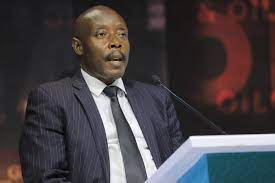
According to Robert Kasande, the Permanent Secretary of the Ministry of Energy and Mineral Development (MEMD), national participation of Uganda will be maximized through three main ways including “provision of goods and services by Ugandans, employment and training of Ugandans and technology transfer to Ugandans.”

Kasende made the remarks was speaking during the 7th Annual Oil and Gas Convention, which was held virtually due to the ongoing lockdown as a result of the second COVID-19 wave in the country.

The policies state that Ugandan entrepreneurs will be given chance to provide goods and services to be used during the production and commercialization of the crude oil in the Lake Albert basin. Section 53 and 125 of the upstream and midstream Acts states that; “the licensee, their contractors and subcontractors are required to give priority goods and services provided by Ugandan citizens and registered entities owned by Ugandans.”

The regulations ring-fenced a number goods and services that can only be provided by Ugandan citizens and Ugandan companies. Among these include; transportation, security, foods and beverages, hotel accommodation and catering , human resource management, office supplies ,fuel supply, land surveying, clearing and forwarding, locally available construction materials , civil works, environment studies and impact assessment, communication and information technology service, waste management and crane hire.

The policies also state that there will be provision of employment and training to Ugandans. Sections 54 and 126 of the Upstream and Midstream Acts provide for “training, recruitment and employment of Ugandans in all phases of petroleum activities taking into account gender, equity, persons with disabilities and host communities.”

Kasande explains that the regulations require that Ugandan citizens are given priority for employment in any petroleum activity executed by any licensee.

Kasande notes that to ensure successful implementation of the policy provision of national participation, there will be need to effectively implement the available policy provisions within the existing policy, legal and regulatory framework to foster national participation.

He as well called upon collaboration and coordination among the key stakeholders to efficiently implement the policy provisions to ensure maximum national participation in the oil and gas industry, establishment of industry collaboration forums and development and application of a holistic approach to measure and monitor national content.

Related

Out to Lunch

#OutToLunch: Are investment clubs ruining your life?

By Denis Jjuuko The internet has led to connectivity we probably never imagined. Previously, you left a job and that was it. Today, if you leave one, most likely somebody will add you to a WhatsApp group of former employees of Company Z. If you don’t leave the job, you belong already to several WhatsApp groups. The schools you attended also have another WhatsApp group. And of course, another for the particular class say Law Class of 2005. If you attended many schools, you are in several of these. The neighbours also have another group. Your ancestral village has another one for its Kampala diaspora. The religion you belong to has several others. The one where you live, and another from your ancestral district or diocese. The gym colleagues have another one. The social clubs you belong to also have others. The list of WhatsApp groups can be endless and sometimes it can be hard to catch up. Some people, perhaps afraid of annoying people if they left, resort to being silent or what Ugandans call akamooli (watching from the sidelines). However, most of these WhatsApp groups have one thing in common — investments or savings. There is perhaps no WhatsApp group where an investment or savings club hasn’t been mooted. Because everyone wants to save and make some ka-money, the idea usually is supported by many members. And indeed some of these investment or saving clubs have blossomed. Some old students or church associations now have billions in assets under management. Many people feel that they shouldn’t be left out and go ahead and sign up to many investment or savings clubs. Each of them expects one to pay a set amount of money every month. Failure to pay can be psychologically torturing. Treasurers are cajoling each one of the members to meet their obligations. Meetings spend half the time devising means to ensure everyone is paying and how to discipline those falling short. I know of somebody who was consistently broke. He was earning a decent monthly salary but he was always stressed and pitiful. I found out that he was belonging to several clubs in Kampala and his ancestral village. They took a significant part of his pay. He was living a miserable life as he tried to meet his obligations with the several investment clubs he belonged to. Saving and investing is a very good thing but it should be of a certain percentage of one’s earnings. If you save and invest for example 70% of your earnings, you must ensure that you can survive on the remaining 30%. If you are saving 70% of your earnings and then playing dodge ball with your landlord at home, failing to get basics for your family, then it makes no sense. Being super stressed because of saving isn’t probably the right thing to do. The repercussions can be dire. Many people suffering to meet their saving obligations in clubs as largely a result of subscribing to many clubs. The best way is to identify a club or two which meet your aspirations and concentrate on those than being in so many clubs and failing to meet your obligations. It frustrates everyone including yourself. Investment and savings clubs however good they are for people and economies, they are very conservative. In order to protect people’s money, they usually invest in assets that are considered safe but sometimes without even regular returns. People can have money in these clubs but they aren’t taking home anything regularly. If a club invests in land or even unit trusts, they have to wait for a long term for either the land to gain value and sell or for the unit trusts to compound significantly to provide a worthy return to the members. Are you willing to wait for that long? Those that lend money to the members charge very high rates, sometimes as much as 3% per a month. Annually, that is 36%. Just because there isn’t much paperwork, collateral and are swifter than commercial lenders, the interest rates are simply prohibitive given that members are essentially borrowing their own money. Investment and savings clubs if they want members to make money, they need to lend below annual interest rates of banks. Since they do short term lending, they could do 0.5% a month. People who are borrowing this money, they could then be able to make money with what they have borrowed. So as your WhatsApp group proposes yet another investment or savings club, be careful before you sign up and see if it makes sense or the ones you belong to are enough. The writer is a communication and visibility consultant. djjuuko@gmail.com

Read More »
Out to Lunch

#OutToLunch: Practical skills still important even in the AI era

By Denis Jjuuko The new British prime minister (yes, there is a new one) has been ubiquitous trying to sell his vision and probably avoid the missteps of his predecessors. In one of the videos he shared on his social media handles, he is seen at a factory that makes trains. He says, artificial intelligence or AI won’t build them. He said AI can write a contract but it won’t make a train like the factory he was visiting or even fix your leaking roof. Andy Burnham is probably the first political leader of a developed economy to say that on camera. His vision is of seeing technical practical jobs being created alongside digital ones. He also acknowledges the limitations of digital innovation. He called for a reboot of his country’s education system. Desktop jobs may be replaced by AI but the practical ones will still exist. As Andy Burnham was sharing the video, the Uganda Airlines acting Chief Executive, veteran Ethiopian aviation expert Girma Wake was holding a presser at his Nakasero office in Kampala. Wake was once the top guy at Ethiopian Airlines, well known for its efficiency, safety and profitability — an exception on the continent. His video interview, in less than five minutes, was confidence building. He offered his vision, underlying briefly what is required to ensure the crane continues to soar as high as it is expected. I think it is going to be a long journey but it seems basics are now in place. One of the things he mentioned was the cost of employment. When Uganda Airlines was collapsed in 2001, Ugandans who had aviation experience moved on. Young people saw no reason to enroll for aviation courses. Those who wanted to pursue certain careers in aviation largely had to finance their education and training outside the country. That is usually very expensive. Today, Wake told his audience, he relies on foreign staff to operate especially the aircraft on wet leases. He says that is very expensive. He needs Ugandans in those jobs. They are affordable and due to family ties and other reasons are more likely to remain with the airline for the long haul. Aviation employs many people. With Uganda Airlines expecting to receive its delivery of eight aircraft from Boeing in early 2030s, many people who go to aviation schools today will perhaps have gained some experience by that time. A simple google search shows that one B737 aircraft needs 10-15 pilots to operate and many others in other jobs in operations and maintenance. Broadly, it may need as many as 80 people for optimum operations. The national carrier’s executive also talked about reviving the flying school in Soroti. I think that now we have a firm order with Boeing, this is even more urgent. So that by the time the aircraft are delivered, there would be Ugandans to operate and maintain them. And AI will not solely operate and maintain the aircraft. It won’t cook the rolex or katogo Uganda Airlines may want to serve on the flight. Though those with the right AI skills will have a bigger chance of landing a job. But it isn’t just aviation where AI, like the British Premier said, would be limited. We are constructing the Standard Gauge Railway (SGR) and even reviving some meter gauge ones. Are we training people to operate and maintain the line, trains or even build them? Or we will rely on experts once the SGR is built like we are doing with a simple job of managing toll gates on the Entebbe Expressway? We are still very much a small economy that will for a long time depend on the practical physical skills of its people. Skilling in technical practical jobs is still important for the majority of people. The automotive industry is experiencing changes as people move to electric and more advanced vehicles. Do we have repair shops that are competent to repair and maintain them? I see an increment in electric and newer model vehicles on the road every day. The garages or workshops are improving too — moving their operations from under the mango tree to somewhat fancy buildings. But are we training people in the numbers we need to do the job? And if Britain is going back to the basics during this era of AI, what about us? To achieve our US$500b economy goal will depend a lot on many of our young people having the skills they need to find jobs with predictable regular income. The writer is a communication and visibility consultant. djjuuko@gmail.com

Read More »
Out to Lunch

#OutToLunch: Watoto’s Kabaka anniversary do and why ability transcends DNA

By Denis Jjuuko On the last day of July 1993, a mammoth crowd gathered at Naggalabi hill in Buddo to witness the historical occasion of coronating Prince Ronald Muwenda Mutebi as the 36th Kabaka of Buganda. For many people in Buganda that day, it is something they had not witnessed in their lifetime. The last coronation had taken place in November 1942 and then the kingdom was abolished in 1966, the Kabaka exiled and an opportunity to coronate his heir temporarily lost. I remember my guardian giving us a rare day off to watch the live telecast all day. This is the only day I remember where we didn’t have to be bothered with house chores. You could pick a cup of tea and just sit in front of the tiny television set in the living room—as long as you didn’t make noise to distract the elders. And being a Saturday, it helped. There was no school to attend. Given Uganda’s demographics, many watching the 33rd coronation anniversary last Friday at Watoto Church in Bweyogerere were either too young or not yet born in July 1993. It was therefore refreshing when Katikkiro Charles Peter Mayiga opened his speech with a memory lane of the events of that day in 1993. He perfectly understood the audience of his message. There are many young urbane educated people who sometimes look the other way when it comes to cultural issues. Some see culture as a road block to their Christian values and aspirations. Holding the coronation anniversary at an urbane church for a young largely educated audience sent a message that culture and religion can and should co-exist. The Watoto leadership embraced the occasion like no other and left no stone unturned in organizing a befitting ceremony. I think this was the first time that a major kingdom event, coronation or birthday, had been held outside the usual hills — Namirembe, Lubaga, Namungoona, Namasuba and Kibuli where Anglicans, Catholics, Orthodox, Adventists and Muslims are headquartered or largely based respectively. You rarely see religious leaders from all denominations gathered in a Pentecostal church, some dancing, waving or in deep prayer during the praise and worship sessions that are common with Pentecostals. The religious leaders were also joined by politicians of all colors. Another example of how culture can be a uniting force. Even though the Kabaka wasn’t personally in attendance in adherence to advice of his medical team, the people turned up in huge numbers, prayed for him and commemorated the day like no other. More others spent the day listening to live broadcasts on radio or watching on television and online. Perhaps watching from his Kireka Palace, a stone’s throw from Watoto’s vast Bweyogerere campus, the Kabaka might have smiled or even nodded at some of the energetic performances Watoto put together in his honor. The more I watched the charismatic young leader of Watoto Church, Pastor Julius Rwotlonyo, preside over perhaps the biggest event of his pastoral journey, the more I thought about Ugandan businesses. Watoto, previously Kampala Pentecostal Church or simply KPC, was founded in 1984 by Canadian missionaries Garry Skinner and his wife. Rwotlonyo was either a toddler or not even born yet. He has no known blood relations with the Watoto founders but today, he is the leader of the church. Pastor Skinner and his wife are alive and are known to have children. But they chose a successor that isn’t their relative. They saw somebody who can further advance their mission and decided to retire and give him the executive suite at their famous building in downtown Kampala. Because of the occasion, Skinner sent in a recorded message. Otherwise, he is not known to be involved in every little thing that happens at the church he founded. This teaches us that we can start businesses, set systems in place, and identify teams that can continue leading when our time to go comes. The successors may or may not be our children. That DNA should not be the only requirement for somebody to lead the businesses we start. Ability to deliver should transcend DNA. It should be in the interests of founders to identify and nurture young people who can take over the business. Since the Skinners handed over Watoto to Rwotlonyo, we haven’t heard any fights like it is common for Ugandan businesses when the founders leave. And had they been involved in any scandals, certainly the Kingdom of Buganda wouldn’t have honored them with an opportunity to host a coronation anniversary. It is something founders must ponder. The writer is a communication and visibility consultant. djjuuko@gmail.com

Read More »