#OutToLunch: Replicate innovation hubs in Kampala and refugee settlements across the country
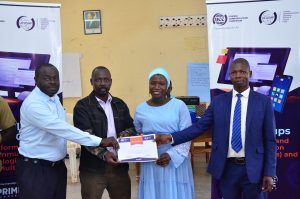
By Denis Jjuuko Airpods in the ears. Hands busy with a smartphone. Shoulders holding a leather laptop carry bag. Legs covered in sagging pants. Torso well covered in a jumper with a hoodie. Hair spiked. Sunglasses on. It is a familiar sight at a building in Kampala where young people trying to replicate Silicon Valley converge to work on largely fintech applications. At least a floor in the building provides open spaces where these people work on their ideas while sipping iced coffees sold at a cafeteria in the corner. Walls are covered with inspiring graffiti of quotes by famous people or even bible verses. The young people are on a mission to make it big in the tech world. Those who find some breakthrough, which usually means nailing somebody willing to invest in their ideas or provide a grant, move to the office cubicles partitioned with glass, providing more inspiration to those still on the journey. These workspaces have many names. Incubation centres, ideation labs, entrepreneurial hubs, job centres. They are usually funded by development partners as a way of subsidizing the cost for these emerging entrepreneurs, developers, inventors, creators or whatever they prefer to call themselves. Perhaps having seen some impact in urban areas, these centres were replicated in many of Uganda’s refugee settlements across the country. At these centres, youthful refugees and host communities access high speed internet, get access to computers and sometimes machinery and tools that enable them to bring their ideas to life. The development partners sometimes throw in training like how to use multimedia platforms to market their businesses or find work. Small grants for groups with innovative ideas or even for those who are dedicated to their work are common. Access to high-speed internet has helped a few of them to create great products. On a visit to the Nakivale Refugee Settlement, I found an interesting group that makes guitars. They taught themselves via YouTube tutorials and they are able to market their shiny guitars to global customers through social media. They have been supported by Partnership for improving prospects for forcibly displaced persons and host communities (PROSPECTS), a project implemented by the International Labour Organization and funded by the Netherlands. It is remarkable what young people can do once they are enabled to innovate. Skilling is critical not just in vocational jobs. But also, in soft skills such as communication and digital marketing. How can they use WhatsApp Status, YouTube or TikTok to push their products out? How can they use YouTube to learn a new skill? I don’t think there is a vocational school that sets itself out there to teach making guitars but those refugees in Nakivale found a niche and made it work even though they have a long way to go. I have heard of people who taught themselves baking, weaving, and a few other things via YouTube tutorials and are now earning a living and even employing others. Once young people have access to affordable internet, many can teach themselves similar skills once they appreciate what they can do with a smartphone. Multimedia skilling programs for youth such as those offered by the Uganda Communications Commission (UCC) through Uganda Communications Universal Service and Access Fund (UCUSAF) are a good starting point. I have seen people learn making professional posters through platforms like Canva or videos using CapCut thereby joining the creator economy. I think there is a need to replicate the incubation hubs in Kampala and job centres in refugee settlements at subcounty level or even district level to start with. Here, young people would converge even if once a week to discuss with like-minded individuals, teach themselves skills and form partnerships and synergies that would enable them to scale their ideas or enterprises. Of course, regular trainings and mentorship would be important. They would be able to access high speed internet, computers or virtual reality gadgets. They would also test out their ideas and over time have access to those who may have been able to succeed. They would also provide markets to themselves. If one has mastered digital marketing, another involved in another industry would be able become their customer. We have also talked about value addition for a long time. Machinery is expensive. Knowledge is scarce. If people grow some coffee in Bukomansimbi or Budadiri and you want them to add value, a roastery can be installed at this hub where those interested can roast and package their coffee. As they grow, they would be able to scale on their own. If the hubs are somewhat working for youths in Kampala and refugee settlements, they can work too in rural communities. The writer is a communication and visibility consultant. djjuuko@gmail.com