

Qatar

Out to Lunch

#OutToLunch: Stronger African economies will create a World Cup winner

By Denis Jjuuko The football World Cup ended recently with Spain lifting the golden trophy after defeating Argentina 1-0 in extra time. This year’s tournament has seen the teams expanded from 32 to 48 of which 10 were from Africa. It is by far the biggest football World Cup ever in nearly 100 years since the competition was first organised in 1930. The organizer, FIFA, is even now talking about further expanding it to 64 national teams. One of the major talking points of the tournament has been the performance of teams from Africa. Only Morocco made it to the quarterfinals. Unlike in the last tournament in 2022 in Qatar, Morocco reached the semifinals. It is the only time an African team had reached that far in the tournament. Countries outside Europe and America didn’t do much either this year. Of the four countries that qualified for the semifinals, only defending champions Argentina is outside Europe. Needless to say, that Argentina was being inspired by Lionel Messi, probably the best player the world has ever seen since Pele and Diego Maradona. Anyway, why don’t African teams perform that well in the World Cup competition yet unlike Asia or the Middle East, football is the most popular sport on the continent? Many young boys on the continent wake up to kick the ball in the streets. Many others try to create professional careers while others watch it for hours on end especially over the weekend. Even though the interest is immense, sports, not just soccer, isn’t considered a major career pathway for many people on the continent. Parents rather push their children into other professional careers than sports. Go to school, get an education, find a job and live a better life thereafter. Sports such as soccer provide very short careers. About 10 years if you are lucky. By the time a player is 30, most likely their career is over. Of course, there are outliers like Messi who is 39 years old and still performing at the top level and Christiano Ronaldo who is 41 years old. But for the majority of players, they don’t stay in the game for that long. Of course, there are other areas in which they can earn after retirement such as coaching, television punditry and podcasting, scouting and even management but the openings are even fewer. Look at the premier league for example, there are only 20 teams and each team has about 30 players, which translates to a paltry 600 players. To make it to the premier league or any of the top leagues in the world is for the exceptional. I think that is why parents usually guide their children away from sports. Besides it is expensive to support a child’s career to develop to a level where he can attract interest of the big highly paying professional leagues. If you are in Africa, the odds are highly against you. Sport is poorly funded. Infrastructure is almost non-existent. A kid with talent needs high quality coaches, kits and infrastructure to make it. Do they exist? Hardly. In many communities, the kids play on bare grounds and in urban areas those grounds are being turned into bland shopping malls. A parent would have to invest in flying a child to European academies to get the best training they need to make it. How many such parents have such resources? And if the kids are good, they would be assimilated in Europe. If you look at the three European countries that reached this year’s semifinals, there are quite a number of immigrants. Some may have been born in Europe, but there are also others who weren’t born there. England’s Marc Guehi was born in Ivory Coast. Of course, north African teams had players born in Europe but usually those are few. And many only chose African teams after failing to impress European countries. We always talk about professionalizing our leagues but it is difficult if the economies are weak. Unless we prioritize developing our economies, African teams will always struggle to win the World Cup. Weak African economies can’t afford to pay top young modern coaches. We end up picking hustlers from eastern Europe or pensioners from western Europe, whose ideas and methods are way past their sell-by dates. Stronger economies would create big companies that can invest in sport as sponsors or even in club ownership (many private equity and hedge funds own clubs in Europe/America for example). Clubs would be able to sell tickets and merchandise at premium rates, develop players they can sell to other clubs in Europe and elsewhere at world market rates and create a sports ecosystem that generates millions of dollars every day. If our economies remain as they are today, we can kiss the World Cup goodbye. The writer is a communication and visibility consultant. djjuuko@gmail.com
Read More »
Out to Lunch

#OutToLunch: Saudi Arabia 2034 World Cup great opportunity for Ugandan workers

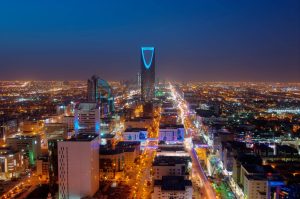
#OutToLunch: Saudi Arabia 2034 World Cup great opportunity for Ugandan workers By Denis Jjuuko On a recent flight to Entebbe, I met a sizeable number of travelers who were, by their conversations, Ugandans returning from some Middle Eastern countries where they are deployed as largely domestic workers. Many were returning home I think either for Christmas or their break after working for two years in the Arabian deserts. They were excited to be returning to their motherland. Before boarding in Doha where they were connecting from other parts of the Middle East, they called relatives who were to pick them once we landed at Entebbe. They spoke to each other very loudly. Their experiences, the type of bosses they had, who they wanted to see first once they are in Uganda, what they wanted to do and some who they wanted to fight etc. Unlike the flights from Entebbe to the Middle East, where female domestic workers dress in abayas that are of the same color and design, walk in line and politely as if they are about to receive the holy communion, this time they were on their own. There was no leader giving them instructions. The abayas had been replaced with skinny jeans, leggings and tank tops. Wigs or caps were now their preferred head gear. There was something about many of them. They didn’t have much regard to other passengers sharing the same boarding area spaces. I thought they were a little bit uncouth. But I was happy that they were returning home at least for their holidays and seeing their family after a few years away. Uganda, like many countries in Africa and even Asia, is a source of domestic workers for wealthy families in the Middle East. Uganda has a labour cooperation agreement with Saudi Arabia. However, the labour agreement talks largely of domestic workers. Most of the domestic workers don’t have much skills and are therefore not contributing much to Saudi Arabia or learning a lot of skills they can use on their return home. I actually wondered how many of those domestic workers returning home will be able to do something else? Especially in situations where they won’t be able to return to their previously jobs in the Middle East. The majority will become poor again given the stories we hear of how relatives fleece them of the little money they make. But there is a great opportunity in Saudi Arabia that the Uganda Ministry of Gender, Labour and Social Development must take advantage of. Saudi Arabia, one of the biggest destinations for Ugandan domestic workers, won the rights to host the 2034 edition of the FIFA World Cup. Saudi Arabia is going to outdo itself in organizing this event. Of the 15 stadiums required to host the soccer extravaganza, only four exist. They are going to build 11 mega stadiums. They will build hotels, expand the airports, railway and road infrastructure. There is going to be a lot of construction in all the major cities. Remember, the Saudis want to outdo Qatar that hosted the last world cup. They are also on a mission to take the limelight from Dubai which has seen unprecedented growth with their focus on building massive infrastructure projects that support tourism and business. Like Qatar, they will need workers to pull off their world cup dream. Skilled workers or those that can easily be skilled. First, workers will be needed at the construction sites. Engineers, masons, surveyors, accountants, welders, project managers and the lot that works on construction sites. Secondly, they will eventually need workers to manage the infrastructure. We have already seen this in Doha. At the airport, the most common languages among workers are Luganda and Swahili. In hotels, it is the same. But because we are not very strategic, many of our workers are supervised by Indians and Filipinos. How do we get our people from lowly to middle and high-level jobs? They will need to be skilled. Some of the domestic workers could be moved to work in hotels. They can start as room service attendants and those who become good at it, will eventually become supervisors and managers. That way they will learn specific highly needed skills that can be very helpful in our tourism and hospitable industry when they eventually get tired of working abroad. Some may even invest here in small bed and breakfasts or restaurants. Engineers we send will gain experience in doing mega infrastructure projects. Welders will gain specific skills that are so needed here. Some may become partners or build businesses in Saudi Arabia just like Jews and the Dutch did in New York. However, this won’t happen on its own. We must now lobby the Saudis to take on our people beyond domestic work. I understand that there is a lot of argument against youths being shipped out to work abroad but there is absolutely nothing wrong with migration. Everyone is a migrant. If the jobs are in Saudi Arabia, let Ugandans go. The Ministry of Gender should not miss this golden chance of Saudi Arabia hosting the world cup. They should turn their domestic labour agreement into a general labour agreement to support the 2034 world cup. That way, the conversations of workers at airport lobbies will eventually be different. Happy 2025. The writer is a communication and visibility consultant. djjuuko@gmail.com

Read More »