#OutToLunch: Xenophobic attacks call for investments in home countries
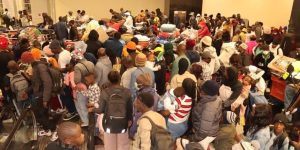
By Denis Jjuuko In the early 1990s, the world started to witness the dismantling of one of the most antediluvian official racist regimes ever assembled. Nelson Mandela, leader of the African National Congress would be released from prison in 1990 after 27 years of inhumane confinement on Robben Island. A new South Africa was on the horizon. Mandela would win the country’s first multiracial presidential elections in 1994 after his ANC won a large majority of parliamentary seats. Mandela and his ANC’s victory marked the end of official apartheid in South Africa. Mandela mentioned from the beginning that he wasn’t replacing official white racism with official black racism. He called the new South Africa, a rainbow nation. A country that embraced you regardless of the color of your skin. Unlike the majority of the so-called revolutionaries, Mandela ruled for one term. He ended up as one of the world’s most revered statesmen and even became a celebrity! At home, after the euphoria of the 1994 elections, many black South Africans realized that the end of apartheid didn’t mean that they would move from their shebeens in the townships to white homes in leafy suburbs and take over white businesses and send the whites to wherever. South Africa wasn’t Idi Amin’s Uganda. They realized that the rainbow mantra meant co-existence. They rejected it but they were still a bit hopeful. The ANC understood the sentiments of many black people and created policies like black economic empowerment (BEE), which provided opportunities for blacks and other people of color. If a white owned a business, they needed some black people in top management and on the board. Some black people also needed to own shares. Government tenders were reserved for business that embraced BEE. But such opportunities were of course reserved for elite blacks — educated in Europe, America or even in the exclusive South African universities. The majority of the beneficiaries of BEE were ANC stalwarts and that is how they became billionaires and today’s captains of industries. Others became tenderprenuers (influencing government tenders). Apartheid had denied the majority of blacks quality education and other opportunities. They didn’t have skills. The apartheid regime preferred to import professionals from elsewhere to work in black communities or do jobs the whites didn’t want to do. That is how Ugandan teachers and medical doctors ended up in South Africa in the 1980s. They settled there quickly and established themselves as hard working, set up private practices and generally built better lives than many of those they left at home. South Africa had (still does) world class universities and when they opened up the country in 1994, many people started attending school there. I would also end up at an elite South African university 10 years after Mandela had been elected for my graduate education. South Africa was and remains the continent’s most sophisticated and largest economy. As economies of many African nations crumbled, South Africa’s soared. Many Africans unable to be externalized to America or Europe for kyeyo saw it as the next perfect frontier and arrived in droves. Many had seen the doctors and teachers who had migrated earlier living better lives. Those who visited Johannesburg, Cape Town, Durban or Pretoria saw a modern country where they wished to work and live. South African TV soap operas Egoli, Generations and Isidingo created a desire that many people wanted to experience themselves. Those who had made it to South Africa arrived back in Kampala every December with fancy cars and threw white-dress themed parties. Another Bantu migration of sorts had to happen but this time to kuyiriba (hustle) including becoming Sangomas (fake traditional healers). In South Africa, ANC riddled with corruption forgot to create jobs for the majority of blacks who were largely uneducated and unskilled. Populist politicians like Julius Malema saw an opportunity and fanned the flames that lead to today’s xenophobic attacks against blacks from outside South Africa. Hundreds have been evacuated back home in Uganda. They are now chilling in Kyankwanzi, ostensibly undergoing orientation. I am not sure what that means. But the xenophobic attacks should be a wake up call for migrants as well as governments of their home countries. People largely migrated to South Africa to find better opportunities for themselves. If we created jobs here, the majority wouldn’t have left. There must be a deliberate way to encourage migrants to invest back home. NSSF should be pushing them for voluntary savings. Capital Markets Authority should be doing drives for collective investments. National Housing should be building houses they can buy. Uganda Investment Authority should be making presentations on where to invest. It used to happen until when politicians hijacked platforms like the Uganda North American Association Convention. Buganda Kingdom is trying with its Buganda Bumu Convention but it is a drop in the ocean. If we refocused, people wouldn’t be evacuated or even deported and returned home with nothing. And lastly an enabling environment that enables businesses to thrive. The writer is a communication and visibility consultant. djjuuko@gmail.com