#OutToLunch Will Uganda’s newly discovered love for international airports grow the economy?
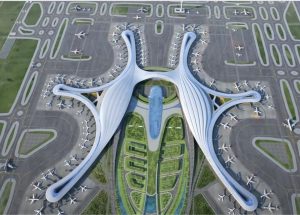
By Denis Jjuuko Uganda has discovered its latest love interest — international airports. We have always had one international airport at Entebbe and some airfields in many parts of the country. But those aren’t the talk of town or dominating online discussion groups and timelines. Construction of an international airport is underway in Kabaale just outside Hoima ostensibly to support the oil and gas sector. New ones have been proposed around Kidepo National Park to support tourism and facilitate regional trade. But the one that has led to more discussions has been the proposed one at Nyakisharara outside Mbarara town. Apparently, it will enable flights to south America to refuel from there on their journeys to Asia and elsewhere. The proposers of the airport claim that this is an existing gap. I am not an aviation expert, so I don’t know why these flights aren’t able to refuel at Entebbe or even existing airports in East Africa. I am also not sure whether it makes sense to build an international airport whose main business is refueling flights from south America. What else caused debate was the release of the artistic impressions of the Nyakisharara airport. Some people claimed the airport looked exactly the same as one somewhere in the Middle East. Some people prompted artificial intelligence apps to make one at least with the famous horns of the Ankole cows incorporated into the design. This newly found love for international airports within a few kilometres of each other have led to the continuation of a debate that never stops — the lack of scheduled domestic flights in Uganda. Up to the 1990s, there were affordable scheduled flights to Kasese, Arua and other parts of the country. Some still exist but they cost an arm and leg, unlike in developed markets in Europe where people fly for a song. There are many reasons that explain the lack of affordable domestic flights in Uganda. The infrastructure is poor enabling only small aircraft to operate at these fields. But that isn’t the biggest problem. The market simply doesn’t exist. Until oil starts flowing from the wells in western Uganda, the country’s economy is largely within a radius of 80km of Kampala. Otherwise, businesses in many parts of the country are small comprised of smallholder farmers and petty traders. The majority of these people have no genuine reason to fly to Kampala and if they have, they wouldn’t afford the tickets even cheap ones that would sustain an airline business. Bus companies have tried to provide executive coaches where people pay an extra Shs10,000 or Shs20,000 to travel in comfort. After a few months or years, they usually close and return to non-executive passengers. The argument the domestic flight enthusiasts give is that the markets for air travel is of those who drive personal cars to these towns. The statistics are hard to find but how many cars arrive in Soroti or Arua from Kampala every single day? There aren’t many. Most of these towns have few hotels but you will hardly arrive in a town and find no room for a night. That is why most people who travel to these towns don’t even bother to book accommodation in advance. They know these towns with fewer than 1,000 hotel rooms will have plenty of free rooms when they arrive. A town which can’t fill less than 1,000 hotel rooms each night probably doesn’t have much business going on. Decent hotel rooms in Uganda cost on average less than Shs100,000 a night including some sort of breakfast. If people can’t fill hotel rooms of Shs100,000, how would they fill aircraft of 50-200 seats on a regular basis for the airline to make money? Look at Members of Parliament, one of the biggest categories of high earners in Uganda. Many of those who represent constituencies outside Kampala come for their weekly meetings by night bus. They can’t afford to drive on a weekly basis. Where scheduled flights exist like Kasese, they don’t use them as well. If a high earning category in Uganda can’t afford to drive every week to Kampala, what about small trader in Kasese or Arua? Although we can improve the airfields to facilitate air travel, international airports in every corner of the country won’t lead to improved incomes for the majority of Ugandans. However, if we want tourists to avoid grueling road trips to Kisoro or Kidepo, smaller airports could do, which could be expanded with increases in traffic. Though investments in agribusinesses and small-scale industries could lead to improved incomes easily for the majority of people who then could be targeted for flying. As per now, international airports could end up as vanity projects. The writer is a communication and visibility consultant. djjuuko@gmail.com