
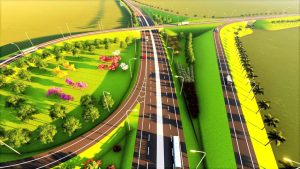
Kampala-Mpigi Expressway

Out to Lunch

#OutToLunch: How Uganda’s next president could easily reduce the housing deficit

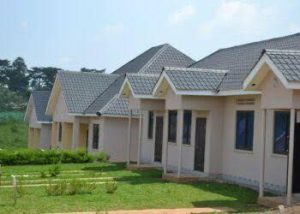
By Denis Jjuuko It is not uncommon to find a social media post in Uganda regarding the price of land or property being shared many times. The argument is that land prices are extremely high especially around Kampala and in many major cities or towns across the country. With an ever-increasing population and poor infrastructure and services a few kilometres outside these major urban centres, it shouldn’t be entirely surprising that land is expensive. I have always given an example of Mpigi town, which is nearer to Kampala than Entebbe but a difficult place to commute due to poor infrastructure. Yet with the Entebbe expressway or even the old road, Entebbe is an easier place to access. So, land prices around Entebbe will always be high as not many people would make Mpigi their area of residence while working in Kampala. That though will change when the Kampala-Mpigi Expressway is complete. However, construction of infrastructure such as expressways in Uganda takes a very long time leading to people crowding around the urban areas where it is easier to commute to their workplaces and services such as hospitals and schools are better. This increases pressures on land for housing purposes in urban areas. And as the population grows, land, an inelastic resource becomes more expensive. Many young people end up struggling to build houses. With the current housing shortage said to be over 2.4 million units in Uganda, poor infrastructure and services and an ever increasing population, the price of land will only continue to rise unless the government does something. And that wouldn’t be nationalizing land like some people urge whenever there are delays in executing infrastructure projects or when the price of land is seen as a hindrance to young people owning houses. Government must realize that the most valuable asset the majority of Ugandans will ever own is a house. Once people own property, they wouldn’t want to create so much chaos that could lead to destruction. Empowering young people to own houses should therefore be in the government’s best interests. Since land in Uganda for housing is largely owned by private entities or communities who determine its cost without any guiding principles, government could create a land bank from which individuals could buy land or a house. How would this work? And since we are going to the polls next week, the country’s next president has his work well cut out. In urban areas like greater Kampala, government could buy large tracts of land in Mukono, Mpigi, Mityana and Luweero and demarcate it for planned housing estates similar with what private land dealers do but a bit better. Land would be divided into small pieces with architectural plans drawn by leading experts. Schools, recreation, and health facilities would be planned. The government would then sell the land at a rate lower than the private sector. Nobody would be allowed to deviate from the architectural plan. If you bought in an area with bungalow houses, you build the exact bungalow. If you bought in an area for storied villas, you build a storied villa as per the architectural plan. Each person or legally married couple would be allowed to buy only one plot and you can’t sell it to another person at any rate. If a buyer prefers to sell, he sells it back to the government at the price he bought it. This would protect the land from speculators who buy, hoard and then sell at an exorbitant price. Because the cost of building a house with a given architectural plan is easy to establish, banks would only rent a certain amount of money. Banks willing to lend the money would not give it to the individual as is usually the case, rather a prequalified construction company that can deliver the house within the established cost of building it with a capped interest rate or profit. This is how Islamic banking works and therefore not a novel idea that is difficult to implement. Should a person fail to pay, the government buys it from the bank at the set amount and then sells it to somebody else. People could pay in installments over a given period. Monthly deductions could be made to salaried workers such as civil servants interested. The government can then construct roads and expressways to those areas as many people would be living in these housing estates. Public transport, schools and health facilities would be prioritized. More young people would end up owning houses and therefore a huge stake in their country and ministry of urban planning would have something big to deliver. The price of land for housing would plummet too enabling more people to own houses. The writer is a communication and visibility consultant. djjuuko@gmail.com
Read More »
Out to Lunch

#OutToLunch: Mpigi could be the next investment big thing

By Denis Jjuuko Mpigi town today is nondescript, a backwater town located approximately 45.8km from Kampala on the Kampala-Masaka highway. The town of almost one street is dominated by small traders, some operating in incomplete buildings or kiosks. A few branches of banks here and there. Generally, nothing much to write home about. I bet that most frequent users of the highway didn’t even know its location until recently when traffic was diverted through it to pave way for the construction of an interchange or something similar that will connect the Masaka highway to the Kampala-Mpigi Expressway that is currently under construction. When the Kampala-Mpigi Expressway is complete, the distance from Kampala to Mpigi will reduce to approximately 41.4km. That isn’t much difference in terms of kilometres until you understand the impact the expressway will create. Today, sometimes, it can take you two hours to cover the distance from Mpigi to Kampala. Other times it can be three hours or more. It is a nightmare. This is one of the busiest highways in Uganda through which the connection to Rwanda, Tanzania, parts of the Democratic Republic of Congo, Burundi and beyond is made thereby facilitating intercountry trade. It is only fitting that an expressway is under construction. To further decongest this busy highway, the government recently held a ground breaking ceremony for the construction of the Mpigi-Kasanje-Nakawuka-Kisubi road as well as the Nakawuka-Nateete road. People traveling to Entebbe from Masaka or any part of south western Uganda will not have to drive all the way to Busega and join the Kampala-Entebbe Expressway. They can use these roads to connect to Entebbe, thereby shortening the distance and cost it currently requires. There is also a ferry service on Lake Victoria connecting Entebbe at Nakiwogo to Buwaya near Mpigi. Although I described Mpigi town in unflattering terms in the opening paragraph of this article, the area surrounding the town is actually very beautiful dotted with well vegetated pristine hills that seem to kiss the sky. Atop these hills, the areas near Mpigi town provide some of the most breathtaking views of Lake Victoria. If you are a child or an aviation enthusiast, you may even find watching planes land and take off from Entebbe international airport a fascinating pastime. A few kilometres from Mpigi town is the Mabamba Swamp. If you have never heard of it, you have certainly never found bird watching interesting. If bird watching isn’t your thing, know that many tourists fly in from all over the world to watch the birds at Mabamba. The Mpanga forest range is not far from Mpigi. There is a crocodile farm and another park where people go and take selfies with lions not far from Mpigi. I don’t have to mention the Equator. But decent hotels in Mpigi are as rare as snow in Uganda. If you have never noticed, Mpigi is the same distance as Entebbe even when using the current Masaka-Mpigi road but because of traffic and congestion and under development, very few people consider Mpigi as a place where they can commute from to Kampala every day. Because of the Kampala-Entebbe Expressway, Entebbe is now so near Kampala taking people a few minutes to reach their destination. Nobody complains anymore if invited to an event in Entebbe. Try organizing an event in Mpigi and you will get many excuses. That is not going to be the case though once the network of roads under construction is complete making Mpigi the right destination for your investment. Land including that on hills with spectacular views is still relatively affordable in Mpigi compared to many other parts of greater Kampala. With the Kampala-Mpigi Expressway and the Mpigi-Kisubi road nexus complete, the time one takes to move from Mpigi to Kampala or Entebbe will be drastically reduced. Living in Mpigi and working in the central business district of Kampala or Entebbe will be as easy as pushing somebody who is squatting. A Kampala resident going to party on a beach in Mpigi will not be so difficult to try. The areas surrounding Mpigi town are going to cease being hard to reach areas. In fact, Katikkiro Charles Peter Mayiga and his team at Bulange are already planning a major housing estate in Mayembe Ga Mbogo on the outskirts of Mpigi town. Many other investors are already in the area with similar plans. Young people looking for affordable land for their first homes should look no further than Mpigi. Older ones could consider Mpigi as a potential area for their retirement. Investors in hospitality and recreation, farming to feed the ever-increasing Kampala population, housing, and satellite cities, Mpigi could be the next big thing. However, many people may not still be aware of Mpigi’s potential as a destination for investment. District local governments have commercial officers. They are usually poorly facilitated and yet they should be drivers in promoting the opportunities available. Hopefully, the one of Mpigi could now launch an Invest in Mpigi campaign. The writer is a communication and visibility consultant. djjuuko@gmail.com

Read More »