
Greater Kampala Metropolitan Area (GKMA)

Out to Lunch

#OutToLunch: UEDCL review should include self-funded connections

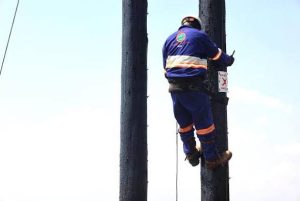
By Denis Jjuuko The cost of land in greater Kampala and indeed other urban areas of Uganda skyrockets all the time making it hard for the majority of people to become homeowners. This increases the country’s housing deficit annually. Currently, the housing deficit stands at approximately 2.4 million units. One of the major reasons for the high cost of land is lack of utilities or actually their availability. If an area gets connected to the national electricity grid and water mains, the prices of land shoot up. If a road is built, the prices triple or even quadruple. The land owners know that availability of utilities like electricity and water is an attraction because where they are not available, the costs to get them can be huge. For example, a new connection may cost you less than Shs100,000 where you don’t need a pole and willing to wait for the government subsidized one or more than Shs500,000 for a self-funded connection. Should there be no pole near you, the costs become excessive as they run into millions of shillings. A single-pole connection costs in excess of Shs2.8m. Should you need more than one pole, the costs become limiting and you have to look for a private company to build that line for you. There is no guidance on how much that costs. Each company charges as they wish. When it comes to a factory or business that needs three-phase electricity and a transformer, the costs could be humongous. The alternative land in areas where electricity is available like the industrial parks is not affordable for small businesses leaving them without any options but to incur high startup costs. Water isn’t any different. If there are no major water pipes near you, you suffer the same fate by installing them at your cost. I think it is these costs that enraged the outgoing Mawokota South Member of Parliament Yusuf Nsibambi to cut down the poles he had installed when the voters rejected them in the January 2026 polls. He claimed on live television that there was no return on investment after getting the fewest of votes from areas where he had installed electricity and sunk boreholes using personal resources. He has since crossed from the opposition FDC to the ruling NRM. Nsibambi may have been lucky not to be arrested for cutting down ‘his’ electric poles and vandalizing the power lines. This is because once you install them, the government agency, UEDCL and Umeme before them, maps them and registers them as their own assets. They include them in their inventory. When electricity and water utilities are publishing their achievements and investments on glossy paper, they include the kilometres of electricity lines, transformers and water mains installed. What they don’t tell you is that some of those aren’t built by them and therefore shouldn’t claim them. If I build my own electricity line or install water or a transformer, why should the government utility claim them? Just because they sent a guy or two on a motorcycle with a GPS machine and wrote down the coordinates? The cost of taking down GPS coordinates is insignificant compared to the cost of building the line, buying the transformer and all the stuff. Now, over the weekend the Minister of Energy and Mineral Development terminated the services of the board chair of UEDCL and sent the managing director on forced leave. The newly appointed acting board chair was swift in naming an acting managing director. Everyone hopes that services will improve. One of the issues should be reviewing new connections especially where there is no pole or transformer. The minister and the regulator need to instruct UEDCL not to demand payment from people who buy a pole, build a line or install transformers until their investment is covered. The surveyors they send to establish that a pole, three-phase or transformer is required can put it in their report and come up with workable cost. When the person goes ahead and funds this connection, then they can credit the customer’s account with the money spent. Every month, they can deduct what the customer has consumed until the credited amount is used up. Thereafter, the customer can start paying for the service. That way, the utility company has not ‘stolen’ a private line or transformer and passed it as their own. The homeowner or business would have their money back and that would lead to lower costs of land and/or doing business. The writer is a communication and visibility consultant. djjuuko@yahoo.com
Read More »
Out to Lunch

#OutToLunch: An effective public transport would shut out road fines complaints

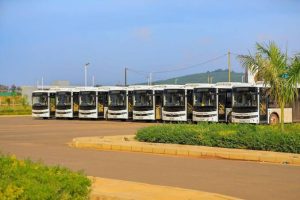
By Denis Jjuuko On 21 November 2023, the Kampala Capital City Authority (KCCA) issued a procurement notice for “Consultancy Services for the Detailed Design Update of the Bus Rapid Transit System (BRT) for the Greater Kampala Metropolitan Area (GKMA)” after receiving “financing from the African Development Fund towards the cost of the Kampala City Roads Rehabilitation Project (KCRRP).” The notice further indicated that “the main objective of the assignment is to review and update the detailed designs for the BRT system that were prepared in 2014 to reflect current and expected travel needs in Greater Kampala Metropolitan Area (GKMA)”. That was probably the nth time such an advert had been published. Given our procurement bureaucracy and the speed at which we do things, probably the consultant has never been hired or has not gone very far in “reviewing and updating” the detailed designs. You will notice that in 2014 or 11 years ago, this work was done. And of course, it wasn’t implemented. During Jennifer Musisi Ssemakula’s tenure as executive director of KCCA, we were even promised cable cars. Many years later, not even a cable has been installed. Had all these plans been implemented many years ago, the government would not have been struggling to implement the so-called intelligent transport management system also known as the punitive road fines. A BRT system that works would have reduced traffic congestion on Kampala roads enabling motorists to drive within acceptable speed limits to reach their destination on time. One of the reasons people tend to speed is because they are catching up with time lost in traffic. Somebody who takes two hours to complete a 5-10km route that leads them to the Kampala Northern Bypass or the Entebbe Expressway will push the gas pedal once they get on any of those roads. They do so not because they are reckless but because they need to be somewhere at the right time. Government officials especially ministers understood this and many of them got themselves lead cars. That way they can manage the traffic gridlock in Kampala faster and reach their destinations on rare occasions on time! They know driving at 30kph is not practical without an effective public transport. Although a car is an ultimate dream for many Ugandans, the major reason people drive is because of the unreliability of public transport in Kampala. That is why during school holidays, many people park the cars and use public transport. There has always been an argument that Kampala roads are narrow to create BRT lanes and such. If you removed street parking, lanes would be created for buses and emergency vehicles. By emergency vehicles I mean emergency vehicles such as ambulances and fire trucks. Not everyone with a luxurious SUV. Spaces can easily be created on dual carriage roads where overpasses could be created for the BRT and even the light rail transit system. In fact, in many cities, there are sections where trains and buses use the same infrastructure. Toll stations would then be created so private cars entering some parts of the city are heavily charged thereby pushing people to use the BRT and other public transport means. Since there would not be street parking on some roads and there would not be a need to drive to the city, entrepreneurs would be encouraged to invest in public parking near stations where people can leave their cars when getting onto the BRT or trains. Or even in Kampala for those who insist to drive. Uganda would stop losing a lot of money in wasted working hours and improve Kampala’s air quality thereby reducing the cost of healthcare. In fact, many people will become healthier as they walk from their work places to the stations to catch a bus or train. Effective public transport is one of the ways to make a city modern. And it isn’t out of this world. Cities like Dar es Salaam have tried it and it is somewhat working. Uganda already has the buses at its Kiira Vehicle Plant in Jinja. Why not put them to use? Then after implementing this in Kampala, trains could be extended to other major cities. If we had trains to Kasese and Packwach a few years ago, why can’t we have them now? We usually claim that there is no money. If we can cut down on some of the excesses in public administration, we would be able to achieve these things easily. We can also issue infrastructure bonds and encourage Ugandans and others to participate in them. Eliminate corruption and briefcase companies from winning tenders and we are good to go. If the majority people used an effective public transport system, nobody would argue about excessive fines on Lugogo Bypass. The writer is a communication and visibility consultant. djjuuko@gmail.com

Read More »