
Financial year

Out to Lunch

#OutToLunch: Skills and investment portal could help those fleeing xenophobia

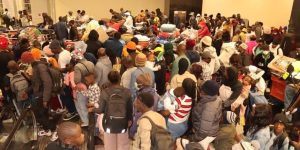
Denis Jjuuko Just like that, we are already in the second half of 2026. Six months to the end of the year. Time really flies fast even when you may not be having a great time. The year kicked off with presidential and parliamentary elections in Uganda and a war in Iran that disrupted global economies. Skyrocketing fuel prices mean a tough economy for ordinary people. As if that wasn’t enough, an Ebola outbreak was declared in Democratic Republic of Congo (DRC) and a few cases in Uganda. Some countries reacted by banning Ugandans from entering their countries. Businesses and opportunities were lost. Covid-19 taught people that travels can easily be disrupted. Yet if you live in Kampala, you won’t tell there is any Ebola outbreak. Life as far as Ebola is concerned is normal. Anyway, a new government is now in place. More ministers than Uganda has ever had and a few acting ones, holding more than one docket. They have promised an economy that jumps from USD50-60 billion to a USD500 billion one annually. Government says it will do a lot of stuff to achieve this. Sometimes though, government is government. We pray to be alive to enjoy this. The end of the first half of the year in Uganda means the start of a new financial year. As you may notice, your fuel pump prices are going up as the government has increased the tax it charges on each litre of fuel. The fuel prices have been high already due to the closure of the Strait of Hormuz due to the war in Iran, now they will even be higher. Time to implement some austerity measures at home. Life is for the brave, not so? You probably made some resolutions at the beginning of 2026. Hope you have already achieved them or you are half way there. If you haven’t started on them, you can still adjust a few things. A clip on social media shows somebody whose goal this year was to buy a car but has easily added the letters p.e.t at the end of car to mean carpet. That is what he will buy. The car is out of reach now but the carpet shouldn’t be. Creative way of achieving some resolutions. Whatever resolutions you may have made, starting a new life in South Africa may have to be reconsidered. Ordinary black South Africans unable to find jobs have turned to other Africans who migrated there accusing them of depriving them of their apartheid inheritance. Some people have already lost their lives and/or properties. The government of Uganda is evacuating Ugandans facing xenophobic attacks in South Africa. Hundreds have been flown home already. They have had enough of it. I hope the government of Uganda has a plan for them upon arrival from the country that once had leaders like Nelson Mandela. Have the impending returnees gained any skills that can help Uganda drive the economy to the promised land of USD500 billion a year? Do they have some capital they would like to deploy? Those who have some needed skills could be linked to those who need them. A digital portal could be designed where they register indicating the skills and expertise they possess so those who need them could easily find them. Those looking for businesses to invest in could also do the same. Matching businesses with the skills and even capital is a necessity to grow the economy. The portal would of course not be for only those returning from South Africa but for all people to ensure inclusivity. I think some recently returned from Iran and there are always many returning from other countries as well. Millions of others are here in Uganda. They have some skills, but they don’t know how to reach those who need them. Many others have the required capital businesses need to scale but don’t know how to invest. That is how they fall to charlatans promising abnormal returns on investment. Of course, investing in other people’s business would require some sort of public oversight so that people don’t lose their money easily after investing but it shouldn’t be as difficult as going to heaven or listing on the stock exchange. A standard legal agreement or registration of this investment with a public entity like the Capital Markets Authority or Uganda Registration Services Bureau could help. The writer is a communication and visibility consultant. djjuuko@gmail.com
Read More »
Out to Lunch

#OutToLunch Extend import duty exemption on electric vehicles and hybrids to assembling parts

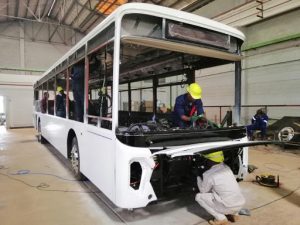
#OutToLunch Extend import duty exemption on electric vehicles and hybrids to assembling parts By Denis Jjuuko Taxes paid upon importation of vehicles in Uganda have largely been assessed based on the year of manufacture, engine size of the vehicle, and sometimes the type of vehicle. A tractor, for example, pays less import duty than a luxurious saloon car. A tractor is used for production whereas a saloon car is for ‘eating life.’ What hasn’t been clear is how much tax one would pay if they imported an electric or even hybrid vehicle. Electric vehicles use batteries which are charged from time to time while hybrids may use both internal combustion engines and batteries. Electric vehicles have no engine capacity as they use none so they can’t be assessed based on engine size. May be based on battery size? But that isn’t clear as well. With the new tax amendments that are to be enforced from July 1 as Uganda began yet another financial year is that electric vehicles (EVs) and hybrids won’t have to pay any import duty. The same applies to motorcycles. The rationale behind this is to “promote electric vehicles and reduce pollution” according to the document issued by the Uganda Revenue Authority (URA). Kampala is one of the most polluted cities in the world due largely to old vehicles that we import into the country. We also have narrow roads and lack an effective public transport system thereby leading to heavy traffic jams during peak hours. Also, because a car is a status symbol in Uganda, whoever gets some ka-money or qualifies for a loan, the first thing they think about is a car. They call it literally walking while seated! Many times, the car the majority of these people can afford is about 15 years old and at the end of its life journey. Such cars are heavy polluters of the environment. It is, therefore, commendable that the Ministry of Finance saw it fit to scrap import duty on EVs and hybrids. The world is moving in that direction and electric mobility is the talk everywhere. We are at the cusp of the most significant change in mobility in more than a century even though EVs existed long before internal combustion engines. So if Ugandans embrace EVs and hybrids, new businesses will be created with entrepreneurs investing in charging systems and infrastructure, hopefully at the same level they have done with fuel stations that exist everywhere you turn. Repair and maintenance shops will be set up and even driving schools. Technical schools and universities teaching motor vehicle engineering and such other courses should start paying more attention to EVs and hybrids and the whole electric mobility value chain. Young people seeking careers should do the same too to prepare themselves for a period of complete EV domination. Africa should stop exporting our minerals as raw materials rather as complete products that are geared at enabling electric mobility. We can export automotive glass instead of silica. We can process the rare minerals instead of sending them as raw materials. More than 60 years after independence, we can’t still be doing the same things we did back then. Otherwise, nothing will change. If we only think of importing, we can’t provide the jobs young people need to live meaningful lives. That is why even though I am generally happy with the tax amendment that scraps import duty on EVs and hybrids, it still an incentive to import rather than make in Uganda. So if I import an EV or hybrid vehicle made in Japan or Germany, I would not pay import duty. By importing that car, I would have denied young people jobs and even more money through taxes to the government. The tax amendment should have included knockdown parts required for assembling or manufacturing vehicles here. The government of Uganda buys about 2,000 vehicles every year. If just 1,000 were made or assembled here, we would significantly create jobs and build our capacity and within a few years be able to export to the region. The regional market for cars is almost a million units annually. But car makers won’t be able to do it unless they are forced. If incentives are given for importing, that is what they will do. That defeats Uganda’s aspirations as enshrined in the 2040 Vision and even the president’s swansong of import substitution. You substitute importation by making here and that is where we need to focus. The writer is a communication and visibility consultant. djjuuko@gmail.com

Read More »