
Ethiopian Airlines

Out to Lunch

#OutToLunch: Practical skills still important even in the AI era

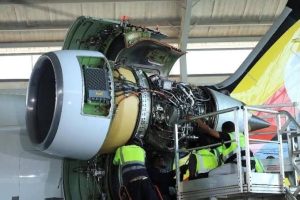
By Denis Jjuuko The new British prime minister (yes, there is a new one) has been ubiquitous trying to sell his vision and probably avoid the missteps of his predecessors. In one of the videos he shared on his social media handles, he is seen at a factory that makes trains. He says, artificial intelligence or AI won’t build them. He said AI can write a contract but it won’t make a train like the factory he was visiting or even fix your leaking roof. Andy Burnham is probably the first political leader of a developed economy to say that on camera. His vision is of seeing technical practical jobs being created alongside digital ones. He also acknowledges the limitations of digital innovation. He called for a reboot of his country’s education system. Desktop jobs may be replaced by AI but the practical ones will still exist. As Andy Burnham was sharing the video, the Uganda Airlines acting Chief Executive, veteran Ethiopian aviation expert Girma Wake was holding a presser at his Nakasero office in Kampala. Wake was once the top guy at Ethiopian Airlines, well known for its efficiency, safety and profitability — an exception on the continent. His video interview, in less than five minutes, was confidence building. He offered his vision, underlying briefly what is required to ensure the crane continues to soar as high as it is expected. I think it is going to be a long journey but it seems basics are now in place. One of the things he mentioned was the cost of employment. When Uganda Airlines was collapsed in 2001, Ugandans who had aviation experience moved on. Young people saw no reason to enroll for aviation courses. Those who wanted to pursue certain careers in aviation largely had to finance their education and training outside the country. That is usually very expensive. Today, Wake told his audience, he relies on foreign staff to operate especially the aircraft on wet leases. He says that is very expensive. He needs Ugandans in those jobs. They are affordable and due to family ties and other reasons are more likely to remain with the airline for the long haul. Aviation employs many people. With Uganda Airlines expecting to receive its delivery of eight aircraft from Boeing in early 2030s, many people who go to aviation schools today will perhaps have gained some experience by that time. A simple google search shows that one B737 aircraft needs 10-15 pilots to operate and many others in other jobs in operations and maintenance. Broadly, it may need as many as 80 people for optimum operations. The national carrier’s executive also talked about reviving the flying school in Soroti. I think that now we have a firm order with Boeing, this is even more urgent. So that by the time the aircraft are delivered, there would be Ugandans to operate and maintain them. And AI will not solely operate and maintain the aircraft. It won’t cook the rolex or katogo Uganda Airlines may want to serve on the flight. Though those with the right AI skills will have a bigger chance of landing a job. But it isn’t just aviation where AI, like the British Premier said, would be limited. We are constructing the Standard Gauge Railway (SGR) and even reviving some meter gauge ones. Are we training people to operate and maintain the line, trains or even build them? Or we will rely on experts once the SGR is built like we are doing with a simple job of managing toll gates on the Entebbe Expressway? We are still very much a small economy that will for a long time depend on the practical physical skills of its people. Skilling in technical practical jobs is still important for the majority of people. The automotive industry is experiencing changes as people move to electric and more advanced vehicles. Do we have repair shops that are competent to repair and maintain them? I see an increment in electric and newer model vehicles on the road every day. The garages or workshops are improving too — moving their operations from under the mango tree to somewhat fancy buildings. But are we training people in the numbers we need to do the job? And if Britain is going back to the basics during this era of AI, what about us? To achieve our US$500b economy goal will depend a lot on many of our young people having the skills they need to find jobs with predictable regular income. The writer is a communication and visibility consultant. djjuuko@gmail.com
Read More »
Out to Lunch

#OutToLunch: Unambitious delayed projects, potholes creating a self-doubting population

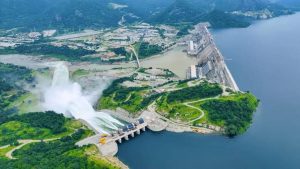
#OutToLunch: Unambitious delayed projects, potholes creating a self-doubting population By Denis Jjuuko A few years ago, I used to frequent Addis Ababa, the Ethiopian capital to largely attend meetings at the African Union headquarters. If you kept away for a few months, you would return to a city that you wouldn’t recognize. A new flyover would exist within a few months. You would see people laying down railway lines and find these huge buses providing public transport. Addis Ababa in the mid 2000s was a construction site that was turning slums into hotels of certain status and other infrastructural projects. They seemed to deliver their projects without much delays. One thing I also noticed about Ethiopians is that they claimed to have the biggest everything. A cab driver or a university professor would quickly tell you that they had the biggest market in Africa — the Merkato, equivalent of our Owino. They claimed they had the largest number of cows on the continent, biggest airline, largest number of producers of leather products and coffee, biggest army and even the most beautiful women. Although some of these claims may be true and others could be debatable, Ethiopians have come to believe that they have to do the biggest things. And they go ahead and do them. Just the other day, Ethiopian Airlines launched perhaps the biggest hotel in Africa. Ethiopian Skylight Hotel in Addis Ababa boasts of 1,024 modern rooms. That is perhaps why they decided to utilize River Nile a little bit more, they didn’t go around building a 100 Megawatts dam. They went for 5,150MW. The Grand Ethiopian Renaissance Dam (GERD) that was launched a few weeks ago is, true to Ethiopian style, billed as one of the largest infrastructural projects on the continent. And like roads and railway lines in Addis Ababa, the hydroelectricity dam, which cost US$5 billion to build was completed in 14 short years. It had many challenges such as protests from Egypt over the use of River Nile — like they do whenever anyone else wants to use the Nile waters as well as funding, technical skills and even bloody wars. But the project never got derailed. Compare it to the Grand Inga Dam in the Democratic Republic of Congo, perhaps the world’s wealthiest country, and you will understand what I am saying. Or just look at some of the countries where it takes a year or more to build a single kilometer of a dual carriage road without interchanges and bridges. To build the GERD, Ethiopia got most of the funding from local contributions in form of donations, and selling of bonds locally and to Ethiopians in the diaspora among other sources. They got very little foreign debt to achieve their project which ideally should ensure affordable electricity access to many people in Ethiopia while exporting some to neighboring countries thereby getting much more foreign revenue. Ethiopia is not some country in America, Europe or Asia. It is actually considered part of East Africa and a mere two hours by air from Entebbe. They face similar challenges like us. Wars, famine, draught and diseases among others. Like Uganda, they are landlocked and depend a lot on agriculture. In fact, we have just toppled them as the largest coffee exporter on the continent. They still produce more coffee though only that they consume a lot of it domestically. Since we are so similar and ideally neighbors, what do they have in their DNA that we don’t? How can they run an airline with more than 150 aircraft while we struggle with about six including leased ones? How can they build flyovers in Addis in months while we take decades to complete ours? Or build small hydroelectricity dams with defaults while they complete mega ones? There is a need to dream big by technocrats and be intentional about building a culture that leads us to achieve our targets and on time. We can have as many patriotic lectures as we wish but if people are driving over potholes every day and have them normalized as the way of life, we won’t achieve more ambitious targets like GERD. We will end up with a population that self-doubts itself. Businesspeople will not dream of creating mega factories or big businesses. Their ambitions will remain importing a few containers from China, driving an old Landcruiser, building a storied house in a slummy area, and another in the village and a few apartments. An ordinary Ethiopian seeing the country launching GERD or the largest hotel on the continent will dream of something as big. The writer is a communication and visibility consultant. djjuuko@gmail.com

Read More »