
Entebbe

Out to Lunch

#OutToLunch Will Uganda’s newly discovered love for international airports grow the economy?

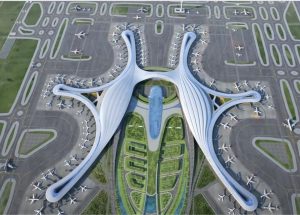
By Denis Jjuuko Uganda has discovered its latest love interest — international airports. We have always had one international airport at Entebbe and some airfields in many parts of the country. But those aren’t the talk of town or dominating online discussion groups and timelines. Construction of an international airport is underway in Kabaale just outside Hoima ostensibly to support the oil and gas sector. New ones have been proposed around Kidepo National Park to support tourism and facilitate regional trade. But the one that has led to more discussions has been the proposed one at Nyakisharara outside Mbarara town. Apparently, it will enable flights to south America to refuel from there on their journeys to Asia and elsewhere. The proposers of the airport claim that this is an existing gap. I am not an aviation expert, so I don’t know why these flights aren’t able to refuel at Entebbe or even existing airports in East Africa. I am also not sure whether it makes sense to build an international airport whose main business is refueling flights from south America. What else caused debate was the release of the artistic impressions of the Nyakisharara airport. Some people claimed the airport looked exactly the same as one somewhere in the Middle East. Some people prompted artificial intelligence apps to make one at least with the famous horns of the Ankole cows incorporated into the design. This newly found love for international airports within a few kilometres of each other have led to the continuation of a debate that never stops — the lack of scheduled domestic flights in Uganda. Up to the 1990s, there were affordable scheduled flights to Kasese, Arua and other parts of the country. Some still exist but they cost an arm and leg, unlike in developed markets in Europe where people fly for a song. There are many reasons that explain the lack of affordable domestic flights in Uganda. The infrastructure is poor enabling only small aircraft to operate at these fields. But that isn’t the biggest problem. The market simply doesn’t exist. Until oil starts flowing from the wells in western Uganda, the country’s economy is largely within a radius of 80km of Kampala. Otherwise, businesses in many parts of the country are small comprised of smallholder farmers and petty traders. The majority of these people have no genuine reason to fly to Kampala and if they have, they wouldn’t afford the tickets even cheap ones that would sustain an airline business. Bus companies have tried to provide executive coaches where people pay an extra Shs10,000 or Shs20,000 to travel in comfort. After a few months or years, they usually close and return to non-executive passengers. The argument the domestic flight enthusiasts give is that the markets for air travel is of those who drive personal cars to these towns. The statistics are hard to find but how many cars arrive in Soroti or Arua from Kampala every single day? There aren’t many. Most of these towns have few hotels but you will hardly arrive in a town and find no room for a night. That is why most people who travel to these towns don’t even bother to book accommodation in advance. They know these towns with fewer than 1,000 hotel rooms will have plenty of free rooms when they arrive. A town which can’t fill less than 1,000 hotel rooms each night probably doesn’t have much business going on. Decent hotel rooms in Uganda cost on average less than Shs100,000 a night including some sort of breakfast. If people can’t fill hotel rooms of Shs100,000, how would they fill aircraft of 50-200 seats on a regular basis for the airline to make money? Look at Members of Parliament, one of the biggest categories of high earners in Uganda. Many of those who represent constituencies outside Kampala come for their weekly meetings by night bus. They can’t afford to drive on a weekly basis. Where scheduled flights exist like Kasese, they don’t use them as well. If a high earning category in Uganda can’t afford to drive every week to Kampala, what about small trader in Kasese or Arua? Although we can improve the airfields to facilitate air travel, international airports in every corner of the country won’t lead to improved incomes for the majority of Ugandans. However, if we want tourists to avoid grueling road trips to Kisoro or Kidepo, smaller airports could do, which could be expanded with increases in traffic. Though investments in agribusinesses and small-scale industries could lead to improved incomes easily for the majority of people who then could be targeted for flying. As per now, international airports could end up as vanity projects. The writer is a communication and visibility consultant. djjuuko@gmail.com

Read More »
Out to Lunch

#OutToLunch: Give school buses same rights as ambulances

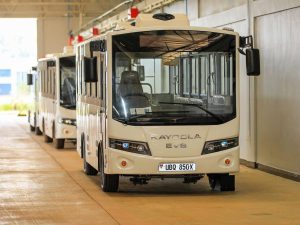
By Denis Jjuuko There is a primary school in Kampala whose bus is seen frequently in towns as far as Mityana picking up kids daily. Another Kampala school bus is seen every day in Entebbe picking up kids. To avoid Kampala’s crippling traffic jams, the buses arrive hours before dawn to pick up the kids so that they are in class on time. Sometimes, the kids are seen dead asleep as the buses maneuver the horrendous traffic jams. In order for teachers to maximise the children’s presence at school, they teach them till late, which means that the buses struggle to clear huge evening rush hour traffic jams to drop the kids at home. This means that the kids arrive very late in the evening yet they have homework to do and hand in the next day, leaving them short of enough time to sleep. This doesn’t only affect kids who live in faraway places from Kampala like Mityana and Entebbe. Those who live in Kampala face a similar problem. Vans pick them pre-dawn so they could do several trips picking up kids and dropping them. It is also common upcountry. I know somebody who lives in Bushenyi but his children attend a day school in Mbarara city. Where the kids are dropped off by the parents or guardians, it isn’t any different. For parents to arrive at work on time, they, too, leave home pre-dawn, drop the kids at school and then proceed to work. And many can’t leave their offices before 5.00pm, which means that they pick up kids late from school. I think it is against that background that the education policy review commission has recommended that schools should close by 3.00pm to enable children be children. It is a welcome idea that will see kids have time to play and most importantly have time to sleep and develop as normal human beings than programmed chips with the sole purpose of passing national exams. However, for this to work, there is a lot that needs to be done that the education policy review commission may not have talked about. The government must be interested in providing high quality education across the country. The only reason a Bushenyi parent may enroll a child in a Mbarara city school is because they are trying to provide the best for their kids. They have looked at what is available in Bushenyi and they think it is not good enough for their children. If the schools in their communities were great, they would have enrolled them there. In the area where I live near Kampala, there isn’t a single public school where I can enroll my kids. If I did, my consciousness wouldn’t enable me sleep at night. Yet in the last 10 years or so, more than five big private schools have been built by entrepreneurs. If individuals can build schools, it means government can build even more. With better public schools near where parents live, government can ban bussing kids across the city or from one town to another because there would be a good public school where kids can be enrolled. A parent living in Naalya would not have to send their kid to Lubowa by bus. However, they could send them there by private cars. This is the norm in some developed countries. In many countries, school buses are distinctively designed and painted yellow. Everyone will notice them from a mile away. They enjoy public transport lanes where such infrastructure exists and where it doesn’t, they are given the same road right of way as ambulances. That saves kids time being on the road for many hours. Distinctive buses would ensure our kids don’t have to be piled in Toyota Ipsums like grasshoppers and being driven dangerously in order to arrive at school on time. Uganda already owns Kiira Motors, which makes buses at their plant just outside Jinja. They can give them the order to make unique school buses and offer them tax free to schools with favourable payment terms. The income from the bus should also not be taxed to make it affordable. If a school doesn’t want to offer this service directly, they could make an arrangement with a third-party service provider. The buses would have to operate within a specific radius of about 5km-10km from the school to which they are attached to avoid the scenario where they pick kids from all over greater Kampala. The writer is a communication and visibility consultant. djjuuko@gmail.com

Read More »
Out to Lunch

#OutToLunch: Saudi Arabia 2034 World Cup great opportunity for Ugandan workers

#OutToLunch: Saudi Arabia 2034 World Cup great opportunity for Ugandan workers By Denis Jjuuko On a recent flight to Entebbe, I met a sizeable number of travelers who were, by their conversations, Ugandans returning from some Middle Eastern countries where they are deployed as largely domestic workers. Many were returning home I think either for Christmas or their break after working for two years in the Arabian deserts. They were excited to be returning to their motherland. Before boarding in Doha where they were connecting from other parts of the Middle East, they called relatives who were to pick them once we landed at Entebbe. They spoke to each other very loudly. Their experiences, the type of bosses they had, who they wanted to see first once they are in Uganda, what they wanted to do and some who they wanted to fight etc. Unlike the flights from Entebbe to the Middle East, where female domestic workers dress in abayas that are of the same color and design, walk in line and politely as if they are about to receive the holy communion, this time they were on their own. There was no leader giving them instructions. The abayas had been replaced with skinny jeans, leggings and tank tops. Wigs or caps were now their preferred head gear. There was something about many of them. They didn’t have much regard to other passengers sharing the same boarding area spaces. I thought they were a little bit uncouth. But I was happy that they were returning home at least for their holidays and seeing their family after a few years away. Uganda, like many countries in Africa and even Asia, is a source of domestic workers for wealthy families in the Middle East. Uganda has a labour cooperation agreement with Saudi Arabia. However, the labour agreement talks largely of domestic workers. Most of the domestic workers don’t have much skills and are therefore not contributing much to Saudi Arabia or learning a lot of skills they can use on their return home. I actually wondered how many of those domestic workers returning home will be able to do something else? Especially in situations where they won’t be able to return to their previously jobs in the Middle East. The majority will become poor again given the stories we hear of how relatives fleece them of the little money they make. But there is a great opportunity in Saudi Arabia that the Uganda Ministry of Gender, Labour and Social Development must take advantage of. Saudi Arabia, one of the biggest destinations for Ugandan domestic workers, won the rights to host the 2034 edition of the FIFA World Cup. Saudi Arabia is going to outdo itself in organizing this event. Of the 15 stadiums required to host the soccer extravaganza, only four exist. They are going to build 11 mega stadiums. They will build hotels, expand the airports, railway and road infrastructure. There is going to be a lot of construction in all the major cities. Remember, the Saudis want to outdo Qatar that hosted the last world cup. They are also on a mission to take the limelight from Dubai which has seen unprecedented growth with their focus on building massive infrastructure projects that support tourism and business. Like Qatar, they will need workers to pull off their world cup dream. Skilled workers or those that can easily be skilled. First, workers will be needed at the construction sites. Engineers, masons, surveyors, accountants, welders, project managers and the lot that works on construction sites. Secondly, they will eventually need workers to manage the infrastructure. We have already seen this in Doha. At the airport, the most common languages among workers are Luganda and Swahili. In hotels, it is the same. But because we are not very strategic, many of our workers are supervised by Indians and Filipinos. How do we get our people from lowly to middle and high-level jobs? They will need to be skilled. Some of the domestic workers could be moved to work in hotels. They can start as room service attendants and those who become good at it, will eventually become supervisors and managers. That way they will learn specific highly needed skills that can be very helpful in our tourism and hospitable industry when they eventually get tired of working abroad. Some may even invest here in small bed and breakfasts or restaurants. Engineers we send will gain experience in doing mega infrastructure projects. Welders will gain specific skills that are so needed here. Some may become partners or build businesses in Saudi Arabia just like Jews and the Dutch did in New York. However, this won’t happen on its own. We must now lobby the Saudis to take on our people beyond domestic work. I understand that there is a lot of argument against youths being shipped out to work abroad but there is absolutely nothing wrong with migration. Everyone is a migrant. If the jobs are in Saudi Arabia, let Ugandans go. The Ministry of Gender should not miss this golden chance of Saudi Arabia hosting the world cup. They should turn their domestic labour agreement into a general labour agreement to support the 2034 world cup. That way, the conversations of workers at airport lobbies will eventually be different. Happy 2025. The writer is a communication and visibility consultant. djjuuko@gmail.com

Read More »