
Bukomansimbi

Out to Lunch

#OutToLunch: Replicate innovation hubs in Kampala and refugee settlements across the country

By Denis Jjuuko Airpods in the ears. Hands busy with a smartphone. Shoulders holding a leather laptop carry bag. Legs covered in sagging pants. Torso well covered in a jumper with a hoodie. Hair spiked. Sunglasses on. It is a familiar sight at a building in Kampala where young people trying to replicate Silicon Valley converge to work on largely fintech applications. At least a floor in the building provides open spaces where these people work on their ideas while sipping iced coffees sold at a cafeteria in the corner. Walls are covered with inspiring graffiti of quotes by famous people or even bible verses. The young people are on a mission to make it big in the tech world. Those who find some breakthrough, which usually means nailing somebody willing to invest in their ideas or provide a grant, move to the office cubicles partitioned with glass, providing more inspiration to those still on the journey. These workspaces have many names. Incubation centres, ideation labs, entrepreneurial hubs, job centres. They are usually funded by development partners as a way of subsidizing the cost for these emerging entrepreneurs, developers, inventors, creators or whatever they prefer to call themselves. Perhaps having seen some impact in urban areas, these centres were replicated in many of Uganda’s refugee settlements across the country. At these centres, youthful refugees and host communities access high speed internet, get access to computers and sometimes machinery and tools that enable them to bring their ideas to life. The development partners sometimes throw in training like how to use multimedia platforms to market their businesses or find work. Small grants for groups with innovative ideas or even for those who are dedicated to their work are common. Access to high-speed internet has helped a few of them to create great products. On a visit to the Nakivale Refugee Settlement, I found an interesting group that makes guitars. They taught themselves via YouTube tutorials and they are able to market their shiny guitars to global customers through social media. They have been supported by Partnership for improving prospects for forcibly displaced persons and host communities (PROSPECTS), a project implemented by the International Labour Organization and funded by the Netherlands. It is remarkable what young people can do once they are enabled to innovate. Skilling is critical not just in vocational jobs. But also, in soft skills such as communication and digital marketing. How can they use WhatsApp Status, YouTube or TikTok to push their products out? How can they use YouTube to learn a new skill? I don’t think there is a vocational school that sets itself out there to teach making guitars but those refugees in Nakivale found a niche and made it work even though they have a long way to go. I have heard of people who taught themselves baking, weaving, and a few other things via YouTube tutorials and are now earning a living and even employing others. Once young people have access to affordable internet, many can teach themselves similar skills once they appreciate what they can do with a smartphone. Multimedia skilling programs for youth such as those offered by the Uganda Communications Commission (UCC) through Uganda Communications Universal Service and Access Fund (UCUSAF) are a good starting point. I have seen people learn making professional posters through platforms like Canva or videos using CapCut thereby joining the creator economy. I think there is a need to replicate the incubation hubs in Kampala and job centres in refugee settlements at subcounty level or even district level to start with. Here, young people would converge even if once a week to discuss with like-minded individuals, teach themselves skills and form partnerships and synergies that would enable them to scale their ideas or enterprises. Of course, regular trainings and mentorship would be important. They would be able to access high speed internet, computers or virtual reality gadgets. They would also test out their ideas and over time have access to those who may have been able to succeed. They would also provide markets to themselves. If one has mastered digital marketing, another involved in another industry would be able become their customer. We have also talked about value addition for a long time. Machinery is expensive. Knowledge is scarce. If people grow some coffee in Bukomansimbi or Budadiri and you want them to add value, a roastery can be installed at this hub where those interested can roast and package their coffee. As they grow, they would be able to scale on their own. If the hubs are somewhat working for youths in Kampala and refugee settlements, they can work too in rural communities. The writer is a communication and visibility consultant. djjuuko@gmail.com

Read More »
Out to Lunch

#OutToLunch: Resilient coffee farmers will make money regardless of UCDA fate

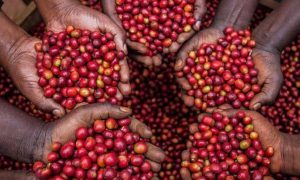
By Denis Jjuuko Whether on coffee tables, bar tables, parliamentary tables, or presidential tables, the talk has been about coffee following the contentious coffee bill that seeks to amend the National Coffee Act 2021. The main tenet in the bill is the proposed dissolution of the Uganda Coffee Development Authority (UCDA). Depending on who you listen to, UCDA is either angelic, demonic or a combination of both. Maybe the debate wouldn’t even have reached its current crescendo had the Speaker of Parliament not caught on a live mic urging her colleagues to do something about the Baganda. Whatever, she meant, the Baganda seemed to be the target. You see, 50% of the coffee grown in Uganda is from Buganda, a source of livelihoods for almost every household in the region. Many kids in Buganda go to school because of the incomes derived from coffee by their parents and guardians. Coffee and of recent, enjoys a demigod status among the people of Buganda. It hasn’t been like that though for the last few years. Many people in Buganda had given up on growing coffee until about 2016 when the kingdom started its famous Emmwanyi Terimba (coffee is profitable) campaign reminding people of the good old days of Mmwanyi Zabaala (another variant of coffee is profitable). Mmwanyi Zabaala was usually a reference to the powerful Bantam motorcycles that people in areas like Masaka massively bought as a result of profits from coffee especially in the 1960s, 1970s and 1980s. Farming is usually not for the fainthearted and prices can significantly fluctuate especially for a product that is largely exported. Prices are many times determined on global markets. Weather changes in Brazil, Colombia or Vietnam, for example, can have a significant impact on Uganda’s coffee. And domestic demands in those larger producer markets can also have impact. Speculators on the futures markets in the global financial capitals can also have an impact. But also, people can simply give up on something by losing hope. Leadership is usually required to restore hope, reminding people that those who “lose a loved one, don’t sleep by the graveside.” Once people are inspired to realize that not every light at the end of the tunnel is of an oncoming train, they could easily wake up and do something for themselves. That is what happened in Buganda circa 2016. With inspiration from the leadership in Buganda, people in the region started growing coffee again. Seeing the uptake in the crop, UCDA sought for a partnership to work together. The end result had been increased exports and increased incomes for the people in the region and indeed elsewhere. A coffee tree lasts about 45 years. So those who had abandoned their trees didn’t all have to plant new ones. Many just did stumping, allowing the coffee to sprout and flourish again. Others planted new ones. Within 2-4 years, they were making money again. I remember a trip to Bukomansimbi about four years ago where I met a man who had been a boda boda rider in Kampala and had decided to return to the village. He had revived his coffee garden and had managed to build himself a decent house and rentals somewhere in Kyengera, just outside Kampala. He regrated the years he had spent in Kampala riding a boda boda and before it, working as a taxi conductor. That was well before the average coffee prices of around Shs13,000 per a kilo of fair average quality. With the prices being offered today, there is real income in the pockets of ordinary Ugandans. And not just ordinary Ugandans, the country’s is benefiting as well as income from coffee exports are topping USD210m per a month. Regardless of what the government of Uganda does, coffee will remain a highly demanded crop across the world. The biggest consumers of coffee in the world don’t grow it and they are not about to give it up. They will continue to demand for it. The traders and the entire value chain is not about to give up coffee. Since the demand is assured, those who are growing coffee should not return to the previous years of feeling pity for themselves. They should instead increase the acreage those who can, look after their coffee trees well and do whatever is necessary to increase production of quality beans. Those that won’t give up, regardless of the prices or scrapping of UCDA would still be better than a farmer that don’t have anything to sell. The writer is a communication and visibility consultant. djjuuko@gmail.com

Read More »