#OutToLunch: Africa must level up if the continent is to create a trillionaire
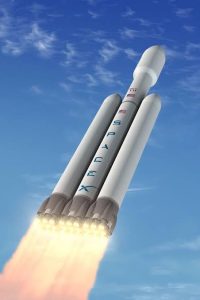
By Denis Jjuuko There was hullabaloo recently when the world’s richest man, Elon Musk, yet again launched another initial public offer (IPO) this time for his space exploration, satellite internet, artificial intelligence and social media company SpaceX. The IPO made him the world’s first trillionaire in US, not Zimbabwean, Dollars! It didn’t take long before the usual commentators in Uganda and elsewhere on the continent went into overdrive with many of them running out of superlatives in praise of Musk. Some owned him as an African, since he was born in South Africa while others blamed everyone else but themselves on the state of innovative companies on the continent. Why aren’t Africans developing AI products and companies, many wondered. Many people have probably tried but to scale them is difficult. Look at how many Africans have developed payment applications. In every innovative hub in Kampala, Nairobi, Lagos or Johannesburg, there are many people developing all sorts of payment apps but they remain relatively unknown outside the ecosystems in which they are being developed. Once in a while, a founder will get some funding and there will be some noise evidenced by billboards in various capitals featuring Nigerian musicians and once the rental fees are done, you will hardly hear about them. Until when they receive another round of investments. I have a feeling many founders’ dream ends at raising a certain amount of funding. Once they have money to pay bills, they sit and relax a bit. I hope I am wrong. But I wouldn’t blame many founders or entrepreneurs on the continent. Creating innovative products like building re-usable rockets or even AI applications that can be scaled requires enormous resources that are hard to realize. How many founders or entrepreneurs will refuse a job that pays money immediately to work on a product whose success can’t be easily determined? They need to pay bills and can’t always look on when their beautiful ex-girlfriends remind them that they couldn’t “eat potential.” Many American innovators have become successful because the government provides them tax breaks and subsidies. Elon Musk wouldn’t have been able to scale Tesla and SpaceX if he wasn’t receiving a lot of subsidies, soft loans and even contracts from the US government. How many African governments offer contracts to a start up? How many provide soft loans and subsidies? Nobody wants to do so. We easily run to Indian multinationals to develop simple things like an integrated website for tax collection. Had SpaceX or Tesla been founded on the African continent, most likely Elon Musk would still be operating in a shared space at an innovation hub at Ntinda Complex or Motiv around Bugoloobi. Unless of course if he knew someone who knew someone whose relative worked in the presidential palace. If he was lucky, he would have been given a flyer to borrow money at 10% payable in four years and he would need to be super lucky to actually get the loan amount credited on his account. Banks don’t look at you if you don’t have a statement that shows a lot of cashflow. I won’t talk about collateral today. That is why you find many people going to Guangzhou in China, bring in whatever that can fit in their checked in luggage, clear taxes, sale and repeat. A few trips over a period of 5-10 years and loan officers are knocking on their doors every day. By this time, the innovator at the innovation hub is most likely still scavenging for the next investor, prompting AI to design some fancy slides for the virtual seed funding presentation to potential investors. The investors listen, love the idea, but they are more likely to get their money back if they backed an 18-year-old kid working from his father’s basement somewhere in California. If they decide to invest in an African’s start up, it is very little money. The Africans who have some money don’t want to invest in “weird” things like space exploration or even AI data centres. They rather invest with a guy claiming to be rearing goats or keeping poultry as long as he promises a huge monthly return. The innovator capable of developing an AI product or a rocket sees the chicken guy rolling on Bandali Avenue in a Subaru with some bimbos and wishes he did the same. If he is a honest person, he would join those opening salons and boutiques in Kyanja Mall. No need to reinvent the wheel, he would console himself. I know that some African governments have funded some startups but they are really few and founders are usually well-connected people. Would an African stock exchange list a non-profitable start up? There is a need to level up to create a critical mass of innovators. If we do, once in a while we’ll have an African Elon Musk, Jeff Bezos or another Aliko Dangote. The writer is a communication and visibility consultant. djjuuko@gmail.com