
#OutToLunch: Coffee export good but protect farmers by consuming some of it locally
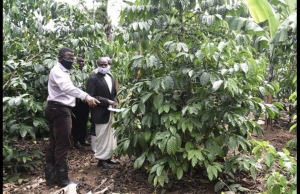
By Denis Jjuuko For a few years, coffee prices have been rising greatly crossing the Shs13,000 per kilo mark for the fair average quality or what is known as kase thereby turning many farmers into millionaires. Some of them instantly. The price of Robusta over the last few months has been almost the same as Arabica that usually grows on higher altitudes. Driving through some villages in Masaka recently, you hardly found a courtyard where coffee was not being dried. And almost everyone dried the coffee on tarpaulins instead of the bare ground of yonder. This obviously means a better-quality product and the fact that people are adhering to the messages being given to them. Farmers are also planting improved varieties and applying better farming methods all of which are leading to an improved end product that is demanded across the world. In the just concluded financial year, Uganda exported 6.13 million bags (60kg each) of coffee earning an unprecedented USD1.144 billion, an increment of 6.33% in volume and 35.29% in revenue compared to the previous year. The higher prices have been attributed to improved quality and quantity but also demand in the destination markets where coffee is consumed. Although there might be other reasons such increased local consumption in larger exporting countries like Brazil and weather fluctuations in Vietnam, and a changing environment in Europe starting in January 2025 leading to stock ups. Europe says it will only be buying coffee which is traced to farms that have not been set up after destroying forests. Most Ugandan coffee farmers are small and do so on small pieces of land and therefore no forests have been destroyed, which means the demand for our coffee in European markets should continue. Although farmers are experiencing the highest prices in 30 years, the vulnerabilities still exist and therefore Uganda’s focus should not be entirely on exports that is targeting the 20m bags annually. Local consumption is equally important. In Ethiopia, Africa’s largest coffee producer, 60% of the harvests are consumed at home. The data may be hard to come up with but imagine how many meetings especially in government ministries, departments and agencies take place on a daily basis. They must be hundreds of them. Many of them have some coffee and tea for the people to enjoy. Many officials in government have flasks of coffee and tea beside their office desks and it is not uncommon to find a few government workers enjoying breakfast or a mid-morning snack complete with a hot cup of beverages. Now, imagine if they all were drinking Ugandan coffee! How much money would the government be spending? How much money would the farmers and roasters be earning? Many times, the coffee people drink is imported instant coffees. At workshops in many hotels, imported instant coffees rule the day sometimes serving hundreds of people attending conferences and workshops. Private companies and development partners are not exceptional. In a country that is a major producer of coffee! I don’t know whether the preference of instant coffees is strategic where we prefer to export raw coffee so we can important instant ones or it is one of those things we have not clearly thought about. Should we consume some of the coffee we grow here or we should focus on exporting it only? There is no guarantee that the current prices will remain as high as they are today and if we only focus on exports, farmers at one stage may become delusional and abandon it like they did years ago. To avoid this risk, there must be ways to promote its consumption locally not through fictious campaigns that teach people how to drink coffee but through a well thought out campaign. A campaign that gets implemented. A campaign that is implemented by people that are trusted. In the central region for example, Buganda Kingdom pushed these boundaries earlier through their Mmwanyi Terimba campaign, distributing seedlings and the Katikkiro making endless drives to the expansive kingdom to see whether the people were growing coffee. The results can be seen by even a suckling baby. Government can start with its offices. Procurement officers, administrators and whoever is responsible for purchasing coffee should be aligned to the fact that charity begins at home. That they can’t be singing value addition while importing something as easy to make as coffee. Then private companies and development partners can be encouraged to go locally roasted coffee. Tax incentives could be given. This doesn’t mean that we abandon the 20 million bags target rather we do both. Improved quality and quantity would ensure that we can go ahead and get nearer to the 20 million bags target while a significant chunk is consumed at home. The writer is communication and visibility consultant. djjuuko@gmail.com